In 2010, just 66 Christmas Island blue-tailed skinks were saved; 15 years later, 545 were released on a new island
In 2010, the Christmas Island blue-tailed skink was close to disappearing from the wild.
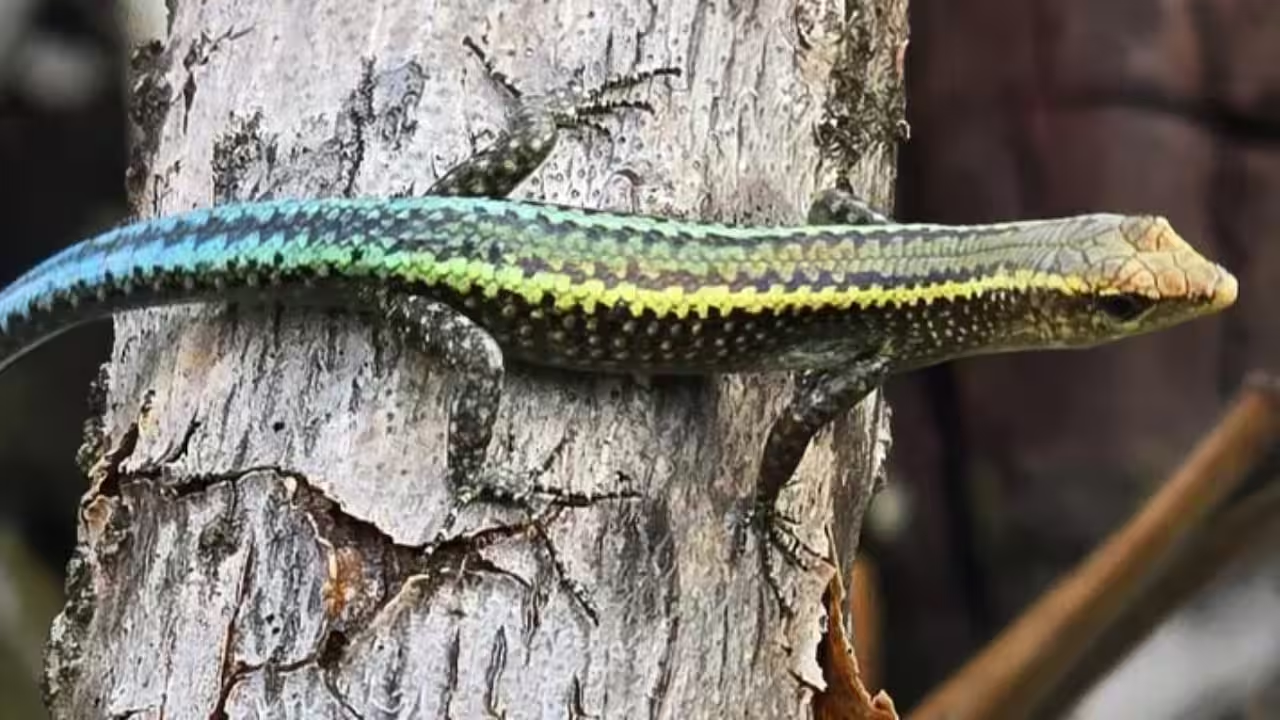
In 2010, the Christmas Island blue-tailed skink was close to disappearing from the wild. Introduced predators had swept across Christmas Island, and a rapid rescue effort by Parks Australia staff saved just 66 individuals before the remaining wild population vanished. Those reptiles became the foundation of a captive breeding and conservation programme that continued for more than 15 years. In July 2026, the programme reached another milestone when 545 Christmas Island blue-tailed skinks were released into the wild on Horsburgh Island in the Cocos (Keeling) archipelago. The release marks the establishment of the species' third wild colony in the island group, offering it a larger habitat in which to build a population.Just 66 skinks were saved as predators swept across Christmas IslandThe Christmas Island blue-tailed skink is a small insect-eating lizard measuring around 10 to 12 centimetres long. It has a dark, striped body and a distinctive bright blue tail. The species is now listed as Extinct in the Wild on the IUCN Red List and is no longer found in its natural habitat on Christmas Island, according to Parks Australia.In 2010, introduced predators were rapidly affecting the species on its home island. Parks Australia staff at Christmas Island National Park mounted a rescue effort and captured 66 blue-tailed skinks before the remaining wild population disappeared. Those 66 animals became the founder population for a captive breeding and conservation programme.The effort was not limited to keeping the reptiles in captivity. Over more than 15 years, conservationists worked to produce animals that could eventually establish new wild populations away from the threats that had caused the original decline.Captive breeding helped establish skink colonies in the Cocos IslandsThe first major step towards returning the species to the wild came in 2019, when blue-tailed skinks were released on Pulu Blan, a tiny island in the Cocos (Keeling) group. Parks Australia later established another colony on neighbouring Pulu Blan Madar in 2020.The earlier releases were part of an effort to establish populations away from Christmas Island, where the skinks had disappeared from the wild. The population on Pulu Blan was increasing through natural recruitment after its release. The Pulu Blan Madar population faced difficulties after invasive yellow crazy ants were discovered, prompting park staff to undertake control measures.By 2026, the conservation programme had produced enough skinks for a much larger release. Parks Australia says 545 animals were taken to Horsburgh Island, making it the third island in the Cocos group to receive a population of Christmas Island blue-tailed skinks. The new colony therefore represents another attempt to establish the species in the wild after it disappeared from Christmas Island.Horsburgh Island gives the rare skinks a much larger new homeHorsburgh Island offers a substantially larger area than the two earlier release sites. According to Parks Australia, it is about 50 times the size of either Pulu Blan or Pulu Blan Madar, giving the skinks the potential to establish a larger and more resilient population.Getting the animals there was itself a complex logistical operation. Blue-tailed skinks from four separate populations were transported to Horsburgh, with the journey involving both aircraft and boats. Some of the animals travelled from as far away as Sydney before reaching their new tropical home.The release was led by Parks Australia and Taronga Conservation Society Australia, with support from the Shire of Cocos (Keeling) Islands, the local Cocos community and Qantas. The 545 reptiles now form the third wild colony of this Christmas Island native in the Cocos (Keeling) archipelago.The story of the blue-tailed skink has therefore moved from a rescue of 66 animals in 2010 to the release of 545 into a new island habitat in 2026. For a species that no longer survives in the wild on its original home, the Horsburgh Island population is another step in an ongoing effort to rebuild wild colonies.You use AI every day. Now get your AI Quotient. Take the AIQ test.
Topics in this story
Gathered from external sources. Rights to this text belong to whoever originally published it.