Israeli elections too close to call as turnout shatters record
TEL AVIV — Early returns in Israel’s election Tuesday evening showed Israeli Prime Minister Benjamin Netanyahu’s bloc neck and neck with the “Change” coalition headed by the bereaved retired general and leader of the center-right Yashar party, Gadi Eisenkot. Eisenkot’s grouping is slightly edging out Netanyahu’s bloc. But Israel’s complicated coalition negotiations — and Netanyahu’s…
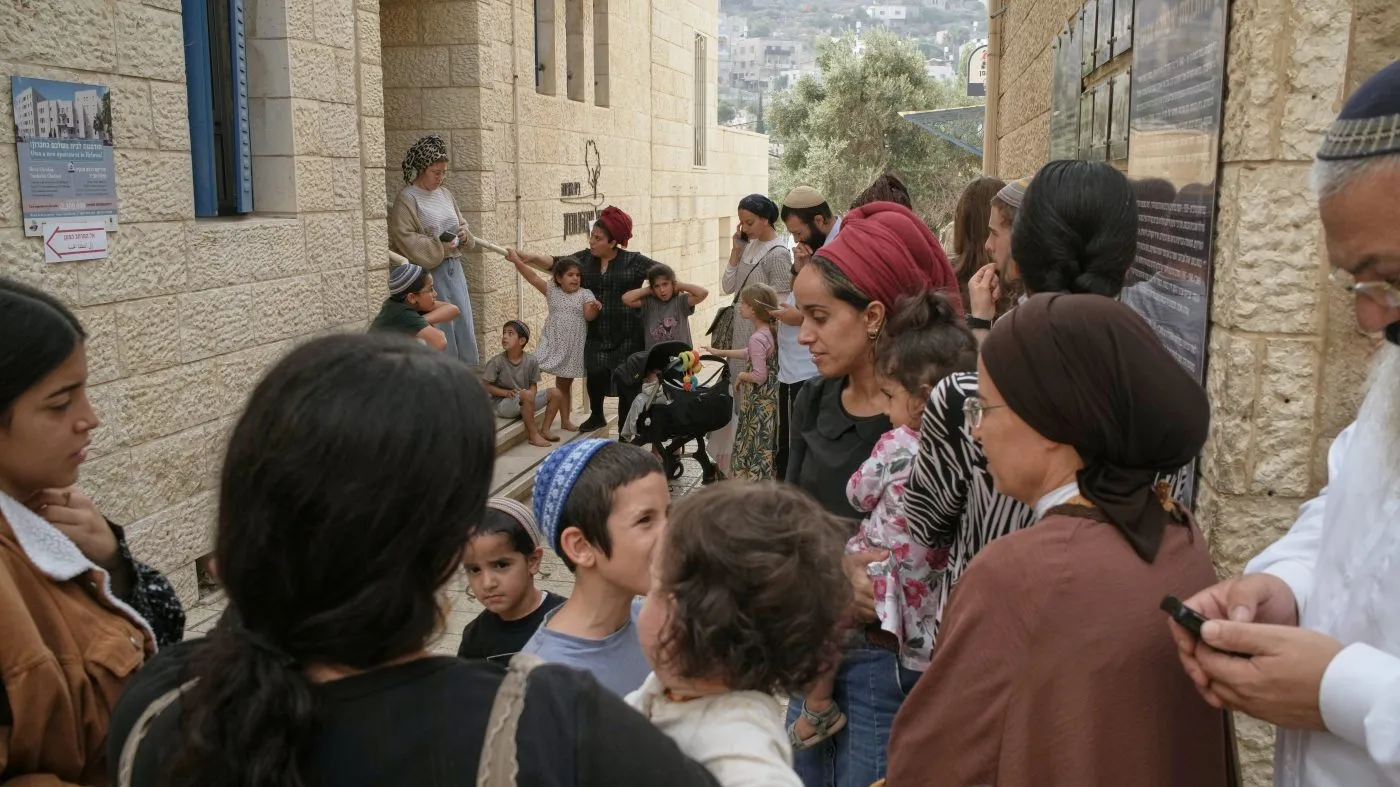
TEL AVIV — Early returns in Israel’s election Tuesday evening showed Israeli Prime Minister Benjamin Netanyahu’s bloc neck and neck with the “Change” coalition headed by the bereaved retired general and leader of the center-right Yashar party, Gadi Eisenkot.
Eisenkot’s grouping is slightly edging out Netanyahu’s bloc. But Israel’s complicated coalition negotiations — and Netanyahu’s sharp politicking — leave open the possibility he could return to power.
A major development was projected seats for Israel’s Arab parties, with early polls pointing to 18 combined seats. They could prove decisive in giving Eisenkot’s bloc a ruling majority, if they come to a coalition agreement.
The election is widely seen as a referendum on Netanyahu, as the first vote since Hamas’s devastating terrorist attack on Oct. 7, 2023, that set up three years of war in Gaza, Lebanon, Iran and other fronts.
Voter turnout Tuesday was the highest since 1999, with 74.3 percent of Israel’s 7.3 million eligible voters participating as of 8 p.m. local time — blowing past the participation rate of 2022 at 70 percent.
Israel does not have absentee voting and an estimated 70,000 Israelis returned to the country to cast their ballots. The full results will likely come into complete focus Wednesday, analysts said.
Israel’s parliament, the Knesset, requires a 61-seat majority out of the total 120 seats.
Israeli President Isaac Herzog will tap the party he views as having the best chance to form a government to lead coalition talks; it doesn’t necessarily need to be the party with the largest number of Knesset seats.
The party leader tapped will have 28 days to form a coalition with a possible 14-day extension. If those efforts fail, Herzog can give another party leader a chance to form a coalition, with a 28-day timeline. There are other contingencies if the parties remain deadlocked.
The final formation of Israel’s new government could take weeks.
While Israelis largely view the war against Hamas as necessary and justified in the face of international criticism over the death toll in Gaza, the country is grappling with deep divisions on domestic issues.
Eisenkot, whose son and nephew died fighting against Hamas in Gaza after Oct. 7, connected with voters who struggled and experienced immense loss following the terrorist attack.
Whether Netanyahu or Eisenkot prevail, Israel’s foreign policy is likely to remain relatively stable, with both parties opposed to a Palestinian state and supportive of the continued Israeli occupation of southern Lebanon amid the fight against Iran-backed Hezbollah.
Both take a hawkish stance against Iran. The U.S. is preparing strike options to renew military attacks against Iran after its own midterm elections next week.
Kobi Marom, a retired colonel in the Israeli military who is close to Eisenkot, said his goal will remain regime change in Iran.
“If Trump and Israel are planning another escalation of Iran, it must be planned much better,” he told The Hill.
“Change” was a common refrain among voters who spoke to The Hill, when describing what they were looking for in their next government.
“The country needed a change after Oct. 7, badly,” said Aaron Adler, 73, an Israeli American voting Tuesday in Jerusalem’s Katamon neighborhood.
Adler recited a list of the top issues voters considered going to the polls: most notably Eisenkot’s campaign promises to launch an official investigative inquiry into Oct. 7 and address the ultra-Orthodox’s exclusion from the military and national service — criticized as an extreme burden on the citizens who are serving in Israel’s campaigns in Gaza, Lebanon and the West Bank, and their families.
Adler said he’ll deal with another few years with Netanyahu, if he emerges on top at the end of the day. “We’ll keep living, this is our country, we love it,” he said.
“We’ll live for another few years with Bibi, nobody lives forever,” he added, using Netanyahu’s nickname.
Other voters in Katamon expressed similar sentiments, voting for parties that promised to join Eisenkot in a governing coalition.
Tomer Ram, 43, also voting in Katamon, cast his ballot for the center-left party The Democrats. Yair Golan, the party’s head, has said he’d join a coalition with Eisenkot to strengthen the numbers and block Netanyahu from coming back to power.
“The current administration is the worst ever, not only in Israel, maybe in the whole world, and they need to be replaced,” Ram said, adding he doesn’t have a problem with any of the center-right conservative groups likely to join with Eisenkot.
This includes the Yisrael Beyteinu party headed by Avigdor Lieberman, a one-time Netanyahu coalition partner who resigned in 2018 because he was critical that the government wasn’t dealing decisively with Hamas in Gaza.
Also likely to join Eisenkot’s coalition is the Beyachad party headed by Naftali Bennett, who briefly served as prime minister from 2021 to 2022, after a previous scramble to form an anti-Netanyahu coalition.
Aya Lael, 42, also in Katamon, cast her ballot for Bennett, saying her main consideration was that Bennett surrounded himself with a team she supports.
“Each of them are really, really good people who are great politicians and making good things for us. Even if I don’t agree with everything, they are serious people who will be in the Knesset can do the work,” she said.
However, Arab parties could ultimately become kingmakers if Eisenkot pursues their cooperation.
In the Arab majority village of Abu Ghosh, 22-year-old Sanad Abed Rahman is encouraging his friends to vote for the first time. He described the younger generation — 18-year-old first-time voters — as more aware of the political situation and motivated to vote.
“People want to change this government, they’re tired of it,” he said, describing the racism and hatred against Israeli Arabs and Palestinians as the worst he’s ever experienced. At 22, Rahman has lived through increasingly frequent war with Hamas and Hezbollah, and increasing violence in the West Bank.
“This racism now, I never saw it before,” he said, pointing specifically at Itamar Ben-Gvir, Israel’s minister of national security who heads the ultra-nationalist, far-right religious party Otzma Yehudit, or “Jewish Power.”
Ben-Gvir, who wears a noose-shaped pin on his lapel, is projected to win 6-7 seats in Israel’s Knesset. And he told Time Magazine he’s hoping to wield his seats as leverage on Netanyahu, calling for a senior portfolio — likely defense minister.
That would likely further isolate Israel on the international stage. Ben-Gvir is under European sanctions for human rights abuses , in particular acts of aggression and violence against Palestinians in the West Bank.
Topics in this story
Gathered from external sources. Rights to this text belong to whoever originally published it.