In 1912, stranded in Antarctica, Captain Scott wrote that his team would “die like gentlemen”; his farewell letter later sold for £163,250
Discover the poignant farewell letter of Captain Robert Falcon Scott, written in 1912 during his ill-fated Antarctic expedition, which sold for an astonishing £163,250 at auction. Explore the tragic story behind this historical document.
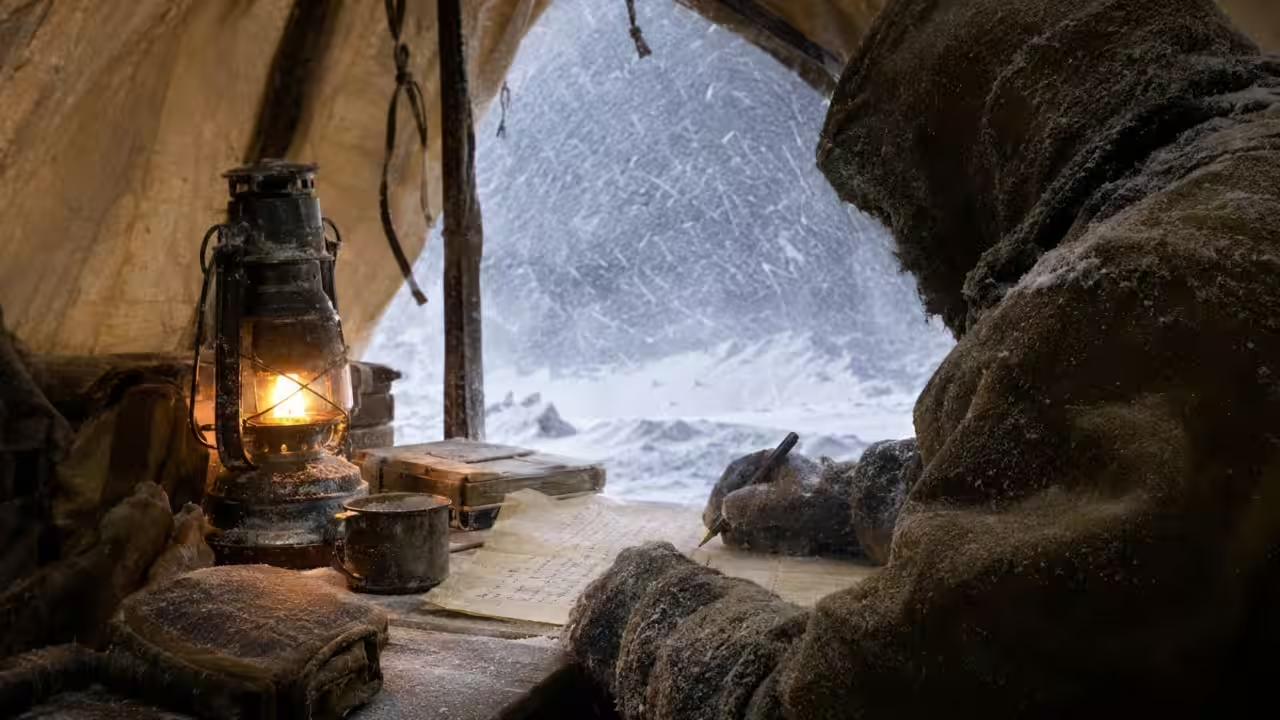
In March 1912, British explorer Captain Robert Falcon Scott was attempting to make the journey back from the South Pole with the surviving members of his crew. One of his companions had already lost his life, while another had walked away into a blizzard. The remaining men with him were struggling against exhaustion, hunger and extreme cold. On March 16, the Captain wrote to his friend and expedition supporter, Sir Edgar Speyer, acknowledging that the party might not survive. He wrote, as cited by Sky News, “I fear we must go and that it leaves the Expedition in a bad muddle.But we have been to the Pole, and we shall die like gentlemen.” The four-page handwritten letter was eventually recovered with Scott’s body and later sold at an auction in 2012.The race to the South Pole and the difficult journey backThis expedition by Scott is officially known as the British Antarctic Expedition of 1910-1913. More commonly, it is also known as the Terra Nova, after its ship. Alongside the ambition of reaching the South Pole, this expedition also had some scientific objectives. The journey turned into a race when Norwegian explorer Roald Amundsen also set out for the southernmost point of the Earth. On December 14, 1911, Amundsen’s party reached the Pole. Scott and his party arrived on January 17, 1912 and found evidence that the Norwegian party had been there prior to them.Scott’s party began their way back on January 19. Their route back across the Antarctic landscape was difficult, and their conditions only deteriorated with time. According to the University of Cambridge’s database, Petty Officer Edgar Evans lost his life on February 17, near the foot of the Beardmore Glacier. Captain Lawrence Oates, on the other hand, was suffering severely by March from frostbite and could no longer keep pace with the rest of them. On March 16, during a blizzard, he left the tent after informing his companions that he was just going outside and might take him some time to be back. He never returned.The remaining team, including Scott, Dr Edward Wilson and Lieutenant Henry Bowers, continued their journey north, making their final camp around March 19. They were around 11 miles away from One Ton Depot, a point that contained food and fuel. However, a prolonged blizzard prevented them from reaching it. With the remaining provisions dwindling, the three men became too weak to continue forward. Scott’s letter to Speyer was dated three days before their final camp was established; therefore, it can be assumed that it belonged to the period when the party was still attempting to make its way back.What the letter containedDated March 16, 1912, the letter was addressed to financier and supporter Edgar Speyer, who had helped fund the expedition. In the letter, Scott expressed understanding that they might never make it back and mentioned regret for the women they would leave behind. He also expressed his gratitude towards Speyer for his assistance. In addition to this, Scott hoped that if his diary was ever found, it would show how the men had remained with their sick companions and continued fighting till the very end.The Captain’s diary was later found alongside their bodies by a search party that was led by Surgeon Edward Atkinson on November 12, 1912. The final entry was dated March 29. He, Wilson and Bowers died in their tent during the final days of March, from starvation and cold. The party collected the records and personal belongings, and the letters were then sent to their intended recipients.The letter sold for £163,250 at an auctionBefore being offered at Bonhams’ Polar Sale in London in 2012, the letter to Speyer had remained in private hands. The four-page letter was catalogued as a farewell letter written shortly after Oates disappeared into the blizzard and only days before Scott’s party established the final camp. Its estimated value was £100,000 to £150,000. It, however, sold for £163,250, thus exceeding the estimated value. Sky News reported that an anonymous British collector bought the letter at the auction.You use AI every day. Now get your AI Quotient. Take the AIQ test.
Topics in this story
Gathered from external sources. Rights to this text belong to whoever originally published it.