Pentagon funding a naval training facility in Ecuador
The Pentagon is funding a naval training facility in Ecuador’s largest city as the United States deepens its security cooperation with the South American nation in a broader push to combat drug cartels on the continent, two U.S. officials familiar with the efforts told The Hill. Virginia-based contractor Culmen International secured a contract to help…
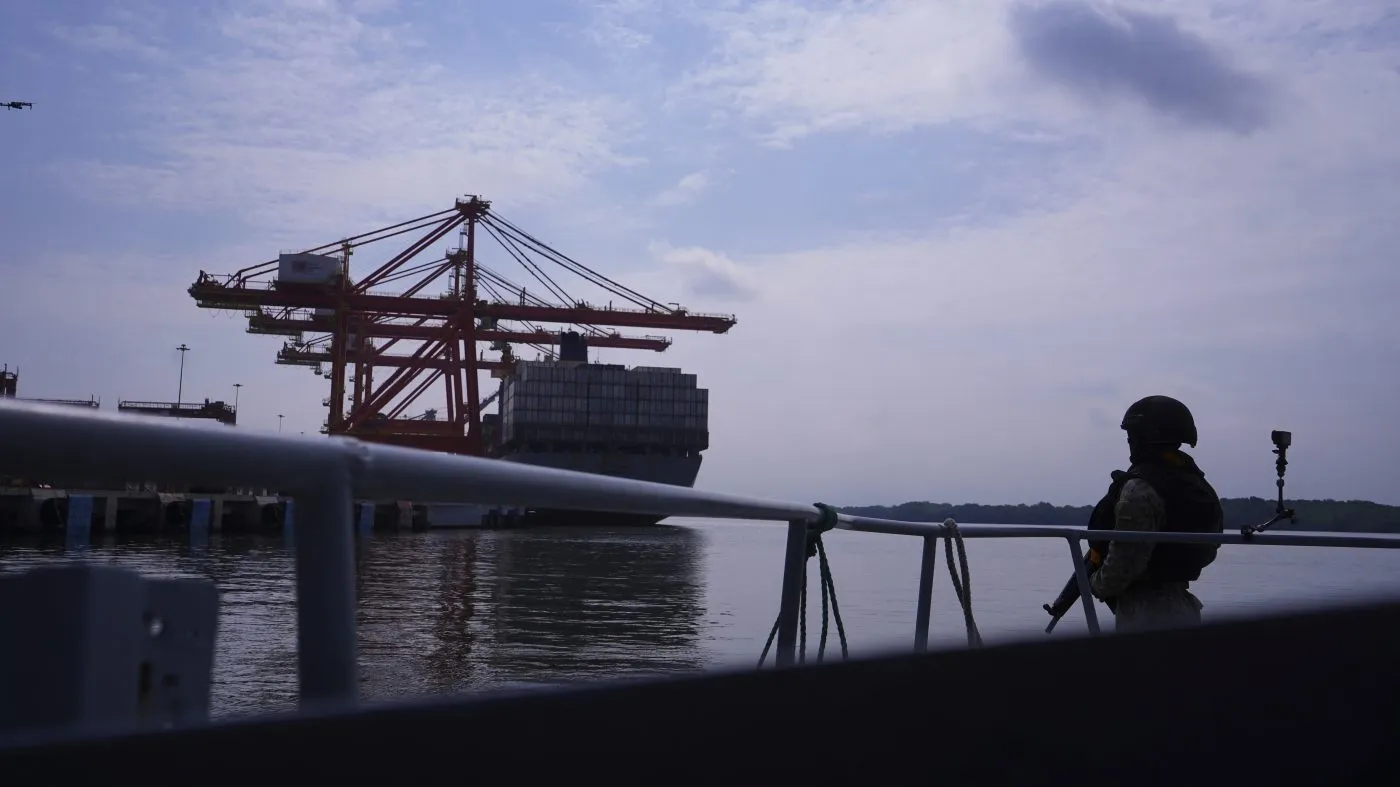
The Pentagon is funding a naval training facility in Ecuador’s largest city as the United States deepens its security cooperation with the South American nation in a broader push to combat drug cartels on the continent, two U.S. officials familiar with the efforts told The Hill. Virginia-based contractor Culmen International secured a contract to help design and construct the center in Guayaquil, a port city, that will ultimately be operated by Ecuadorian security forces, said the officials, who spoke on condition of anonymity to discuss the arrangement. It is unclear how long it will take to be built, how many U.S. and Ecuadorian personnel will be deployed there, and how many naval vessels will be present. The U.S. Southern Command (Southcom), which oversees U.S. military operations in Central and South America, declined to comment. The facility is funded through the Title 10 capacity building program, one of the U.S. officials said. Once the facility is operational, it will be up to Ecuador to weigh whether to have U.S. service members there, they added. Henry Ziemer, a fellow with the Americas Program at the Center for Strategic and International Studies (CSIS), said funding for the project “may be a point of interest” for those conducting oversight in Washington. “Though this administration has definitely been willing to play fast and loose with how it gets funding for certain projects,” Henry Ziemer, a fellow with the Americas Program at the Center for Strategic and International Studies (CSIS), said in an interview with The Hill. “Of course, no better example being the Pentagon’s Office of Strategic Capital being kind of the primary mover and shaker with the Venezuelan oil deal that was announced this August.” The Pentagon did not respond to The Hill’s request for comment about the facility. The new naval facility comes as the Pentagon continues to execute its multifront war against drug cartels on the continent and the Trump administration pushes countries to partner with U.S. forces in joint operations against narco-traffickers. U.S. personnel involved in the ongoing operations are given rotational access to Ecuadorian bases. The U.S. military has been wiping out alleged drug boats in the Caribbean and Eastern Pacific, killing scores of suspected traffickers in attacks that have received pushback from some law-of-war experts and congressional Democrats. The U.S. forces have also interdicted bigger refueling vessels off the coast of Ecuador before destroying them. U.S. personnel have also begun embedding on the ground with Ecuadorian forces in raids against alleged drug traffickers. Last November, over two-thirds of Ecuadorians rejected the proposal to host foreign military bases inside the country, a setback for President Daniel Noboa, an ally of President Trump, who has focused on fighting organized crime and welcomed expanded defense partnership with the U.S. “I think this doesn’t necessarily strike me as unusual for U.S. security cooperation with a partner nation,” Ziemer said. “The biggest kind of story in this though, is of course the broader U.S.-Ecuador security relationship, and in particular the question of bases.” In the past, the U.S. government did include some facility construction in its aid to Latin America, with contributions toward radar sites, hardened police stations and improvements to airstrips. The new facility is another sign of the U.S. deepening its security ties with Ecuador, where the Pentagon has recently sent MQ-9 Reaper drones, according to regional experts. Recently, the U.S. government also programmed $52 million in Foreign Military Financing from European and Middle Eastern allies to four Latin American countries, including Ecuador. The closest analog to the facility, Ziemer said, was the State Department approving a potential sale of $1.5 billion in equipment and services to Peru in January to help expand and modernize the port of Callao, which is also the country’s main naval port. Earlier this month, Culmen International shared a post on Facebook , Instagram and LinkedIn stating it was “proud to support” Southcom’s “counterdrug mission” with the construction of the facility. The Hill reached out to the contractor to comment on Oct. 16. Days later, the post about the facility on those platforms were taken down. Culmen International did not respond to The Hill’s request for comment this week. Southcom will not run the facility, one of the sources said. But the facility is “aligned with the U.S. partner objectives,” they added.
Topics in this story
Gathered from external sources. Rights to this text belong to whoever originally published it.