America’s first MD-granting medical school branch on tribal land will open in Arizona in 2027; 10 students a year will enter a 3-year programme on full tuition scholarships
US News: A new chapter in medical education is set to begin in Arizona in 2027, with the University of Arizona and Gila River Health Care (GRHC), the Gila Rive.
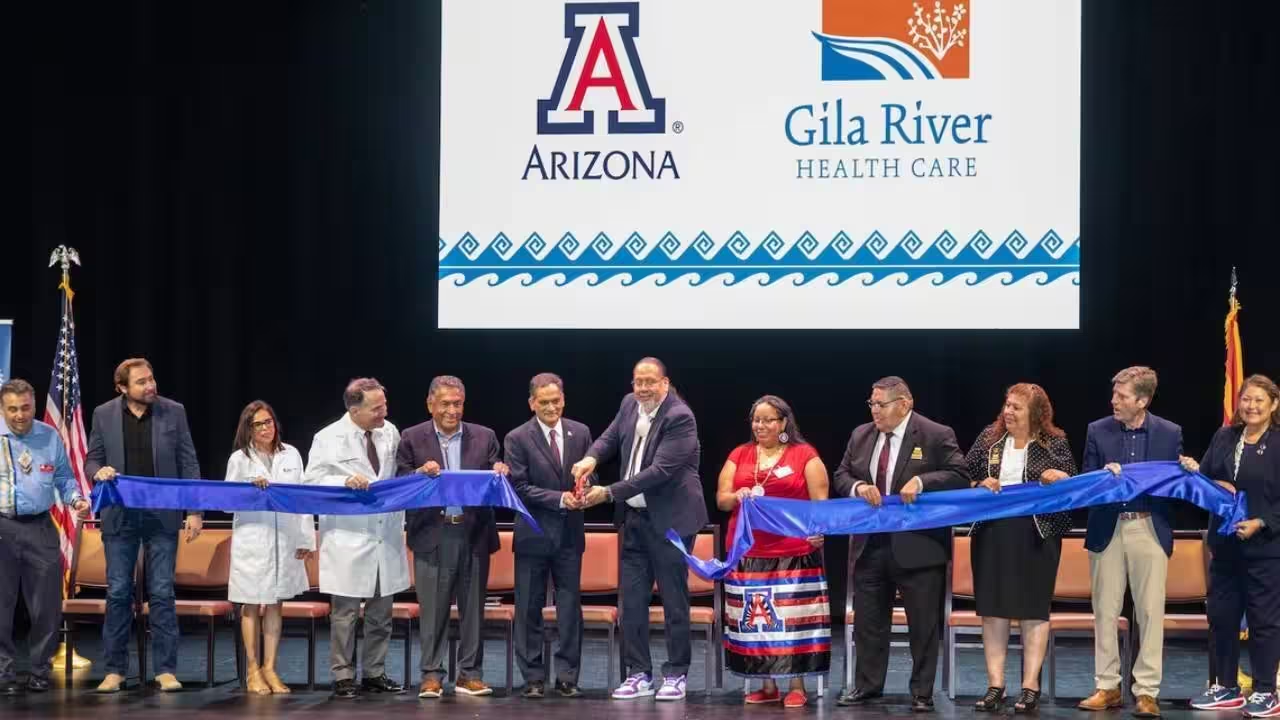
A new chapter in medical education is set to begin in Arizona in 2027, with the University of Arizona and Gila River Health Care (GRHC), the Gila River Indian Community’s tribally operated healthcare system, announcing a long-term partnership to establish the nation’s first MD-granting medical school branch on the lands of a sovereign Tribal Nation.The University of Arizona College of Medicine – Phoenix Regional Medical Branch in Sacaton, Arizona, will train future physicians within a Tribal healthcare system while aiming to improve access to care in Tribal, rural and medically underserved communities.Beginning in July 2027, 10 students will be admitted each year to the University of Arizona College of Medicine – Phoenix’s three-year MD-granting Primary Care Accelerated Program at the Gila River Branch. The students will receive full tuition scholarships funded by GRHC, as per the official University of Arizona News report published on August 18, 2026.Students will split training between Phoenix and SacatonThe selected students will spend the first 18 months completing their foundational medical education in Phoenix. They will then relocate to Sacaton for the final 18 months of clinical education within the Gila River healthcare system.University of Arizona President Suresh Garimella said the initiative is designed to address some of the country’s most pressing physician shortages.“Tribal and rural communities have some of the nation’s greatest unmet primary care needs,” Garimella said.He added that the partnership would train physicians through an accelerated three-year MD programme while providing full scholarships to reduce the burden of student debt.“That is how you build a physician workforce that remains in the communities that need them most,” he said.Arizona faces growing need for primary care physiciansThe US continues to experience physician shortages, with rural and Tribal communities particularly affected. Arizona currently ranks No. 42 in the nation for primary care access, while its rapidly growing population has further increased demand for physicians.Research has shown that doctors are more likely to practise in the communities where they receive their training, making community-based medical education an important strategy for developing a long-term healthcare workforce.Instead of relying solely on large academic medical centres for medical education, the new Regional Medical Branch will place students directly within a community-based healthcare system.Students will work under faculty supervision and care for patients across different clinical settings. They will also gain an understanding of the historical, cultural and social factors that influence health in Native communities.Gila River Community hopes to create new opportunities for studentsStephen Roe Lewis, Governor of the Gila River Indian Community, described the partnership as an opportunity to make medical education more accessible to young people from the area.“This is a tremendous opportunity for our community and for the next generation of physicians,” Lewis said.“For too long, many of our young people who dreamed of becoming doctors had to leave home to pursue that goal. This partnership with the University of Arizona changes that. It gives them the opportunity to learn, train and build their careers right here in the Community, where they can make a real difference for the people they serve.”The University of Arizona and GRHC also believe the programme could encourage more Native American students to pursue medicine and create stronger pathways into Arizona’s physician workforce.GRHC commits more than $25 millionGila River Health Care has committed more than $25 million through 2034 to establish and support the Regional Medical Branch.The funding will cover faculty positions, student scholarships and educational infrastructure.Unlike traditional clinical rotations, students will become part of an operating healthcare system. They will work alongside physicians serving Native communities while gaining direct experience of the healthcare challenges affecting the population.The partners are also exploring the development of primary care residency programmes at GRHC. Such programmes could further support the long-term goal of retaining physicians in the Gila River Community and other underserved areas.Dr. Fredric Wondisford, dean of the University of Arizona College of Medicine – Phoenix, said the partnership could reshape how future physicians are trained.“This partnership challenges us to think differently about where and how physicians are educated,” Wondisford said.“Clinical excellence is shaped not only by scientific knowledge, but by understanding the communities physicians serve. By educating future physicians within a tribally operated healthcare system serving Native communities, we are creating a learning experience that cannot be replicated in a traditional academic medical center.”First-of-its-kind partnership aims to address physician shortageRobert Pablo, chairman of the Gila River Health Care Board of Directors, also highlighted the difficulty rural healthcare systems face in recruiting trained professionals.“There’s a real challenge for rural health hospitals to recruit trained professionals to come and work in their communities,” Pablo said.“We are very fortunate to launch this first-of-its-kind partnership between Gila River Health Care and the University of Arizona, which will establish a starting ground for these young doctors to jumpstart their careers.”The initiative builds on a similar partnership announced last year between the University of Arizona and Onvida Health in Yuma. The Regional Medical Branch is part of the university’s broader effort to expand community-based medical education across Arizona.The Association of American Medical Colleges projects that the US could face a shortage of up to 86,000 physicians by 2036, with Tribal and rural communities expected to be among those most affected.The University of Arizona, the Gila River Indian Community and GRHC believe partnerships between public research universities, sovereign Tribal Nations and community healthcare systems could play an increasingly important role in addressing the shortage.The new medical branch is expected to demonstrate how medical education can be brought directly into the communities that need doctors most, while simultaneously expanding educational opportunities and strengthening Arizona’s healthcare workforce.Catch the latest World News and Live updates. Download the TOI app.
Topics in this story
Gathered from external sources. Rights to this text belong to whoever originally published it.