Japan’s ‘Phone Booth to the Dead’: The mysterious telephone booth where people go to talk to their loved ones who have passed away
In a quiet corner of Japan, a simple white telephone booth has become an unlikely place of comfort for people grieving the loss of someone they love.
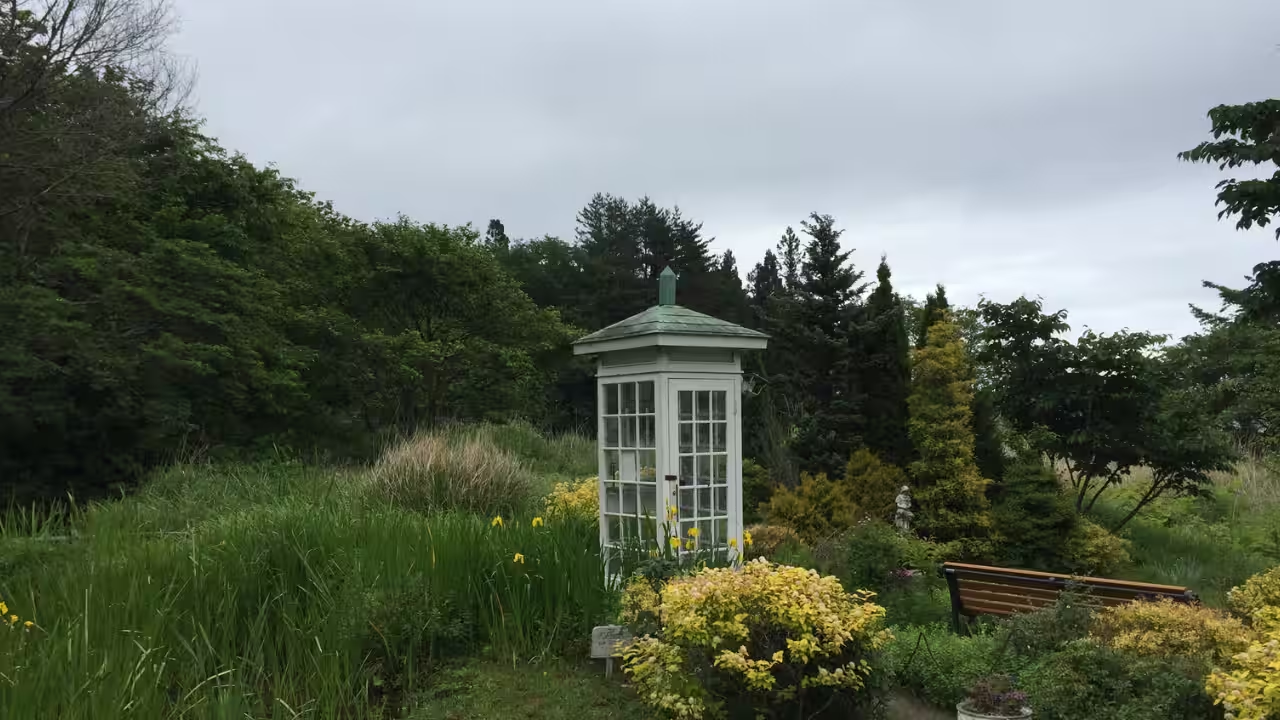
In a quiet corner of Japan, a simple white telephone booth has become an unlikely place of comfort for people grieving the loss of someone they love. It has no working telephone connection, no signal and no way to deliver a message to its intended recipient. Yet, thousands of people have travelled to it to do something deeply personal: pick up the receiver and talk to someone who is no longer alive. Known as the "Wind Phone", or "Kaze no Denwa" in Japanese, the booth stands in a garden in Otsuchi, a coastal town in Iwate Prefecture. What began as one man’s private way of coping with loss has grown into a place of remembrance for people from across Japan and beyond.A phone created out of personal griefThe story of the Wind Phone began in December 2010, when Japanese garden designer Itaru Sasaki lost his cousin to cancer. Struggling to come to terms with the loss, Sasaki wanted a way to continue feeling connected to someone who had been an important part of his life.He found an old rotary telephone and placed it inside a white, glass-panelled telephone booth in his garden. The telephone was deliberately left disconnected. Sasaki imagined that the conversations he could no longer have through an ordinary telephone might instead be carried away by the wind.He named it Kaze no Denwa, which translates to the Wind Phone. At the time, the booth was intended for his personal use. However, just three months after its creation, an event would change its purpose forever.The 2011 tsunami changed everythingOn March 11, 2011, a massive earthquake struck northeastern Japan, triggering a devastating tsunami along the country’s Pacific coast. The disaster claimed thousands of lives and left communities struggling with the sudden loss of family members, friends and neighbours.The coastal town of Otsuchi was among the worst-affected areas. Around 1,400 residents lost their lives, leaving many families without an opportunity to say goodbye.In the aftermath, Sasaki decided to open his garden and the Wind Phone to members of the public. People who had lost loved ones began visiting the booth, using the disconnected telephone to express their grief, share everyday updates and say things they had never managed to say before. What had started as one man’s private response to bereavement gradually became a place of collective healing.What happens inside the Wind Phone?The experience is remarkably simple. Visitors enter the small booth, pick up the old telephone receiver and dial the number of the person they wish to speak to. There is no functioning telephone line, and nobody answers on the other end.People use the opportunity to talk about their lives, ask questions, share memories or express feelings they have been carrying since their loved one’s death. Some speak to parents, others to partners, children, siblings or friends. A notebook is also kept inside the booth, allowing visitors to leave written messages and personal reflections.There are no instructions about what people should say or how long they should stay. The idea is to give visitors a private space where they can express emotions without worrying about being judged or interrupted. The telephone does not claim to establish contact with the dead. Instead, it offers a symbolic way of continuing a conversation that ended too soon.From a Japanese garden to a global phenomenonOver the years, the Wind Phone has attracted visitors from across Japan and other parts of the world. According to accounts of the original booth, more than 30,000 people have made their way to Sasaki’s garden.Its influence has also extended well beyond Otsuchi. Telephone booths inspired by the original have appeared in different countries, offering people spaces to remember those they have lost.A July 2025 report by The Yomiuri Shimbun noted that wind phones had been established at more than 400 locations across 17 countries, including the United States, Germany and South Africa. Some have been created to help people cope with losses caused by the COVID-19 pandemic, wars and other personal tragedies.The concept has also found its way into popular culture. Japanese filmmaker Nobuhiro Suwa’s 2020 film Voices in the Wind (Kaze no Denwa) features a young woman who loses her family in the 2011 tsunami and embarks on a journey connected to the Wind Phone. The film received an honourable mention in the Generation section of the 2020 Berlin International Film Festival.Why does talking to someone who has died matter?The Wind Phone reflects something familiar to many people who have experienced grief: the desire to speak to someone even after they are gone. There are everyday moments when people instinctively reach for their phones to share good news, discuss a problem or simply tell a loved one about their day. Losing that familiar connection can make ordinary experiences feel unexpectedly difficult.Psychologists who study bereavement have recognised that maintaining an emotional connection with someone who has died can be an important part of how people navigate loss. This does not necessarily mean being unable to accept their death. For some, remembering, speaking to or feeling connected to the person becomes part of learning to live without them.The Wind Phone offers a physical space for that experience. It does not promise answers, bring back the people who are missed or make grief disappear. What it provides is an opportunity to say the things that remain unsaid.And perhaps that is why a telephone that is not connected to any network continues to draw people towards it. For those who visit, the most important part of the conversation may not be hearing a reply, but finally having somewhere to say what has been on their minds.You use AI every day. Now get your AI Quotient. Take the AIQ testGet the latest Lifestyle News and more. Download the TOI app.
Topics in this story
Gathered from external sources. Rights to this text belong to whoever originally published it.