Divers find unopened wooden chest on 320-year-old English warship; wreck at high risk of deterioration as more of it emerges
Divers surveying the wreck of a 320-year-old English warship have discovered an unopened wooden chest, exceptionally well-preserved ropes, wooden decks
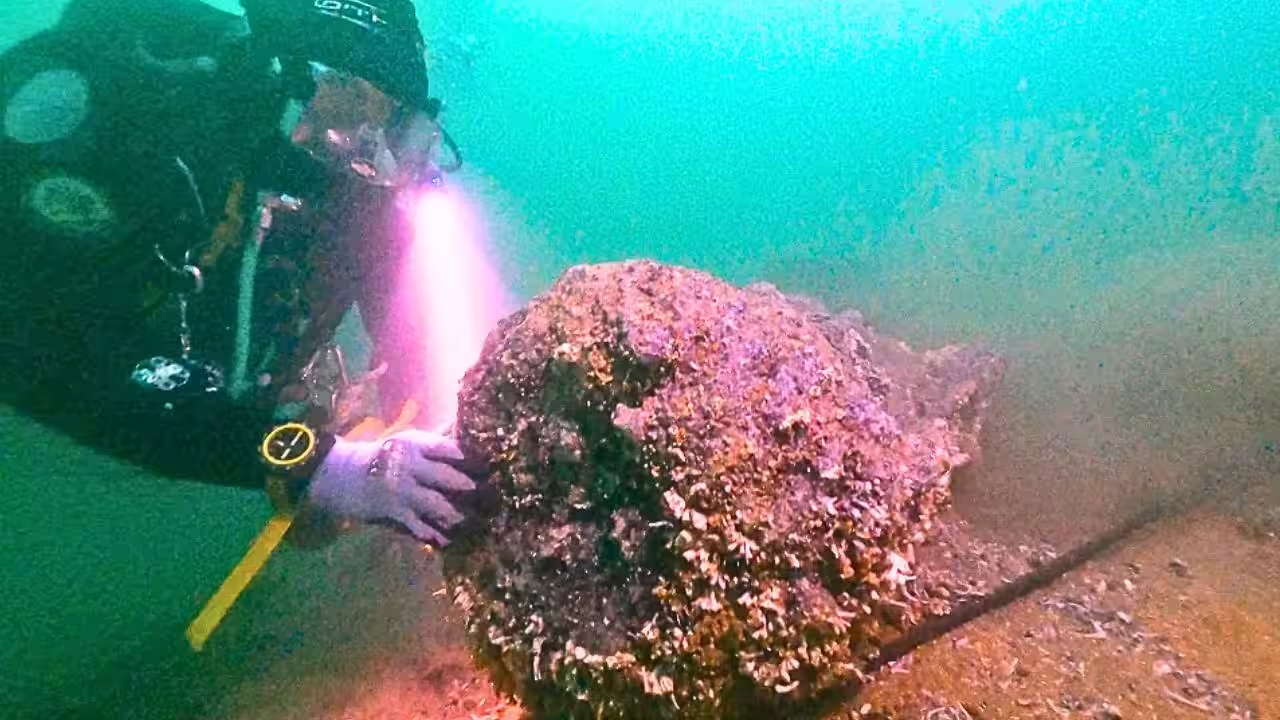
Divers surveying the wreck of a 320-year-old English warship have discovered an unopened wooden chest, exceptionally well-preserved ropes, wooden decks and other objects on the seabed off the Kent coast.According to Historic England, the Northumberland, a 70-gun warship built in Bristol in 1679, sank during the Great Storm of 1703 on the treacherous Goodwin Sands. A survey funded by Historic England revealed that a much larger section of the ship may have survived on the seabed.However, shifting sands, strong currents and marine organisms continue to threaten the wreck. As more of its structure becomes exposed, the fragile site faces an increasing risk of deterioration. The discoveries could help researchers understand shipbuilding and life at sea during the Stuart period.Northumberland wreck reveals wooden chests, preserved ropes and multiple decksThe survey work revealed extensive remains of the Northumberland, including exposed deck planks, the wooden frame of the ship and evidence of multiple wooden decks. Divers also found exceptionally well-preserved organic material, including coils of rope lying on a timber deck. Several wooden chests were discovered, some containing musket balls, while one remained completely sealed with its contents unknown.The survey also confirmed seven iron cannons at the south-eastern end of the wreck site, with another six further north. Other finds included part of a wooden gun carriage, swords, muskets and copper cauldrons. The objects remain in situ on the seabed.How the Northumberland warship sank off the Kent coast in 1703The Northumberland was built in Bristol in 1679 as a Third Rate warship carrying 70 guns. Its construction formed part of Samuel Pepys' efforts to regenerate the English Navy. The ship sank on 26 November 1703 during the Great Storm, which struck the Goodwin Sands off the Kent coast. Three other warships, the Restoration, the Stirling Castle and the Mary, were also lost during the storm. The location of the Mary has yet to be determined. All four ships belonged to Queen Anne's fleet. Queen Anne was the last Stuart monarch and reigned from 1702 to 1714. The Northumberland wreck provides evidence of naval history from this period.Why the Northumberland shipwreck remains at risk despite centuries of preservationThe Northumberland lies across a large area of seabed at a depth of 15 to 20 metres. Although marine deposits and seabed sediments have helped preserve wooden structures and other organic materials, the wreck remains vulnerable to changing conditions. Shifting sands, strong currents and marine boring organisms continue to make the site unstable.More of the ship is becoming exposed, increasing concerns about its deterioration. The wreck was first designated a Protected Wreck Site in 1981 and has been listed on Historic England's Heritage at Risk Register since 2017.Licensee Dan Pascoe regularly monitors its condition as part of ongoing fieldwork supporting the protection of England's 57 Protected Wreck Sites on behalf of the Department for Culture, Media and Sport.The Northumberland wreck could bridge the gap between the Mary Rose and HMS VictoryThe extent of the surviving structure makes the Northumberland a potentially important source of information about wooden warships built during the Stuart period. Historic England's Marine Team Leader, Paul Jeffery, said, “The completeness of the Northumberland wreck site is remarkable. Historic England’s diving work is so important to ensure we continue to record what we can of this site. It is a race against time as more of the Northumberland wreck becomes exposed”.Dan Pascoe said the ship has the potential to become one of the best-preserved wooden warships in the UK. Historian Dan Snow, founder and creative director of History Hit, also highlighted its historical significance. He described the wreck as a missing link between the Mary Rose and HMS Victory, saying it could help fill gaps in knowledge about shipbuilding and life at sea during a pivotal period in British history.You use AI every day. Now get your AI Quotient. Take the AIQ test.
Topics in this story
Gathered from external sources. Rights to this text belong to whoever originally published it.