5 takeaways from Trump and Xi’s ‘Made for TV’ summit
President Trump and Chinese President Xi Jinping concluded a lavish three-day summit in Washington, D.C., Friday, pledging to meet at least two more times this year. It was one of the few, solid commitments announced during the meetings, which saw other high-stakes issues fall to the background. This includes negotiations over artificial intelligence regulation, long-term…
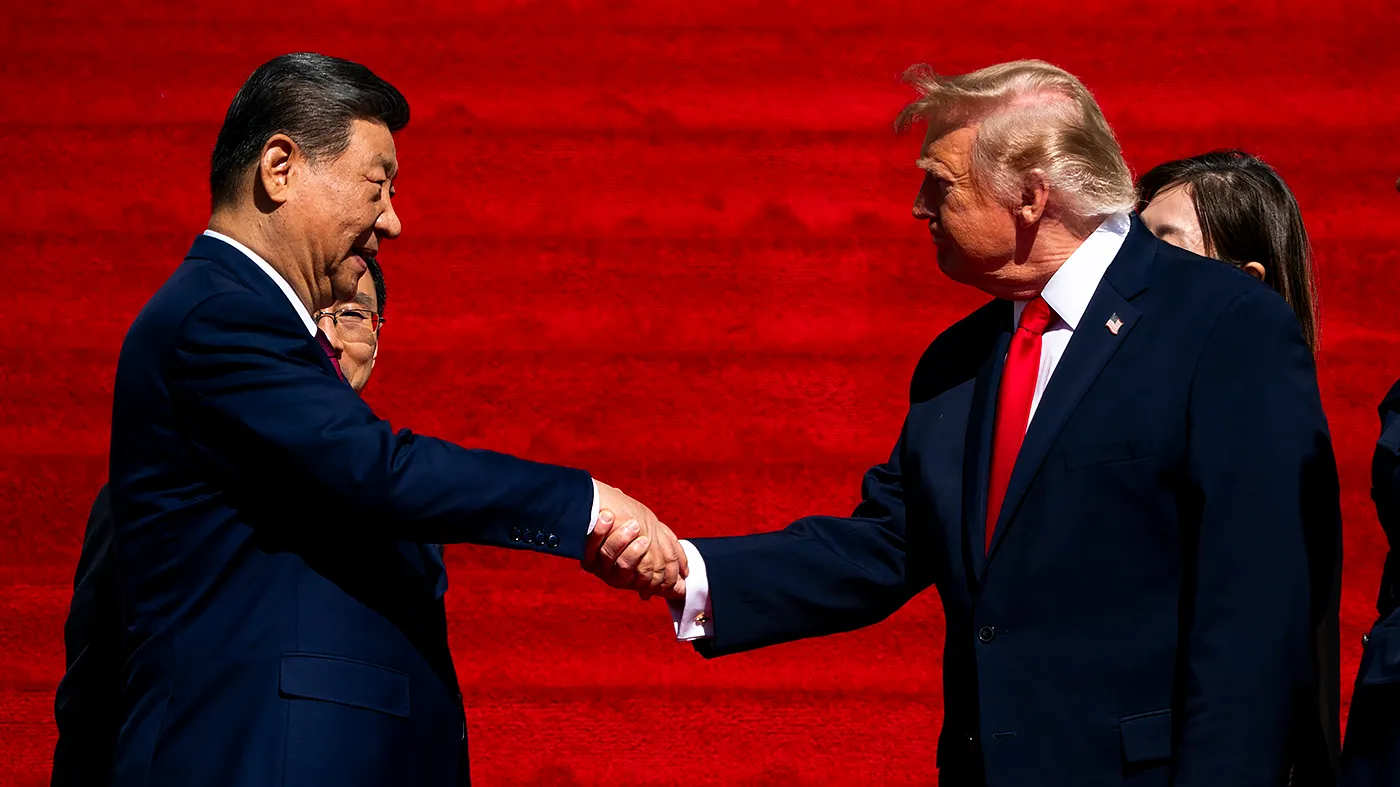
President Trump and Chinese President Xi Jinping concluded a lavish three-day summit in Washington, D.C., Friday, pledging to meet at least two more times this year .
It was one of the few, solid commitments announced during the meetings, which saw other high-stakes issues fall to the background. This includes negotiations over artificial intelligence regulation, long-term trade agreements, Taiwan’s security and the release of Americans detained in China.
The president’s supporters describe Trump’s hosting of Xi as handling America’s chief adversary and toughest competitor responsibly — maintaining good, if not close, relations and continuing the conversation.
But critics are outraged that Trump afforded the rare honor of a state visit to an authoritarian leader looking to usurp America’s position as the global leader and trample on democratic freedoms.
Here are five takeaways from Trump’s summit with Xi:
On surface, more pomp and circumstance than substance
Xi’s arrival in the U.S. Wednesday kicked off an extravagant three days of ceremonies.
The president took the rare and unusual decision to meet Xi on the tarmac of Joint Base Andrews in Maryland, laying out a red carpet, bringing along an honor guard and experiencing the power of a B1 bomber flyover at low altitude.
Trump showed off his favorite things to Xi: the construction projects around the White House, including the paved-over Rose Garden, the granite helicopter pad, the controversial ballroom. And he took an opportunity to disparage his predecessor, pointing out a framed photo of an autopen he says represents former President Biden among portraits of U.S. presidents.
An opulent dinner capped off the events, with more than 100 invited guests including the titans of the tech world representing Amazon, Nvidia, X and others.
Trump largely shielded Xi from the press, a noticeable departure from the president’s freewheeling Oval Office meetings with other heads of state.
Xi tightly controls speech in his country, jailing political opponents or any perceived enemies, including U.S. citizens. He’s accused of carrying out a campaign of genocide against the Uyghur Muslim minority.
“Everything has been done to the highest order of perfection and there’s thought in every little detail, and it’s greatly appreciated,” Xi said during tea with Trump and their wives, as an instrumental version of “Stand By Me” played serenely in the background.
Members of the press were ushered out at the conclusion of the remarks.
On trade, Treasury Secretary Scott Bessent said Wednesday before the summit began that the U.S. and China had agreed to extend their trade truce for two months. He told Fox News’s Bret Baier that the extension is to “give us more time to see what we can do on the economic front.”
Nothing more on that note was announced.
Anti-Xi protests make waves outside of White House
Despite the limited opportunities for the press to ask questions, protesters outside the White House succeeded in having Xi hear their chants for a free Hong Kong and a free Tibet.
Outside Xi’s hotel and along his driving route, signs included Xi’s face with “END CCP!” written across the bottom, referring to the Chinese Communist Party. Another featured a picture of Trump underneath an umbrella with “communism has no place in America” written in white.
Protesters were gathered along a fence outside of Lafayette Park and could be heard from the White House’s North Portico as Xi made his arrival for the state dinner.
The demonstrators shouted that Xi was not welcome in the U.S. and advocated on several issues, including freedoms in Tibet and Hong Kong and keeping China out of Taiwan.
The Associated Press reported that some protesters also congregated outside the Chinese Embassy before marching through Washington.
Trump, who has taken to calling AI “super intelligence” or SI, said Wednesday that it would be a “big topic of discussion, but I want to leave it exactly where it is.”
But Xi said Thursday that the U.S. and China have an obligation to manage the development of AI as “leading nations” in the industry.
“We have both the capability and responsibility to develop and manage AI for good and ensure that the development of AI is always under human control and serves the well-being of the people,” Xi said in the White House’s Grand Foyer.
A readout of Trump and Xi’s meeting from the Chinese said that Xi told Trump that the two countries “may have competition, but they may cooperate even more.”
“AI must be kept under human control. A people-centered approach should be upheld, and AI should be developed for the positive and for good, so that AI will serve the progress of humanity,” the readout said .
Some of AI’s biggest names were in attendance at Thursday’s state dinner, including OpenAI’s Sam Altman, Nvidia’s Jensen Huang and Alphabet’s Sundar Pichai.
Accusations of China aiding Iran in war loom
Trump was under scrutiny from lawmakers in both parties for the lavish visit, particularly because of accusations China has helped Iran in the war against the U.S.
The backlash came after The Wall Street Journal reported Thursday that Iranian customs data showed Chinese entities made thousands of shipments in components that have been used in drones and missiles.
Additionally, senators were informed of growing military cooperation between Iran and China at a closed-door national security briefing Thursday. Republican and Democratic senators, in turn, called on Trump to confront Xi on the matter.
U.S. Ambassador to China David Perdue told CNBC in an interview that Trump raised the issue during his meeting with Xi on Thursday.
“We made it very clear to them weeks ago that any help that they would give Iran, whether it be direct or indirect, whether it be intelligence or parts or military equipment, was totally unacceptable,” Perdue said.
“President Trump made that very clear again yesterday,” he continued. “This is an ongoing drumbeat that we have made very clear to them.”
Chinese press clash with White House staff
Tensions were already running high in the run-up to the state visit between the U.S. press and the White House over Trump’s decision to ban three outlets from covering the White House.
However, tensions were also running high between White House and Secret Service staffers and the Chinese press during the state visit.
Videos shared online by journalists at the White House showed Chinese journalists appearing to refuse to move for the Secret Service on the South Lawn. The refusal of the Chinese journalists resulted in Secret Service staff physically having to move them out of the way.
White House staff were also seen repeatedly trying to keep Chinese journalists out of the camera shots of other journalists during the Rose Garden military review.
This is not the first time Chinese reporters have clashed with U.S. staff. The New York Post reported that a Chinese journalist trampled a White House aide during Trump’s visit to Beijing in May.
Topics in this story
Gathered from external sources. Rights to this text belong to whoever originally published it.