Missionaries are still going to Africa. But for African Christian leaders, it is the West that needs help
Two years ago, Nigerian pastor Jerry Eze arrived in London to lead a prayer conference at Twickenham — the world’s largest rugby stadium — and immediately wondered whether he had picked the wrong place.
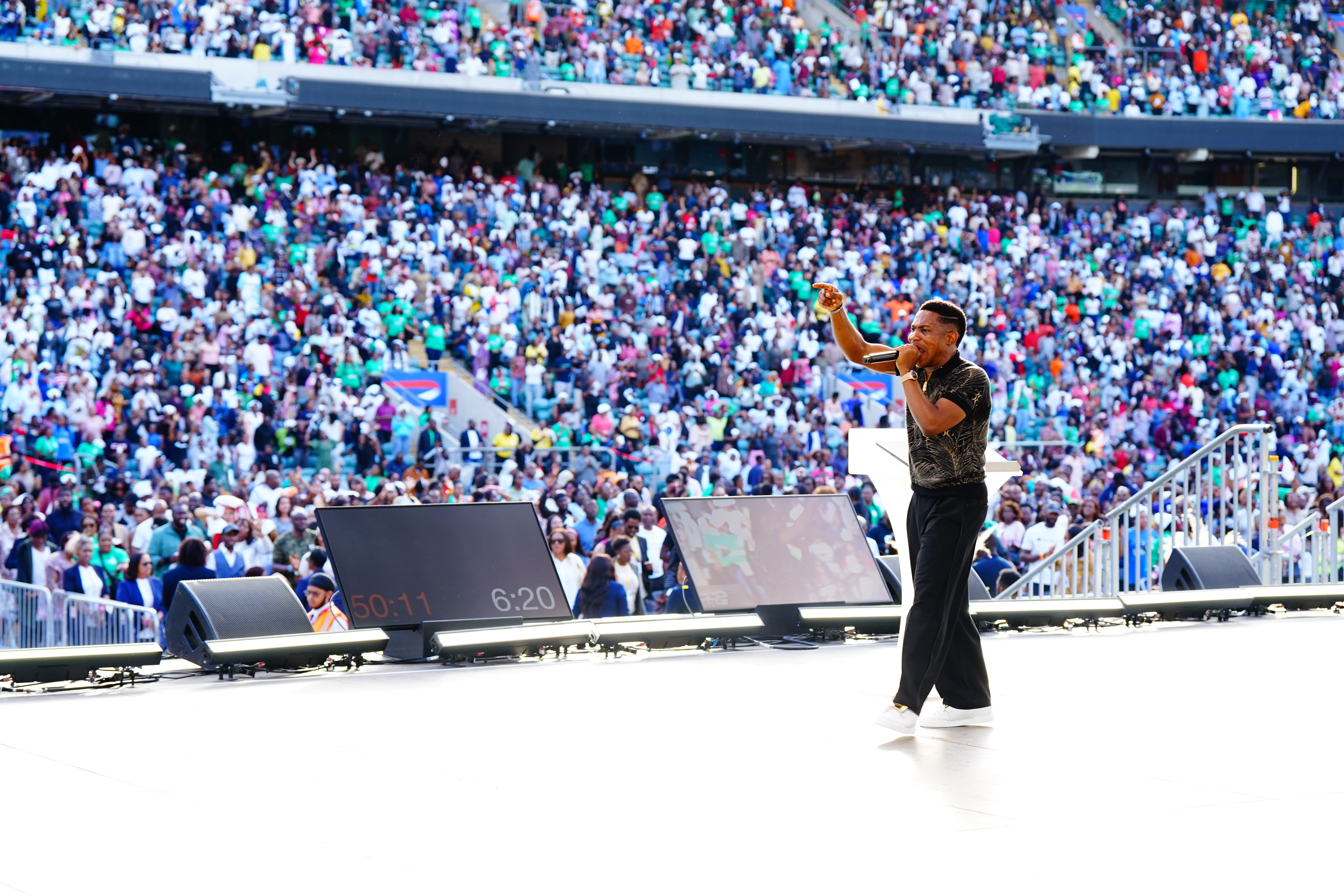
Two years ago, Nigerian pastor Jerry Eze arrived in London to lead a prayer conference at Twickenham — the world’s largest rugby stadium — and immediately wondered whether he had picked the wrong place. The event had yet to begin, and the 82,000-seat arena appeared even larger than he had imagined, with rows of empty seats stretching out before him. But as the start time approached, worshippers began to arrive, filling the seats one by one. Soon, the vast stadium was packed — not with rugby fans or concertgoers, but with thousands who came to pray with an African preacher. When Eze stepped onto the stage and faced the crowd, he told CNN he felt a mix of nerves and gratitude — praying he would fulfill what he believed was God’s purpose for him there. Eze reaches a global audience through daily prayer broadcasts on YouTube. To him, what happened at Twickenham showed how Christianity is changing around the world. For generations, Christian mission flowed primarily from Europe and North America to Africa. Missionaries often arrived alongside European militaries, closely linking Christian mission with colonial rule in the minds of many Africans. Their presence is still felt – the United States remains the world’s largest missionary-sending country by far, according to the World Christian Database. Only last month, American missionary Kevin Rideout was released after nine months in captivity in Niger, where he worked with SIM International, a Christian mission organization that has operated in the country for more than 100 years. But now the traffic is two-way. A new generation of African Christians is challenging that old pattern, spreading the gospel in the opposite direction. “When I was growing up, the common picture of a missionary was a Westerner coming to Africa,” Tshepang Basupi, the Southern Africa director of Africa Inland Mission, told CNN. “Today, we have Africans going to other parts of Africa, to Asia, to Europe and to North America.” Basupi, who is from Botswana, leads more than 100 missionaries and helps recruit Africans for cross-cultural mission work. Many are finding their style of preaching is highly popular among the African diaspora in Europe and North America, where they satisfy a hunger for a different kind of Christianity. Rather than bringing a new religion to a population, these missionaries are bringing a new style of religion to places they see as having lost the fervor that they see at home. Eze describes himself as “a missionary to the West,” and says this influence comes partly from the way Africans practice Christianity. “For us here in Africa, it is the fervency and the zeal with which we do it. There’s an African passion and stamina,” he said, adding, “the fire is leaving the West.” From Africa to the world This movement is not new, but it has grown as Christianity spreads in Africa. In 2008, about 18,400 African missionaries had served abroad, according to one estimate. Although more recent data is not available for direct comparison, a 2024 report by the Lausanne Movement, using World Christian Database data, found that missionary activity is now much more global, with Nigeria alone sending an estimated 20,000 missionaries abroad in 2020. CAPRO, a mission group from Nigeria, says it has over 800 missionaries from more than 27 countries working in 46 nations worldwide, including Canada, where its teams evangelize among indigenous communities. Dondo Iorlamen, the international director of CAPRO, believes Africa is well-positioned to send missionaries because Christianity is growing stronger there. “Africa and Asia are the leading mission-sending regions in the world,” he said. The mission is not only about bringing people back to faith. Some African Christians also see it as a way of restoring Christian values they believe the West has moved away from. Harvey Kwiyani, a Malawian theologian based in England who studies African Christianity and its role in the West, said this includes conservative views on sexuality, as well as differences over everyday life, such as going to pubs, which some African Pentecostals consider incompatible with Christian life. “The Africans are coming in to re-evangelize Westerners so they can go back to what they consider Christian values,” he told CNN. But Kwiyani is skeptical about how successful that effort will be. He says the West has, to a great extent, “moved on from Christianity,” and many people there no longer consider themselves religious. “Christianity itself is a very demanding religion,” he said. “It requires you to sort of shift your culture so you can be shaped by this golden spirit that most Westerners don’t really want to deal with at the moment.” The growing movement of African Christians into the West is sometimes described as “reverse mission.” But Basupi rejects that idea. “‘Reverse mission’ assumes that mission belongs to the West and that Africa is simply reversing the direction of Western missionary movement,” he said. “Mission is not for the West only; it is for every believer.” Why the West? Eze says African missions are increasingly looking to the West because many churches there are shrinking and fewer people identify as religious. The decline is visible across Europe. A 2025 Pew study found that 67% of people in Europe were Christian in 2020, compared with 75% in 2010. In North America, 63% were Christian in 2020, versus 77% in 2010. The US has also seen a decline in the number of Christians. Pew’s latest Religious Landscape Study found that 62% of US adults identified as Christian in 2023-24, while 29% had no religious affiliation. In sub-Saharan Africa, the number of Christians grew 31% between 2010 and 2020, reaching 697 million, according to Pew. It is now home to the world’s largest Christian population. Eze sees those changes as evidence of a spiritual need that African Christians can help address. “These are the people who showed us God,” he said. “But Christianity is declining there.” He believes “the baton of revival is in Africa right now” — and that African Christianity has something the West needs. “God has given us something we call the miraculous. It is our currency. It is something they are looking for,” he said, describing a strong emphasis many African Christians place on prayer, healing and the supernatural. Nigerian pastor William Kumuyi, whose Global Crusades have taken his ministry to countries across several continents, sees those qualities as a wider feature of African Christianity. “Christianity in Africa is characterized by unreserved faith, fervent prayer, and reliance on God’s supernatural intervention,” he said, adding that African churches can offer Western societies “a rekindled passion for the authority of Scripture, holiness of life, and expectancy for miracles.” But reaching the West doesn’t always mean reaching large numbers of Westerners. African churches in the West often serve migrant communities. A 2021 study by the World Council of Churches found that migration is contributing to the growth of minority churches in some European countries. “They are not growing among the Whites. They are growing among the migrants, especially Africans,” said Iorlamen. Eze, whose ministry has churches in the US, UK, and Canada, said many who attend his conferences are Black, but some are White as well. Kumuyi said the goal is to reach beyond diaspora communities. “While diaspora communities often provide an initial entry point, our clear objective is never to build ethnic enclaves,” he said. “In the Canadian cities of Granby, Toronto, and Hamilton, as well as outreaches across Asia and Oceania, the focus is the broader host population.” A changing mission, with old baggage The changing direction of Christian mission is also challenging the old idea of what a “missionary” is. Iorlamen says the word still carries the weight of Africa’s colonial past. “Some people don’t like it,” he said. “It reminds them of colonialism and the offenses some missionaries committed — conniving with the colonial masters to enslave people.” Basupi says the growing role of African Christians in global mission does not mean Western missionaries are no longer needed in Africa. “There is room for everyone,” he said. “We should come as equal partners and fellow servants, learning from one another and contributing where we are needed.” Two years after Twickenham, Eze is preparing to return to Britain for a conference at Manchester’s Old Trafford stadium, with nearly 100,000 people registered, he said. Whether that reflects a revival among Western populations or the strength of Africa’s Christian diaspora, Eze sees it as a new chapter. “They preached God to us. We accepted Him and wanted to know Him. Now, we’re going back to show them what He can do.”
Topics in this story
Gathered from external sources. Rights to this text belong to whoever originally published it.