'Goat', 'cow' or 'bibi': Taliban's latest crackdown strips Afghan women of their names
The Taliban authorities in Afghanistan’s northern Balkh province have reportedly banned the use of women’s names on official documents, including medical
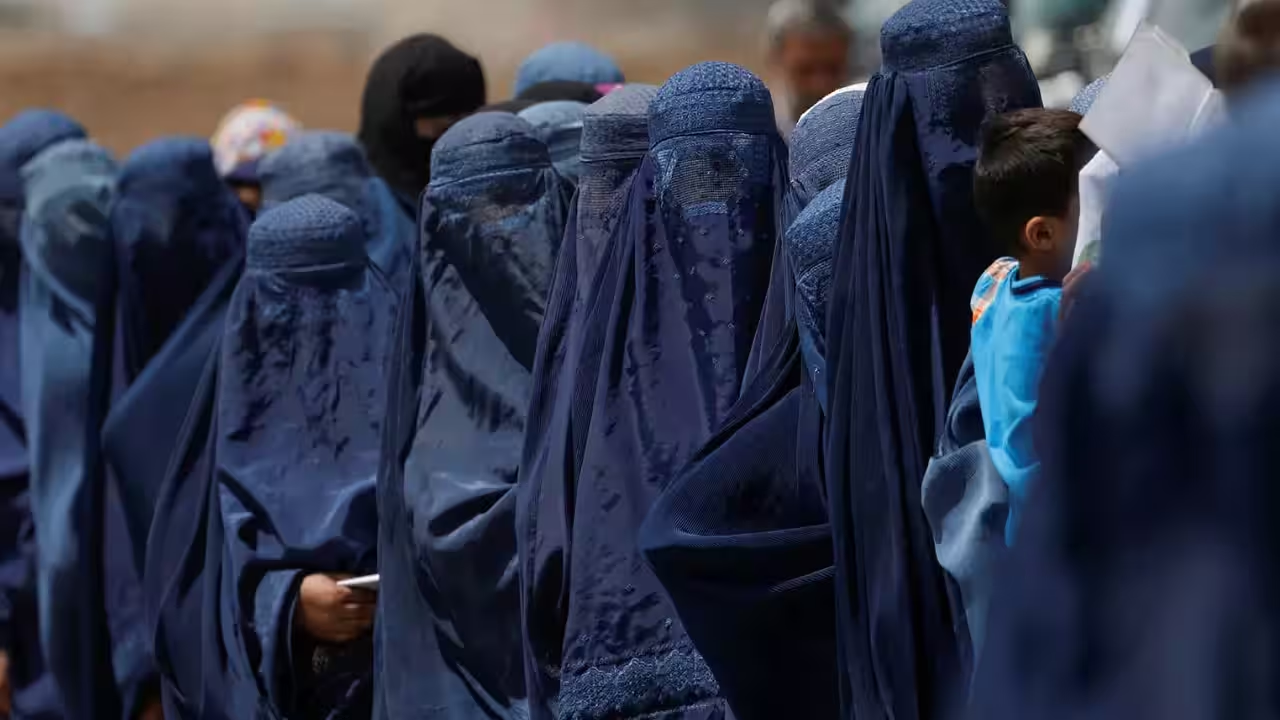
The Taliban authorities in Afghanistan’s northern Balkh province have reportedly banned the use of women’s names on official documents, including medical records and prescriptions. Healthcare workers have also been instructed to address female patients as “Bibi”, meaning grandmother or old woman.The reported order, highlighted by Spanish newspaper El País and based on accounts cited from Afghan outlet Zan Times and The Guardian, has raised concerns that the restriction could be extended to other parts of the country.According to the reports, hospital staff and other public employees in Balkh have been told not to use women’s names. Afghan women’s rights activist Lalah Osmany, based in Germany, told El País that testimonies from women, doctors and civil rights activists indicated that some women were also being addressed in degrading terms such as “goat” or “cow”.“This is a systematic process of dehumanization,” Osmany told the newspaper.An Afghan activist speaking under a pseudonym also confirmed the reported order to El País, although she said it had so far been ignored.Zubaida Akbar, who heads the Afghanistan programme at women’s rights organisation Femena, warned that the restriction could eventually become nationwide. She pointed to previous instances in which measures introduced locally were subsequently expanded across Afghanistan. Femena has documented more than 144 decrees restricting women’s rights, according to El País.The reported move comes amid wider restrictions imposed on women since the Taliban returned to power in 2021. Girls have been barred from education beyond the age of 12, while women have been excluded from most professions and face restrictions on speaking in public.The restrictions have also affected access to healthcare. In several provinces, male doctors have reportedly been barred from treating female patients. Women are among the few groups permitted to work in healthcare, but the Taliban banned women from training in medical fields in December 2024.UNICEF has warned that the restrictions have created a “dual crisis”, as trained women healthcare workers leave or retire without younger women being allowed to replace them.A 2024 UN report also highlighted difficulties Afghan women face in obtaining civil documents. Women generally need a male chaperone to complete the process, creating barriers for those in women-led households or those whose male relatives cannot accompany them. Such documents are often necessary to access healthcare, education, humanitarian assistance and banking services.Despite the restrictions, some women continue to operate underground businesses and secret schools. In an Associated Press report published on November 17, a Kabul beauty salon owner, whose identity was withheld for her safety, said: “But now, they won’t even allow that; for women in Afghanistan, working has become a crime.”An assistant teacher at a secret school told the AP: “We are absolutely terrified of that possibility,” referring to the prospect of arrest.You use AI every day. Now get your AI Quotient. Take the AIQ test.
Topics in this story
Gathered from external sources. Rights to this text belong to whoever originally published it.