In 1980, an 8-year-old found $5,800 of D.B. Cooper’s ransom money buried in Columbia River sand; 28 years later, the decayed $20 bills sold for more than $37,000
US News: In February 1980, eight-year-old Brian Ingram discovered packets of $20 bills tied to D.B. Cooper's infamous hijacking. This article explores the extraordinary find, the investigation that followed, and the surprising auction sale decades later.
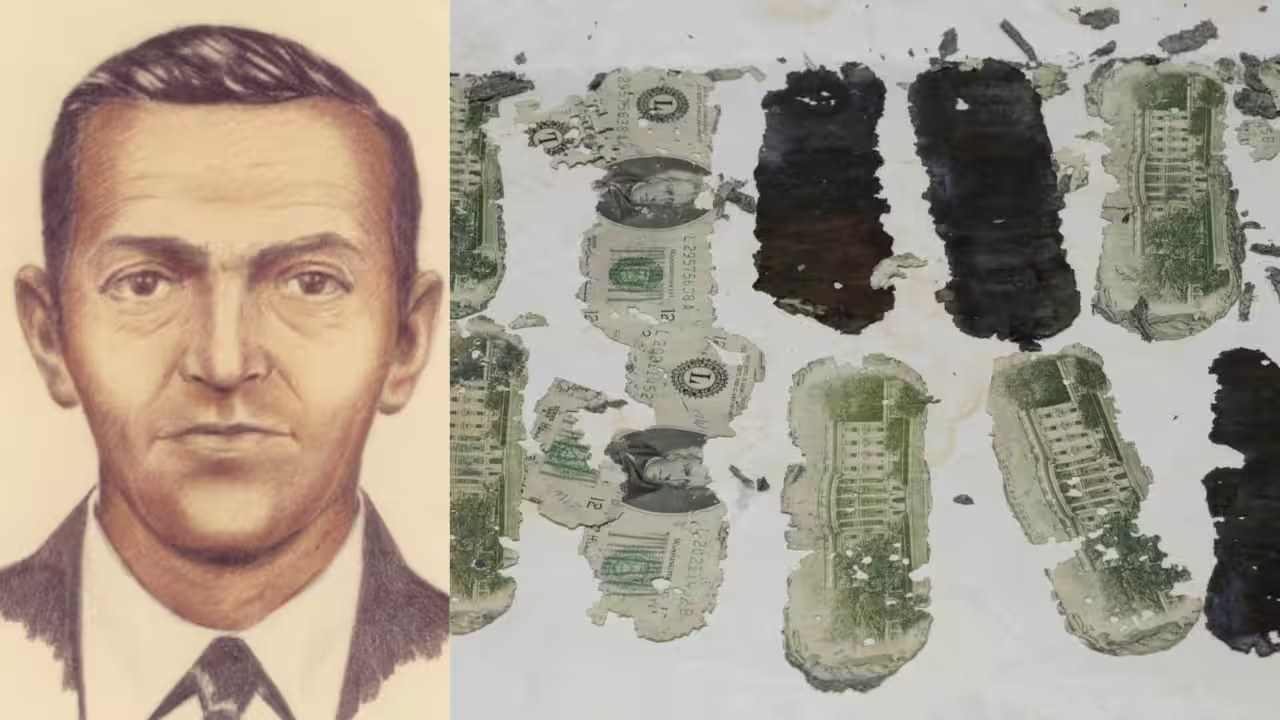
Eight-year-old Brian Ingram was raking sand for a family campfire on the Washington side of the Columbia River on February 10, 1980, when he uncovered three deteriorating packets of $20 bills. The money had been part of the $200,000 ransom paid to the hijacker known as D.B. Cooper in 1971, and the total value of the recovered bills was $5,800.Ingram was picnicking with his parents and relatives at Tena Bar in Clark County when he found the money buried several inches to several feet below the sand. Some bills were black or almost unreadable, while others had deteriorated to pieces. The family initially did not know whether the money was genuine.Investigators compared the serial numbers with records made by Seattle First National Bank before the ransom was handed over to Cooper. The bureau confirmed that the bills came from three ransom packets; two containing 100 $20 bills and another containing 90. The packets had originally been given to Cooper after he hijacked Northwest Orient Flight 305 on November 24, 1971. The discovery was the first confirmed piece of Cooper’s ransom found since the hijacking, and also produced a new question that investigators could not answer: how had part of the money travelled from wherever Cooper lost it to a sandbar along the Columbia River?The FBI could not establish how the money arrivedInvestigators searched the area after the discovery and found additional fragments, with some being several feet beneath the sand. The FBI brought in a backhoe along with specialists in soil, archaeology and river currents to examine the site. The paper had spent years exposed to water and sediment, and the original packaging was gone. FBI investigators considered the possibility that the ransom had reached the site through water movement rather than being deliberately buried there.HistoryLink’s account notes that the FBI never established with certainty how the money reached the riverbank. One theory was that a bag containing the ransom had been carried downstream before breaking apart, while former FBI agent Ralph Himmelsbach believed that the bag may have been close to a stream and later moved by high water before deteriorating.Tena Bar was on the Washington side of the Columbia, while Cooper’s exact landing point after he jumped from the aircraft was never determined. He had left the plane somewhere over southwestern Washington during the night of the hijacking. The ransom had been assembled in $20 bills because investigators wanted to make the money heavy enough to make the escape more difficult. Cooper received the cash along with four parachutes and ordered the plane toward Mexico, and then disappeared from the aircraft during the flight.The damaged bills became collectiblesThe FBI, Ingram’s family, Northwest Orient Airlines and the airline’s insurer all had claims connected to the bills. In 1986, a proposed court judgment divided the proceeds between the parties, with the FBI retaining a small amount as evidence and Ingram receiving a share. The money stayed with Ingram for years, and by 2006, he was preparing to sell portions of the collection. He eventually selected PCGS Currency to authenticate the bills before an auction.15 of the recovered bills were sold through Heritage Auction Galleries in Dallas for $37,000 in September 2008, according to HistoryLink’s account. The sale price was two to three times higher than expected, and some of the notes still carried initials made by investigators who had examined them after the discovery. Many of the original notes were too badly damaged to retain much physical integrity, and the recovered money had already been divided through the earlier legal settlement.The FBI ended its active investigation in 2016 after more than four decades of searching for the hijacker, but the Columbia River money remains one of the clearest physical links to the ransom. The bills that an eight-year-old pulled from the sand in 1980 were severely damaged yet some survived long enough to become auction pieces nearly three decades later.Catch the latest World News and Live updates. Download the TOI app.
Topics in this story
Gathered from external sources. Rights to this text belong to whoever originally published it.