In 2015, after a fight with his parents, 14-year-old Andrés Cantó began digging; six years later, his cave had a bedroom, Wi-Fi and a sound system
After a family dispute, 14-year-old Andrés Cantó dug a cave in his garden, turning it into a remarkable underground home with modern amenities. Discover the journey and construction of this unique living space.
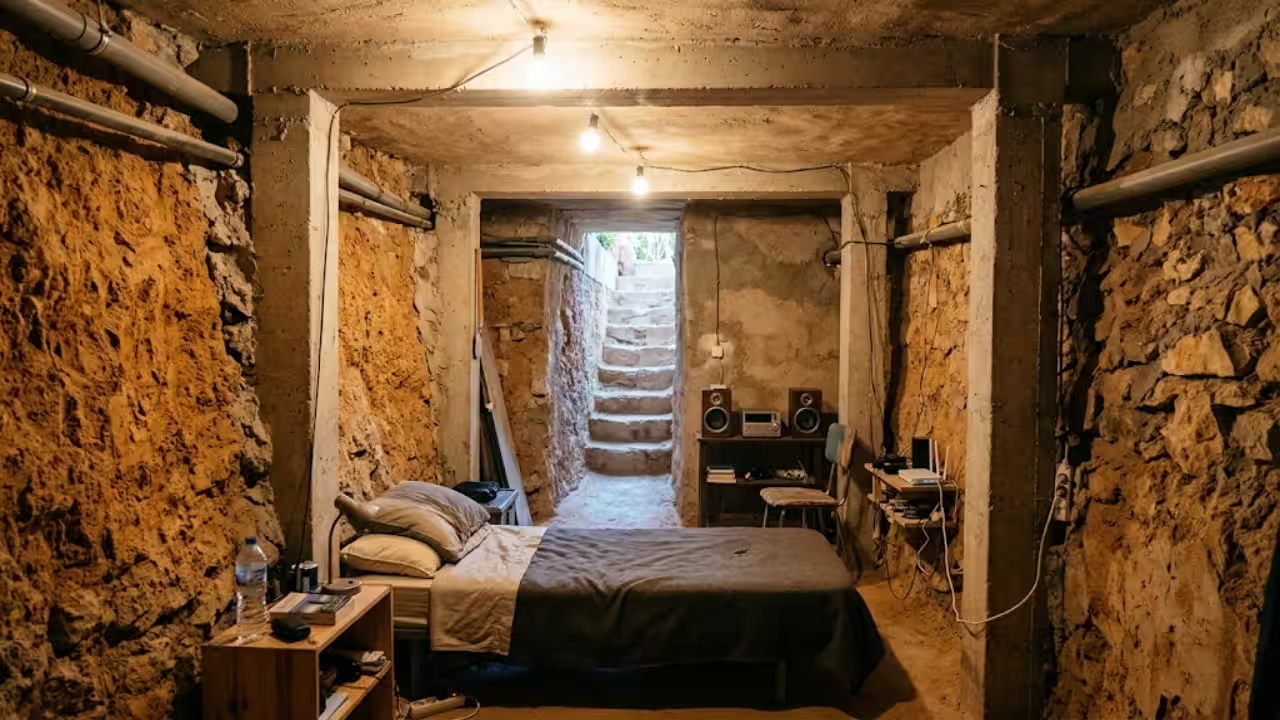
When a family dispute arises, the majority of teenagers either shut a door or hide behind headphones. Some find a more tangible way to express themselves. After a fight at home in March 2015, 14-year-old Andrés Cantó took up a pickaxe and began excavating a hole in his family's garden in Alicante, Spain. Six years later, he had a cave home with a bedroom, heating, Wi-Fi, and a music system, and word of his underground sanctuary had spread worldwide.Living underground is a recognized building technique. According to the US Department of Energy, earth-sheltered homes are less affected by severe external air temperatures than conventional houses because earth temperatures do not vary as much as air temperatures. Canto wasn't thinking about any of that. What started out as an outlet for aggravation slowly morphed into a building project, and it is worth examining how this came to be, what the final area contains and what a project like this actually requires.A tantrum that became a projectAccording to Business Insider, the argument behind it all was small. Cantó’s mother wanted him to change his clothes before he went out with friends; he refused, and he ended up stuck at home. He later described the moment as a childish tantrum. Instead of sulking in his room, he took a pickaxe into the garden. He also said he was bored and alone in his neighbourhood and had wanted to do something athletic for a while, so the row simply gave him the push.For the first three years he had no grand scheme. He said he merely wanted to see how deep a hole he could dig and went back to it most afternoons. Fox News reported that the job was done by hand with a makeshift pulley system, and NPR was among the outlets that covered the story in May 2021. The breakthrough occurred in 2017, when Cantó discovered the pit could be a proper dwelling area. His best friend, Andrieu, lent him a pneumatic drill and showed up most afternoons to help. In about a year the couple had quadrupled the depth from some five feet (1.5 metres) to eleven feet (about 3.4 metres). That change of plan is where the hole stopped being a hobby and started being a home.Contents of the caveIn 2021, the room featured a stairway leading down to a corridor with heating pipes and a coat rack. Beyond it is a room with seating and a sound system, an oven in the middle and a bedroom with a single bed, shelving and room for four friends to sit. Cantó himself installed the Wi-Fi, and he told Business Insider he spends up to five hours a day down there. Most weeks friends come around. His parents are less excited and keep asking if he’s finished yet.It was built cheaply. Zenger News reported a total cost of roughly $60, with the roof and walls strengthened with concrete and columns. The cave is not flawless.It periodically floods, and insects, spiders and snails get in; however, Cantó has said he does not mind sharing the space and lets them move elsewhere in the wall. He also told Business Insider that he is thinking about adding a jacuzzi next.Digging safely undergroundAnyone considering a similar project should first review the hazards and consult a qualified professional. OSHA, the US workplace safety organisation, describes excavation and trenching as one of the most dangerous construction activities. It says cave-ins are the greatest threat and are far more likely than other excavation incidents to cause death. The information sheet requires protective devices in trenches five feet or deeper unless the dig is totally in stable rock. Once a trench is 20 feet deep, an engineer is to design the protection. It also states spoil and heavy equipment should be kept at least two feet from the edge, trenches should be inspected after a rainstorm, and workers should test for low oxygen and know where subsurface utilities run. Those safety requirements are relevant to any hand-dug excavation, including a family garden.Soil and water are equally important. The Department of Energy advises that the greatest long-term difficulty with underground dwellings is moisture, that sand and gravel are better for earth sheltering than clay, and that ventilation must be carefully planned. That matches well with Cantó’s flooding and his bug visitors. The same advice suggests an earth-protected house can cost up to 20% more to build than a conventional one, which puts into perspective his claimed $60 budget.Andrés Cantó’s story is, above all, one of patience. A 14-year-old began excavating in Alicante in March 2015 during a family row and continued for over six years, ending up with a cave house with a bedroom, wifi, heating, an oven and a sound system. It cost very little money, a tremendous amount of time and a decent level of risk that expert builders would get away with engineering and inspections. The project carries real risks if treated as a living space. Cantó himself says the painful memories that triggered it have faded.You use AI every day. Now get your AI Quotient. Take the AIQ test.
Topics in this story
Gathered from external sources. Rights to this text belong to whoever originally published it.