Nepal floods death toll tops 900, as number of missing nearly doubles to more than 4,200
More than 900 people were killed by the devastating flooding in Nepal, officials in the south Asian country said Monday as the number of those listed as missing almost doubled to 4,247, including 592 foreign nationals.
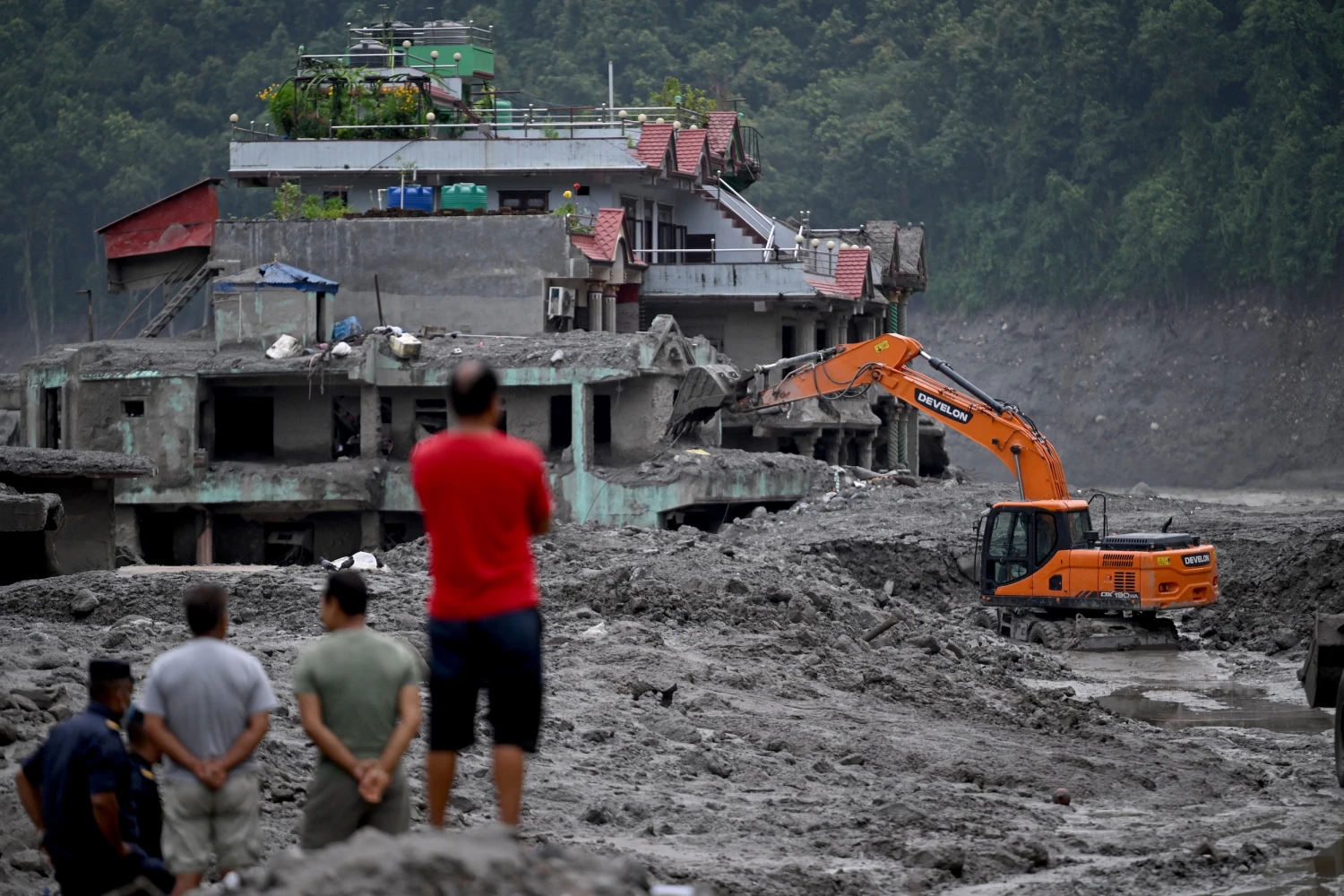
More than 900 people were killed by the devastating flooding in Nepal, officials in the south Asian country said Monday as the number of those listed as missing almost doubled to 4,247, including 592 foreign nationals. The government “has mobilized all available resources and efforts at its disposal for search, rescue, and relief and recovery operations,” a spokesperson for the Nepali Foreign Ministry told a news conference Monday, before thanking a number of countries including, Qatar, the United Kingdom, Australia and Japan for helping out with relief efforts. “So far, 903 bodies have been recovered,” the spokesperson said, adding that 10,000 people had been rescued, including 323 foreign nationals. Separately, Nepal’s disaster agency said 4,247 people were missing as of 1 a.m. ET Monday. On Saturday, the country’s Foreign Minister Shisir Khanal put that figure at 2,400. State Department spokesperson Tommy Pigott told Fox News that about 85 Americans were still unaccounted for as of 5 p.m. Sunday. The State Department, he said, had “activated $3.6 million in humanitarian assistance, including lifesaving food assistance.” He added that the U.S. had “surged consular assistance to this area to make sure we are able to provide 24/7 support to Americans that need it out of our embassies in Beijing and Kathmandu.” In Nepal, rescuers continue to struggle to reach devastated communities days after the massive flooding that stemmed from a glacier collapse near the country’s northern border with China’s Tibet region Wednesday. Describing the disaster as “overwhelming,” Ferrin Cole, an operations director at Crisis Response International, a South Carolina-based relief organization, told NBC News on Sunday that “the flood that came down that mountain just wiped out cities.” “We’re going in as fast as we can to get people the help that they need,” he said. The disaster has affected more than 90,000 people, according to the Nepal Red Cross. Morgues in the country have been overwhelmed and in Chitwan district, which sits 125 miles from the disaster zone, authorities dug hundreds of graves in a forest at Devghat for bodies swept downstream from the flood-hit Rasuwa region. “We were left with no other option,” Ganesh Aryal, chief district officer of Chitwan told Reuters. “Our concern was the risk to public health posed by the rapid decomposition of the bodies.” “More than half” the bodies recovered there were “beyond recognition,” he added. Elsewhere rescue teams were attempting to reach the 933 workers believed to be trapped at 11 hydropower projects in the hard-hit districts of Rasuwa and Nuwakot. Pictures and videos shared by rescue teams showed earth-moving equipment digging and shoveling mud and rocks under lights in the dark of the night in a bid to find the workers many whom were thought to be in about half a dozen tunnels. The Nepali army told the Associated Press that search-and-rescue teams were using controlled blasts, excavators and searchlights to clear water. China has separately reported 16 deaths and 546 people missing in its Tibet region, including hundreds of foreigners. It is unclear how much overlap there is between the Chinese and Nepali missing-person counts. China’s state television CCTV attributed the disaster to “glacier instability resulting from the long-term effects of climate warming,” in a report Sunday. “It struck suddenly, with a large peak flow, high speed, severe destructive force and a wide impact area,” the broadcaster said. A landslide-dammed lake above the border checkpoint is overflowing, furthering complicating the response effort, CCTV reported. But it said the likelihood of a complete breach is “relatively low.”
Topics in this story
Gathered from external sources. Rights to this text belong to whoever originally published it.