Mona Lisa may have had alopecia, dermatologist claims; study explains why her eyebrows and eyelashes are missing
Mona Lisa alopecia is the diagnosis proposed in a new medical study of Leonardo da Vinci's most famous portrait, suggesting the sitter's missing eyebrows
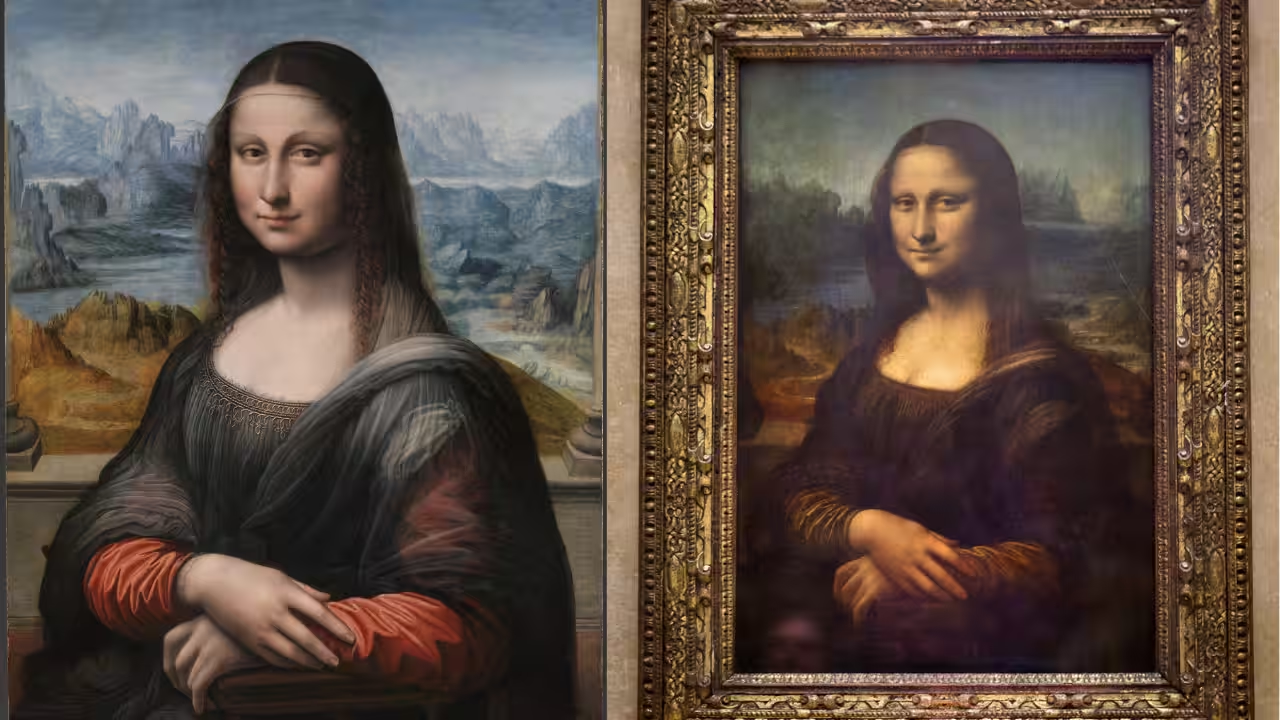
Mona Lisa alopecia is the diagnosis proposed in a new medical study of Leonardo da Vinci's most famous portrait, suggesting the sitter's missing eyebrows and eyelashes were caused by alopecia areata universalis, an autoimmune condition that removes hair from the entire body. The study ‘Alopecia areata universalis in Leonardo da Vinci’s Mona Lisa: A systematic retrospective iconodiagnosis’ uses retrospective iconodiagnosis, the practice of identifying disease from artworks, and deliberately examines the painted surface rather than the woman herself. Its conclusion is striking, what has often been put down to Renaissance fashion may instead be a careful, accurate and dignified record of illness, painted by an artist famous for observing the human body closely.Why does the Mona Lisa have no eyebrows? A new alopecia diagnosis explains the missing hairThe portrait has long invited medical guesses. Her pale complexion and thinning hair previously prompted claims of thyroid problems, and a scarring hair loss called frontal fibrosing alopecia was suggested more recently. According to The Telegraph, Dr Luigi Laino of the Institute of Dermatology and Trichology in Rome says her missing eyebrows and eyelashes, along with a receding hairline, point instead to the early stages of alopecia. Writing in Clinics in Dermatology, he asks that the painting be recognised for what it has always shown, "a young woman with alopecia areata". His paper also states how its own thesis could be disproved.Four clues hidden in the painting: no eyebrows, no eyelashes, no hairline blend and unscarred skinThe eyebrows are missing completely, on both sides and in a perfectly matching way. They are not thinned or plucked into a fine line. The eyelashes are absent along the whole edge of every eyelid, yet those edges are finely painted, with no sign of damage or smudging. The hairline has no soft transition, a natural one fades through fine, downy hairs, but here it stops abruptly. Finally, the skin around the eyes and across the forehead is smooth and unscarred.Why Renaissance fashion, syphilis, leprosy and other theories fail to explain the missing hairFashion in fifteenth-century Florence favoured a high, bare forehead and slim eyebrows, so it could explain two of the four clues. It cannot explain the eyelashes, which women of the time wanted long and dark, and no tool existed to remove them so close to the eye. Secondary syphilis, lepromatous leprosy (a severe form of leprosy), telogen effluvium (shedding after stress or illness), trichotillomania (compulsive hair pulling) and frontal fibrosing alopecia each fail on at least one key sign. Only alopecia areata universalis fits all four.Nor did Leonardo simply skip the details. He painted eyebrows in earlier portraits, including individually stroked hairs in the Lady with an Ermine. A cleaning accident is also ruled out, because the paint layers around the eyes are thin and intact and a workshop copy in the Prado agrees with the original.The lone hair above the eye: How one tiny strand supports the alopecia areata diagnosisMultispectral imaging, which photographs a painting across 13 bands of light, found one tiny hair above the eye. It had been read as the trace of a painted eyebrow that vanished over time. The study sees a single surviving real hair instead. In alopecia areata the immune system switches hair follicles off rather than destroying them, so a few can keep growing while the rest stay dormant. The paper backs this with a clinical photograph of an eight-year-old patient showing exactly the same feature.If she had alopecia, why does the Mona Lisa have a full head of hair? The Florentine answerThe answer, according to the study, lies in Florentine culture. Fifteenth-century Italy had a thriving trade in real human hair, used to make the capigliara, a structured hairpiece. A married woman also covered her head as a sign of her marital status, so a full, dark, ordered head of hair is not evidence against the diagnosis.A young wife under stress, and why her age fits early alopecia areataAccording to the Italian Art Society, Lisa Gherardini was an Italian woman widely known as the ‘sitter’, she was born in Florence on 15 June 1479, the first of seven children of a noble but modestly wealthy family. She married the widowed silk merchant Francesco del Giocondo on 5 March 1495, aged 15, and had her first child in 1496. The Telegraph reports that Dr Laino also pointed to the loss of two children and the threat of plague, and said stress and hormonal changes can bring on alopecia. The study adds that the condition brings stigma, anxiety and depression, burdens that would have weighed heavily on a young wife whose public appearance was a matter of family honour.At 24 in 1503, her age is consistent with the early onset typical of extensive alopecia areata. The Telegraph says the condition affects an estimated 400,000 people in the United Kingdom, women more often than men, with symptoms most often starting between the ages of 25 and 29.What the Mona Lisa alopecia study cannot prove, the limits of diagnosing a paintingFew Mona Lisa theories have been settled, and Dr Michael Yafi, who told the European Congress on Obesity in Istanbul that her portrait showed excess body fat, called the many diagnoses fun and interesting. Dr Laino's paper is just as candid about its own limits. It acknowledges the usual caveats of diagnosing the past, assumes the relevant passages are Leonardo's own and well preserved, which the technical evidence supports but cannot place beyond doubt, and cannot rule out a cause that is no longer visible on the panel.You use AI every day. Now get your AI Quotient. Take the AIQ test.
Topics in this story
Gathered from external sources. Rights to this text belong to whoever originally published it.