In 1933, California built Santiago Creek Dam to create Irvine Lake; 93 years later, the 750-acre reservoir is being lowered ahead of a five-year project that will drain it entirely before rebuilding key dam structures
Orange County’s largest freshwater lake is set to remain empty for five years as local water managers prepare to drain Irvine Lake for major safety
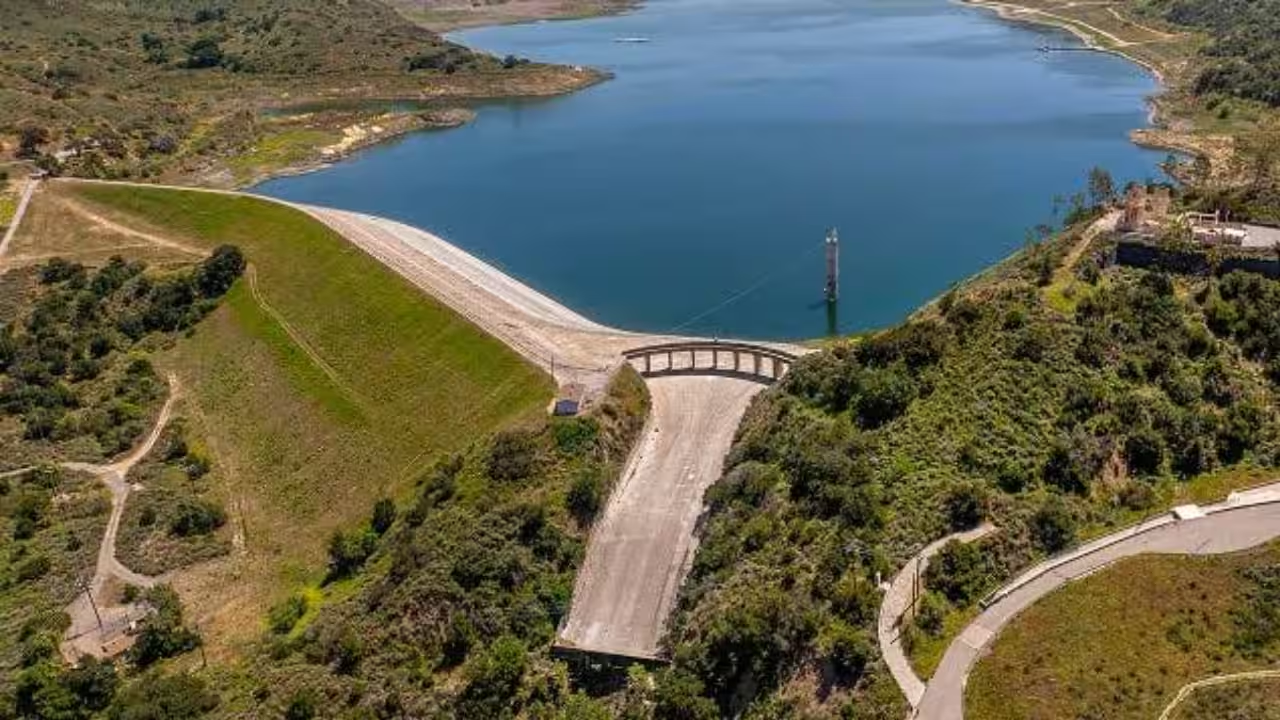
Orange County’s largest freshwater lake is set to remain empty for five years as local water managers prepare to drain Irvine Lake for major safety repairs to a 93-year-old dam. The 750-acre reservoir was created in 1933 after the Santiago Creek Dam was built. It will begin a gradual drawdown this month. According to reporting by SFGATE, the Irvine Ranch Water District will lower the lake’s water level from 735 feet to about 720 feet. This will reduce the amount of stored water from 2,800 acre-feet to just 300 acre-feet. The remaining water will stay in the lake until next summer. Contractors will then drain the basin completely to begin structural repairs on the aging dam. he five-year construction plan aims to improve aging infrastructure, address safety risks identified by regulators, and increase the lake’s long-term water storage capacity.Upgrading an extremely high hazard damThe California Division of Safety of Dams has classified the Santiago Creek Dam as having an "Extremely High" downstream hazard level. Because of structural weaknesses, state inspectors have limited the maximum amount of water the lake can hold in recent years. Official details published by project managers on the Santiago Creek Dam website describe several major improvements:Building a new, modern concrete spillway to handle heavy runoff. Reinforcing and strengthening the main earthen dam.Replacing the outlet tower that controls water flowing into and out of the reservoir.According to statements from the Irvine Ranch Water District reported by SFGATE, the improvements will restore the lake to its original design capacity of 28,000 acre-feet. This will allow local authorities to collect and store much more rainwater during major storms.Managing storm risks and drawdown timelinesThe drawdown schedule takes seasonal weather preparations and long-term construction plans into account. Local water managers said lowering the lake is also necessary to prepare for expected winter weather. John Fabris, spokesperson for the Irvine Ranch Water District, explained the plan in an email statement cited by SFGATE. “Drawing down the lake’s levels ahead of El Niño will ensure we have enough space in the reservoir to accommodate major storms and keep the downstream community safe,” Fabris told SFGATE. Fabris added that winter rainfall could temporarily raise the lake’s water level in the coming months. However, crews will repeatedly lower the stored water back to 300 acre-feet before draining the lake completely next summer. “Ultimately, one of the benefits of the Santiago Creek Dam Improvement project is that it will allow us to take advantage of future big storms and capture more rainwater, adding to the community's water supply,” Fabris noted.Local angling impacts and environmental concernsPlans to drain the lake have raised concerns among local freshwater anglers. Irvine Lake is a popular fishing spot along the shore in Orange County, where boating, swimming, and camping are not allowed. Members of the local fishing community have raised questions about what will happen to the lake’s fish, especially non-native white sturgeon, which are protected by catch-and-release rules. Anglers have filed formal appeals with regional water quality control boards, asking for an organised plan to move the fish and prevent them from dying during the draining process. In response to these environmental concerns, Fabris explained that all fish species in Irvine Lake were introduced through stocking programmes rather than arriving through natural migration. “There are no native fish in Irvine Lake,” Fabris told SFGATE. He confirmed that the water district is working with state wildlife officials and fish experts from the California Department of Fish and Wildlife to discuss possible plans to relocate the fish. The water district confirmed that public shoreline fishing is expected to return after construction is complete and the reservoir has been refilled. This is expected to take approximately five years.You use AI every day. Now get your AI Quotient. Take the AIQ test.
Topics in this story
Gathered from external sources. Rights to this text belong to whoever originally published it.