In 1975, a Michigan carpenter found an Edmund Fitzgerald life ring and lifeboat fragment washed ashore; five decades later, the pair sold for $150,000
US News: Discover the incredible story of how a life ring and lifeboat fragment from the SS Edmund Fitzgerald, found in 1975, sold for $150,000 at auction five decades later.
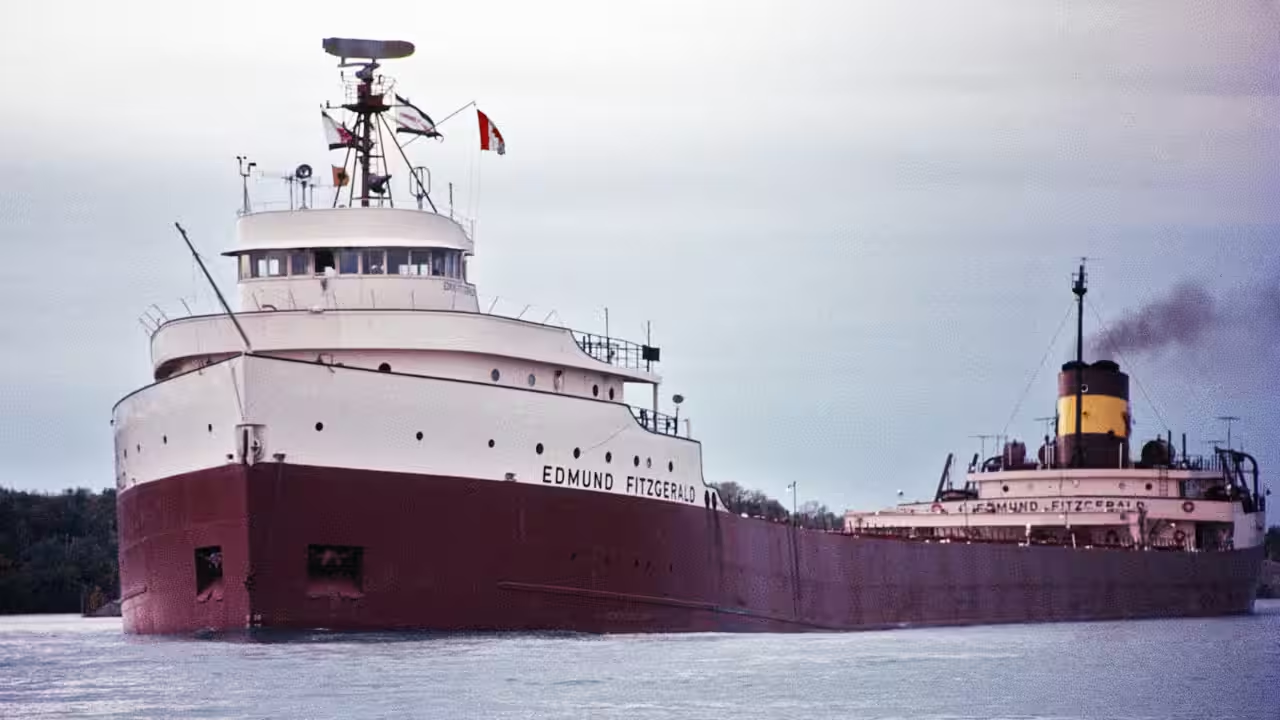
Larry Orr was working as a carpenter along Michigan's Lake Superior shoreline in 1975 when he found a life ring from the SS Edmund Fitzgerald and a piece of wood from one of its lifeboats, two objects that were connected to one of the Great Lakes' most famous shipwrecks. The discovery came shortly after the 729-foot freighter disappeared in Lake Superior on November 10, 1975. The ship had been carrying iron ore from Superior, Wisconsin, toward Detroit when it encountered a powerful storm. According to the Smithsonian's National Museum of American History, the Fitzgerald faced winds reaching 75 mph, snow, and waves estimated at 25 feet. The vessel reported that it was taking heavy seas over the deck and had developed a bad list before disappearing from radar later that evening. The Coast Guard later located the wreck in about 530 feet of water, roughly 17 miles northwest of Whitefish Point. The ship had broken into two sections on the lake floor, and all 29 crew members were lost.However, the artifacts remained in his possession for decades rather than disappearing into the history of the sinking. The life ring was eventually loaned to the Great Lakes Shipwreck Museum at Whitefish Point, where visitors could see an object that was recovered from the aftermath of the disaster.The Fitzgerald became a permanent part of Great Lakes historyThe Edmund Fitzgerald had been one of the largest and best-known freighters operating on the Great Lakes, and its loss became the worst single accident in Lake Superior's history in terms of lives lost in one incident. The Great Lakes Shipwreck Historical Society records the sinking as November 10, 1975, with the wreck lying north-northwest of Whitefish Point. The ship disappeared suddenly and did not leave any distress call. The wreck's location and condition eventually provided more information, but did not produce a single explanation about what happened during the storm.For the families of the 29 crew members, however, the wreck remained a personal loss, and every November, memorial services continue to mark the sinking and remember those who died. The artifacts found by Orr therefore carried a significance that went beyond their physical connection to the ship, since they were pieces of material evidence from the shoreline aftermath of a disaster whose wreck still rests beneath Lake Superior.Five decades later, the objects returned to the auction blockOrr had agreed to transfer the life ring to the state as part of a settlement connected to a separate lawsuit, and after the arrangement attracted public attention, the state returned the artifact to him. Orr ultimately decided to sell the objects, and according to the Associated Press, the life ring and a piece of the lifeboat were offered together at a December 2025 auction by Detroit auction house DuMouchelles, about a month after the 50th anniversary of the Fitzgerald's sinking. The lot carried an estimate of $15,000 to $20,000 but received 32 bids before selling for $150,000.The auction listing identified the objects as a life ring from the S.S. Edmund Fitzgerald and a plank from Lifeboat 1, and the buyer was not publicly identified. For Orr, the objects had spent half a century as reminders of something he encountered on the Michigan shore in the immediate aftermath of the sinking. In 2025, they became one of the rare pieces of Edmund Fitzgerald history to reach a six-figure auction price.Catch the latest World News and Live updates. Download the TOI app.
Topics in this story
Gathered from external sources. Rights to this text belong to whoever originally published it.