A diver identified an East India Company ship that sank off the Isles of Scilly in 1680 after years of research and underwater exploration; its recovered artefacts, including coins and sword fragments, are now going on display
A collection of artefacts recovered from a 17th-century shipwreck has been donated to the Isles of Scilly Museum.
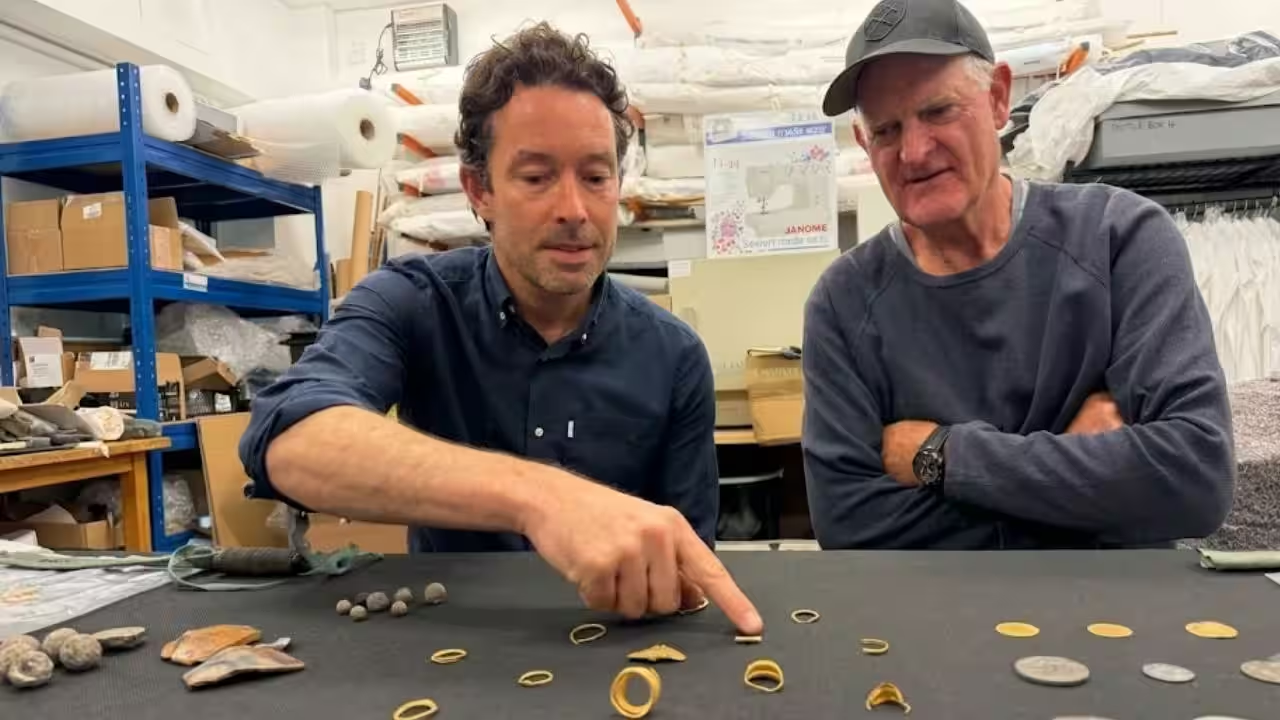
A collection of artefacts recovered from a 17th-century shipwreck has been donated to the Isles of Scilly Museum. The finds came from the Phoenix, an East India Company vessel that sank off the islands in 1680 while returning from China with cargo. Local diver and author Todd Stevens donated the collection after identifying the wreck in 2017.His search followed years of investigation and exploration. According to the Isles of Scilly Museum, material includes coins, navigational instruments, sword fragments, jewellery and items believed to have belonged to the crew and Captain William Wildy. The artefacts will be displayed in the museum’s Maritime Gallery, where visitors can explore the ship’s final voyage and the maritime history of the Isles of Scilly.How did Todd Stevens identify the shipwreck after years of searchingThe Phoenix was a 46-gun ship built at Blackwall in 1670. It was captained by William Wildy of Whitechapel and sailed under charter to the East India Company. The vessel was returning from Amoy, China, when it was wrecked in poor weather near the Isles of Scilly on 11 January 1680.Its cargo included pepper, spices, silks and cloth. The loss became part of the islands’ maritime history and had consequences beyond the ship and its cargo. Contemporary correspondence after the disaster showed that the wreck prompted the construction of a lighthouse on St Agnes. It was the first lighthouse built on the Isles of Scilly.How an old map and broken cannons helped identify the Phoenix wreckStevens traced the wreck site through years of historical investigation and underwater exploration. A historic map of the waters around the Isles of Scilly, held in the National Maritime Museum archive, helped him identify the area. The map had the words ‘Cap Wildy lost’ written across a section of sea west of the island of Samson.The note pointed towards the location associated with the Phoenix and its captain. After the site was located, documentary evidence helped establish the identity of the vessel. Distinctive ballast known as kentledge also confirmed the identification. The material consisted of broken cannon pieces carried aboard the ship. Stevens identified the wreck site in 2017, and later donated the recovered collection to the Isles of Scilly Museum.Recovered artefacts offer a glimpse into 17th-century life at seaThe donated collection contains many objects recovered from the Phoenix wreck. These include coins, navigational instruments, sword fragments, jewellery and other personal items. The museum said some of the personal belongings are believed to have belonged to members of the crew and Captain Wildy himself. The finds provide an insight into maritime trade, navigation and life at sea during the 17th century, in the 1600s.The collection was donated by Stevens, a local diver and author who identified the wreck site. Curator of the Isles of Scilly Museum, Dr Xavier Duffy, said, “The quality of the finds is outstanding – it’s hard to believe these items have been sitting on the seabed for nearly 350 years. This donation ensures the material can now be shared with the public and preserved for future generations as part of the islands’ heritage.”You use AI every day. Now get your AI Quotient. Take the AIQ test.
Topics in this story
Gathered from external sources. Rights to this text belong to whoever originally published it.