Pennsylvania began draining a lake after engineers found seepage at its dam; the $5.5 million rehabilitation project could begin in 2026 or 2027
Pennsylvania began draining High Point Lake in Somerset County ahead of schedule after engineers found seepage at the dam’s auxiliary spillway and
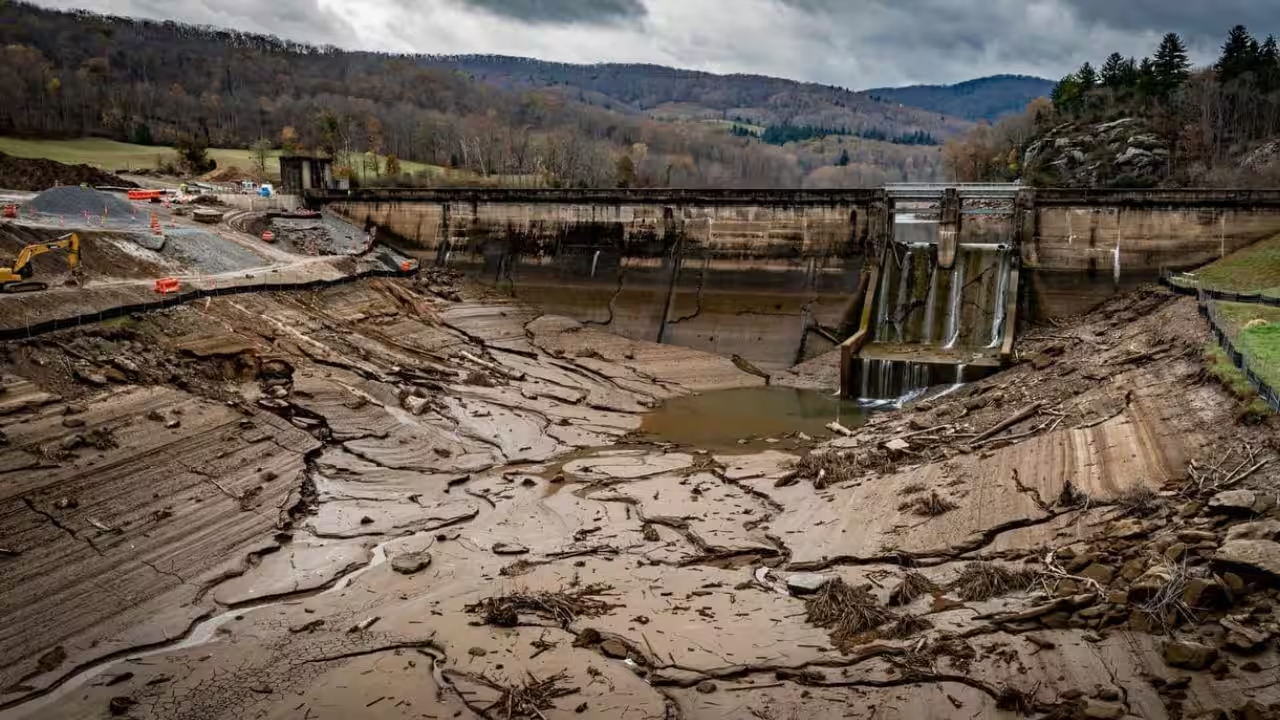
Pennsylvania began draining High Point Lake in Somerset County ahead of schedule after engineers found seepage at the dam’s auxiliary spillway and embankment. The full drawdown had originally been planned ahead of a dam rehabilitation project.According to the Commonwealth of Pennsylvania, the decision was brought forward as a safety precaution after a partial drawdown allowed engineers to inspect the dam in dry conditions and confirm structural concerns. Over the following six to eight weeks, depending on rainfall, the water level was expected to fall until only a small pool remained to help control sediment flowing into downstream waterways. Fishing and boating were to continue for as long as possible.What led to the early draining of High Point Lake in PennsylvaniaThe Pennsylvania Fish and Boat Commission announced a full drawdown of High Point Lake in Addison Township, Somerset County, in August 2025. The process was brought forward after commission engineers found seepage at the auxiliary spillway and dam embankment during a routine inspection in July.After consulting design engineers and state dam safety officials, the commission partially lowered the lake to inspect the dam under dry conditions. The inspection confirmed structural concerns, prompting officials to recommend a full drawdown as a safety precaution. The process was intended to redirect water flows away from the auxiliary spillway ahead of a major dam rehabilitation project.High Point Lake remained open for fishing and boating during drawdownWater levels at High Point Lake were expected to fall gradually over six to eight weeks, depending on local rainfall, as the drawdown began in 2025. As the process continued, the reservoir was set to shrink until only a small pool remained to help control sediment flowing into downstream waterways.The Pennsylvania Fish and Boat Commission said the lake would remain open for fishing and boating for as long as possible during the drawdown. However, visitors were advised to use caution around muddy areas along the shoreline, lakebed, and boat launch. The drawdown was intended to address safety concerns ahead of planned rehabilitation work on the dam.Pennsylvania planned fish health checks during High Point Lake drawdownDuring the drawdown in 2025, Pennsylvania Fish and Boat Commission staff planned to test the health of fish in High Point Lake. If appropriate, they would also consider moving as many fish as possible to other waterways through a fish salvage operation.The commission had lifted all fishing season restrictions, size limits, and creel limits to help reduce the fish population in the lake. These measures were in place at the time of the announcement. However, the commission had not confirmed that a fish salvage operation would take place.A $5.5 million dam project aimed to address safety concerns at High Point LakeThe $5.5 million rehabilitation project for High Point Lake’s dam was in the permitting phase in 2025. The plans included building a new dam embankment and spillway to meet dam safety standards set by the Pennsylvania Department of Environmental Protection.Construction was expected to begin in autumn 2026 or spring 2027, depending on when the final permits were issued. Once work began, the project was expected to take about 1.5 years to complete.The lake’s full drawdown was brought forward as a safety precaution after engineers identified seepage and confirmed structural concerns during an inspection.You use AI every day. Now get your AI Quotient. Take the AIQ test.
Topics in this story
Gathered from external sources. Rights to this text belong to whoever originally published it.