Before inventing the aeroplane, the Wright brothers ran a printing business in Dayton, building their own press from scrap materials and developing skills that helped shape aviation history
Long before they built the aeroplane, Wilbur and Orville Wright were printers.
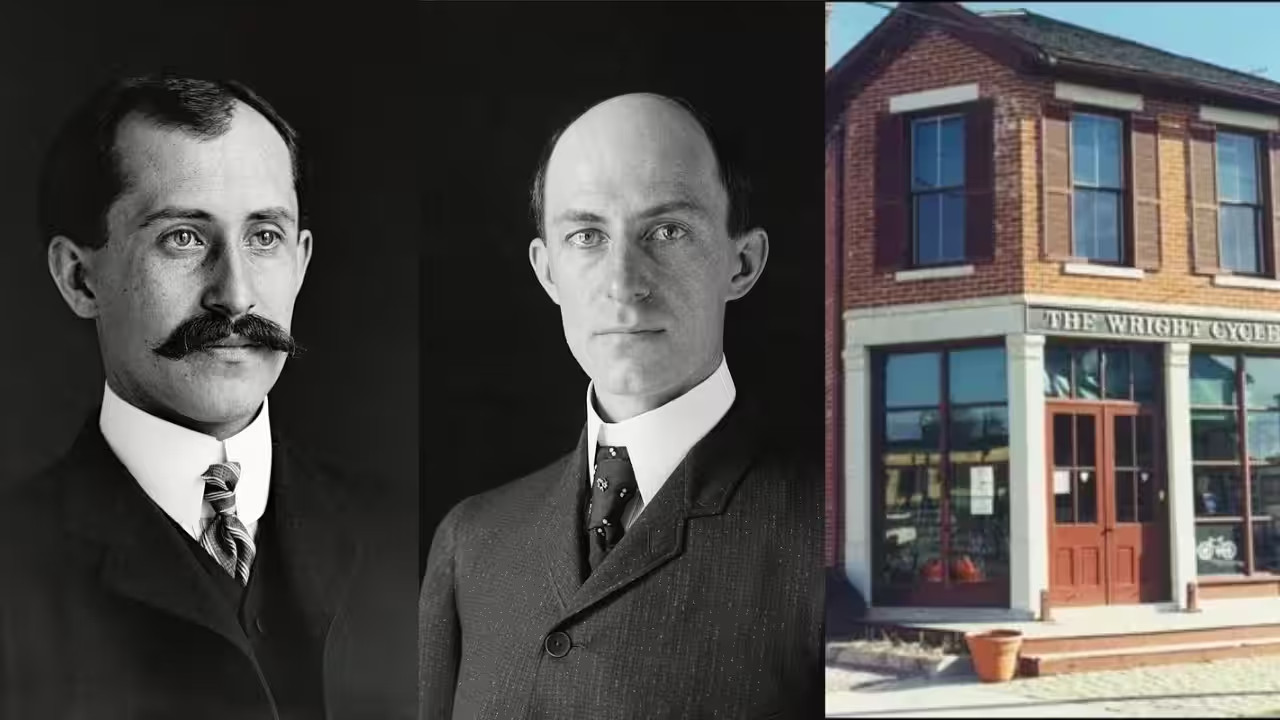
Long before they built the aeroplane, Wilbur and Orville Wright were printers. From 1890 to 1895, the brothers ran Wright and Wright Job Printers from a suite at the front of the second floor of Dayton's Hoover Block, a three-storey commercial building constructed in 1890. There they filled orders for calling cards, posters and letterheads, and worked on the Dayton Tattler with their friend Paul Laurence Dunbar. According to the National Park Service, the printing years taught them skills they later used in aviation. The restored building, now called the Wright-Dunbar Interpretive Center, forms part of Dayton Aviation Heritage National Historical Park.Hoover Block and the Wright brothers' early printing businessZachary T. Hoover constructed the three-storey Hoover Block in 1890 as a mixed-use commercial building. The ground floor was designed to hold three shops, and the second floor housed three suites. The third floor was set aside as a large open meeting hall. From 1890 to 1895, the Wright brothers ran "Wright and Wright Job Printers" from a suite at the front of the second floor.The Hoover Block as "one of only two properties intact today associated with the brothers' printing careers". The other is The Wright Cycle Company building at 22 South Williams Street. The park service also calls the print shop the first of the brothers' three joint business ventures, which were printing, bicycles and aeroplanes. It states that the shop gave Wilbur and Orville a chance to build up their mechanical and business skills.The Wright brothers' first newspapers and homemade printing pressThe brothers' first job printing business started in 1889 in a rented room of a building that has since been demolished. There they issued two newspapers, the weekly West Side News and the daily Evening Item. They built their own printing press from junk iron, firewood, a gravestone and a buggy top. The press worked so well that other firms hired the Wrights to design and build presses for them. Orville was publisher of the papers and Wilbur was editor. Both papers failed for lack of community support, and the brothers went back to ordinary printing orders.After the move to the Hoover Block, the NPS says the firm prospered moderately. It filled orders for calling cards, posters, annual reports, directories, letterheads, advertisements and broadsides. Their father, Bishop Milton Wright, also gave them considerable work. He was publishing agent for the Old Constitution of the United Brethren Church and publisher of the Christian Conservator. The Wrights also worked at the Hoover Block on the Dayton Tattler, a weekly paper started in 1890 by their friend Paul Laurence Dunbar, who later became a poet of international renown. Only three issues of the Tatler appeared. In 1894 the brothers began Snap-Shots, a weekly for Dayton cyclists. It ran from 20 October 1894 to 17 April 1896, which the NPS says made it the longest-running of their papers.How the Wright brothers' printing skills paved the way for aviationThe NPS lesson lists several things the brothers took from printing into aviation. Through the newspaper business, they learned to report and record events accurately. According to the NPS, that skill later helped them document their work on the aeroplane and win court cases over patent infringement. The machinery they designed as printers prepared them for the machinery and mechanics of bicycle manufacture and aircraft building. The printing years developed their business experience, which helped them later in founding the aviation industry. It describes the ten years in printing as an important precursor to their later work inventing and marketing the aeroplane.The Wright brothers moved their printing operation from the Hoover Block to 22 South Williams Street in the spring of 1895, but the building stayed connected to them. The NPS records that in May 1909, after the brothers returned to Dayton from flying demonstrations in Europe, a group of West Side businessmen organised the first aeroplane club in the world. It was incorporated as the International Dayton Aeroplane Club and held its meetings and social functions at the Hoover Block. Dues were a dollar a year, and the club had more than 200 members, including Bishop Milton Wright and the brothers' older brother, Lorin. Wilbur and Orville were honorary lifetime members.Restored Hoover Block preserves the Wright brothers' printing legacyThe Hoover Block is now called the Wright-Dunbar Interpretive Center. Dayton Aviation Heritage National Historical Park is a cooperative effort between the National Park Service and four partners. Its sites include The Wright Cycle Company Complex, which comprises The Wright Cycle Company building, the Wright-Dunbar Interpretive Center (described as the restored Hoover Block) and the Aviation Trail Visitor Center and museum. The park's other sites are Huffman Prairie Flying Field and its interpretive centre, the John W. Berry, Sr. Wright Brothers Aviation Center at Carillon Historical Park, and the Paul Laurence Dunbar State Memorial.The lesson also includes an NPS photograph of the Hoover Block print shop interior. The caption says it shows the shop as it looked when the Wrights worked there. Visitor-facing questions in the lesson ask students whether they think the recreated workshops help people understand the brothers' experience, and why learning about the Hoover Block matters. The NPS states that the two adjoining properties at The Wright Cycle Company Complex are testaments to the brothers' original occupations as newspaper printers and bicycle mechanics.You use AI every day. Now get your AI Quotient. Take the AIQ test.
Topics in this story
Gathered from external sources. Rights to this text belong to whoever originally published it.