In the 1960s, Takao Shitoâs family refused to surrender its farm for Japanâs Narita Airport; over 50 years later, a runway still bends around his fields
Rest of World News: Explore the incredible story of Takao Shito, a farmer who refused to sell his family's land for Narita International Airport, shaping its runway's design in the process. Discover his ongoing battle against urban development and the legacy of resistance.
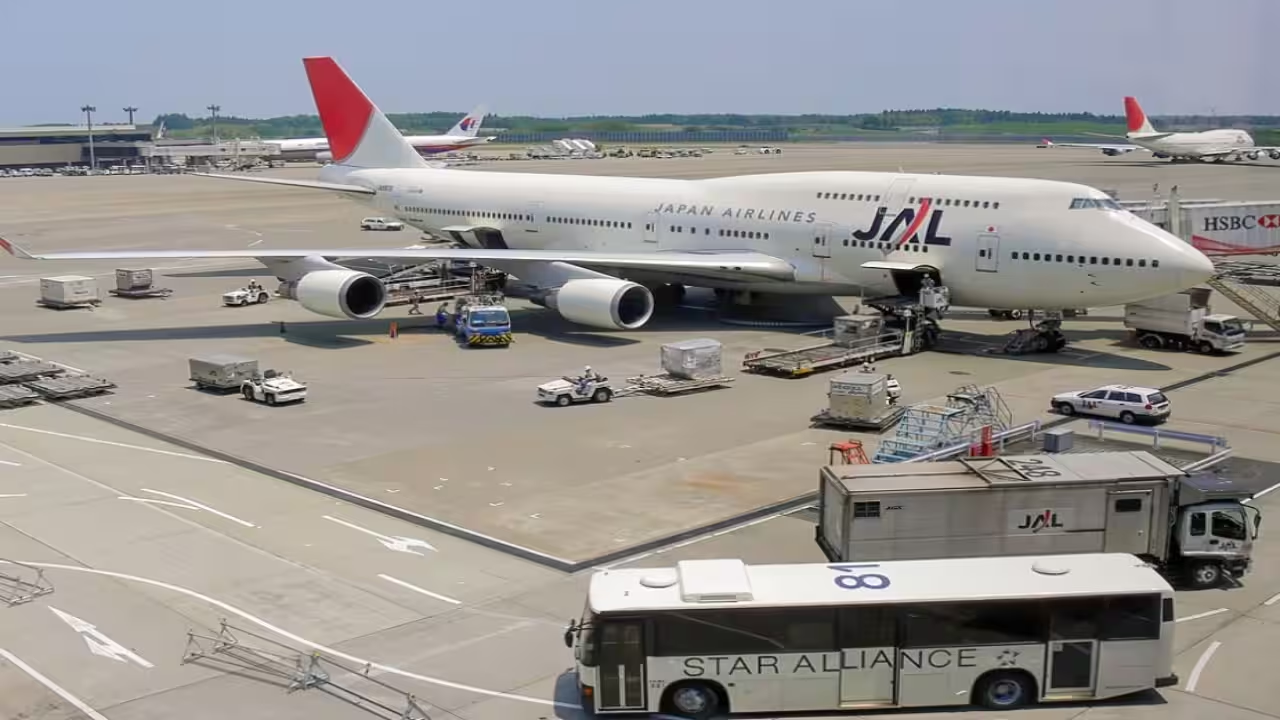
In the fields surrounding Narita International Airport, jets pass overhead every few minutes as they climb toward Tokyo. Down below, a farmer named Takao Shito tends rows of carrots, onions and radishes on land his family had worked for nearly a century by the time the airport dispute began. His father refused to leave the land in the 1960s, helping force planners to route one runway around the farm.The dispute began in 1966, when the Japanese government chose Sanrizuka, a rural area about 40 miles from Tokyo, as the site for a new international airport intended to symbolise the country's postwar progress. Local farmers, including Shito's father, resisted fiercely from the outset, and the standoff eventually escalated into violence. The feature outlet Japan Insides says the Shito family farmed the same plot for nearly a century, growing rice and vegetables and raising livestock before the government claimed the surrounding land in the 1960s.Decades of clashes over the landDemonstrations against the airport grew increasingly bitter through the late 1960s and 1970s, and at least a dozen police officers and protesters died in the confrontations that followed. Authorities eventually took over many properties, and the number of resisting farms gradually shrank as families accepted compensation and moved elsewhere. Narita finally opened in 1978, though continued local opposition meant that it initially operated with only one runway. Shito was reportedly offered a large payment to give up the land, but he refused.Shito has told the BBC that he is not interested in money and simply wants to continue farming, even though his fields are surrounded by airport infrastructure and aircraft noise. When the airport later built a second runway, planners had already bought the surrounding lots from their legal owners, some of whom had rented land to the Shito family for generations. Shito refused to sell his own portion, pointing to protections under Japan's Agricultural Land Act, and the airport ultimately redesigned the runway so that it curves around his fields rather than passing straight through them.A shrinking village inside an airportWhere roughly 28 households once farmed in Shito's village before construction began, only a handful remain today, and Shito is now the last resident still living inside the airport perimeter itself. Today, he reaches his fields through underground tunnels beneath the taxiways, works amid the roar of aircraft and sells his organic produce directly to regular customers in the Tokyo area. He has often said that the soil, cultivated by three generations of his family for nearly a century before the airport dispute, is too good to abandon. The government has so far chosen not to compel the sale of the last occupied plots, wary that doing so would reignite the unrest that once defined the area. Shito, now in his seventies, continues to farm each day with help from volunteers who bring food and supplies, including former student protesters from decades past.His fight has become a symbol of the broader Sanrizuka land dispute, one of modern Japanâs longest-running social movements.Catch the latest World News and Live updates. Download the TOI app.
Topics in this story
Gathered from external sources. Rights to this text belong to whoever originally published it.