A couple bought the Atlanta house where a 1982 arrest led to a landmark US Supreme Court gay rights case; now a city board has approved the plan to demolish it despite the opposition from civil rights groups
A house in Atlanta, Georgia, that became part of American LGBTQ+ history after a 1982 police arrest has been approved for demolition, despite efforts by
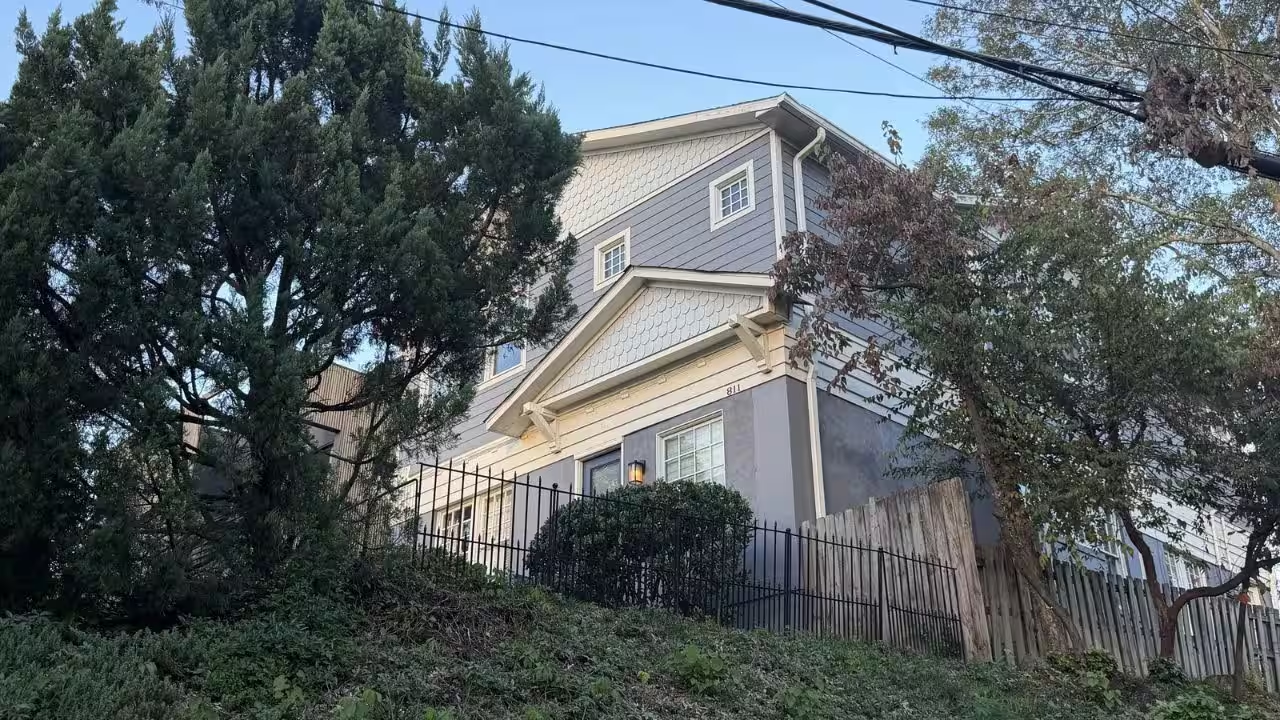
A house in Atlanta, Georgia, that became part of American LGBTQ+ history after a 1982 police arrest has been approved for demolition, despite efforts by civil rights advocates to save it. The property at 811 Ponce de Leon Place was once home to Michael Hardwick, whose arrest led to a landmark US Supreme Court case challenging the state's sodomy law. Its current owners, Paul and Penny Gutierrez, want to replace the building with a new house and swimming pool, while preservation campaigners argue that the site deserves protection.Atlanta house linked to Michael Hardwick's landmark Supreme Court caseThe property is located in the Virginia-Highland neighbourhood of Atlanta. Although it may appear to be an ordinary residential building, its connection to a major legal battle has made it an important place for LGBTQ+ rights advocates and historians.According to The Advocate, Michael Hardwick was arrested at the house in 1982 after a police officer entered the property and found him engaging in a sexual act with another man. The officer had arrived with a warrant related to a traffic violation, which The Advocate reported was invalid.Hardwick was subsequently arrested for sodomy, which was classified as a felony under Georgia law at the time. The offence carried the possibility of a prison sentence of up to 20 years.The local prosecutor eventually decided not to pursue the charge. However, Hardwick chose to challenge the state law with assistance from the American Civil Liberties Union and other lawyers.The 1986 ruling and its eventual reversalThe legal challenge became known as Bowers v. Hardwick. In 1986, the US Supreme Court ruled 5-4 in favour of upholding Georgia's sodomy law as it applied to consensual sexual activity between men.The decision meant that the Constitution did not protect a fundamental right to engage in private, consensual same-sex sexual activity under the circumstances considered by the court. It also allowed similar laws across the country to remain in force.CBS News Atlanta explained that Hardwick had initially won his challenge in a US Court of Appeals before Georgia's attorney general took the matter to the Supreme Court. The eventual ruling against him remained in place for years.However, the legal position changed in 2003 when the Supreme Court decided Lawrence v. Texas. The case, brought with the help of Lambda Legal, resulted in the court overturning Bowers v. Hardwick and striking down laws criminalising private, consensual sexual intimacy between adults of the same sex.The reversal made Hardwick's former home an important physical reminder of a legal battle that had shaped the rights and privacy of LGBTQ+ people across the country.Why the owners want to replace the existing buildingPaul and Penny Gutierrez, the current owners, purchased the property in October 2025, according to Axios. Their plans involve demolishing the existing house and constructing a replacement home with a swimming pool.The owners' position has been represented by attorney Stephen Rothman, who has questioned whether the building itself should be preserved because of its historical connection.As reported by The Advocate, Rothman argued that the house had undergone substantial renovations around 2016 and was now considerably different from the structure that stood when Hardwick was arrested.He also raised concerns about the condition of the property, pointing to poorly constructed renovations, black mould and maintenance problems. According to the attorney, restoring the building could cost more than replacing it.The argument is that preserving the location's history does not necessarily require keeping a structure that has changed significantly since the original incident.The owners have also indicated that they would be open to installing a historical marker on the property, allowing visitors to recognise its connection to the landmark case even if the original building disappears.Preservation campaigners are pushing for historic protectionThe demolition proposal has drawn opposition from civil rights advocates, constitutional law experts and local residents who believe the property should be recognised as a historic landmark.CBS News Atlanta reported that the campaign to save the house has attracted support from people who consider it an important part of the country's LGBTQ+ history. Fred Smith, a law professor who has taught the Bowers v. Hardwick case at Emory and Stanford universities, highlighted the importance of being able to connect legal history with an actual location.He argued that visiting the place where an important event occurred can give students and members of the public a stronger understanding of its historical significance.The house is also included in Atlanta's 2023 LGBTQ+ Historic Context Statement, a document identifying locations connected to the city's LGBTQ+ history. However, being included in the report does not automatically give a property legal landmark protection.According to Axios, more than 90 local individuals and organisations submitted objections to the demolition proposal. More than 100 law professors from across the country also opposed the plans.Atlanta's demolition approval leaves the property's future uncertainThe Atlanta City Council unanimously passed a resolution on November 2 requesting that the city's Urban Design Commission begin the process of considering the property for landmark designation. However, the resolution did not immediately grant the house protected status.The Advocate reported that the Board of Zoning Adjustment approved the demolition request on November 5, just three days after the council resolution. Axios also reported that the board approved most of the zoning requests the Gutierrezes needed for their proposed replacement home. The timing has frustrated preservation campaigners, who believe the city should have moved more quickly to protect the property.There is still a possible route to temporary protection. If the Atlanta Urban Design Commission formally issues a notice of intent to nominate the property as a landmark, the city's rules can trigger an automatic 120-day freeze on demolition permits.Fred Smith told Axios that an appeal of the zoning decision was likely, noting the level of opposition from residents, organisations and legal academics.You use AI every day. Now get your AI Quotient. Take the AIQ test.
Topics in this story
Gathered from external sources. Rights to this text belong to whoever originally published it.