The fallout from the US-Canada trade clash transcends economic impact
Even more concerning is the prospect that the North America alliance could weaken while NATO also faces increasing strains.
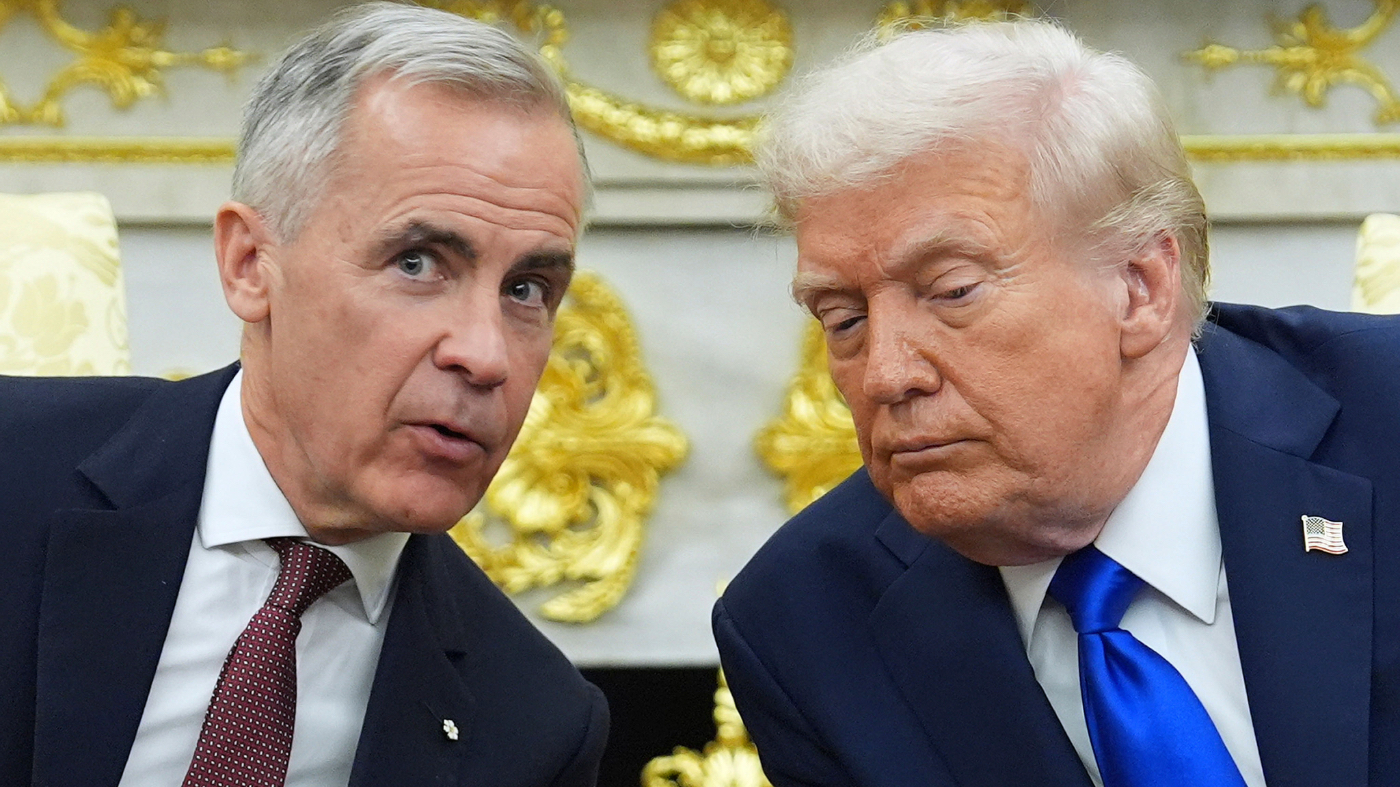
The collapse of bilateral trade negotiations between the U.S. and Canada in late August has set off an escalation in tariffs that will be difficult to resolve. After the U.S. imposed a 50 percent tariff on a long list of Canadian goods through the never used Section 338 of the Tariff Act of 1930 , Canada followed with a 50 percent tariff on U.S. goods last week that will match the U.S. tariffs dollar for dollar .
Most observers are perplexed by what happened, considering the two parties were close to reaching an agreement. Some are still hopeful the dispute can be resolved, but no resolution is in sight, and President Trump has announced a ban on certain goods from Canada.
Several issues must be considered. First, what led to the breakdown? Second, what will the economic fallout be? Third, what are the broader ramifications of what is happening?
The backdrop is that negotiations to extend the United States-Mexico-Canada Agreement got off to a rocky start when the Trump administration declined to extend the trade pact for a new 16-year term on July 1. This did not end the agreement, but it set in motion a wind down over a 10-year period if the parties cannot agree on how to amend it.
Not long after, the Trump administration announced 50 percent tariffs on $20 billion worth of Canadian goods that were to become effective on Aug. 19. This purportedly was in response to retaliatory tariffs the Canadian government leveled on U.S. autos, alcohol and dairy products last year.
These developments left observers perplexed about what Trump is seeking. Many viewed the action as a ploy to gain leverage in negotiating changes in the trade agreement, which Trump once heralded as the most important trade agreement ever achieved. However, when the U.S. trade deficit did not shrink, Trump doubled down in his second term by implementing reciprocal tariffs against all U.S. trading partners, including Canada and Mexico.
U.S. Trade Representative Jamieson Greer claims that Trump’s top priority for changing the agreement is to attain lower U.S. trade deficits with Canada and Mexico. However, this seems doubtful, considering its bilateral trade gap represents only 4 percent of the overall U.S. merchandise trade deficit .
A more plausible explanation is that Trump wants Canada to raise trade barriers to deter Chinese and other Asian countries from locating production facilities in the hemisphere, as Mexico did last year. Prime Minister Mark Carney, however, views this as an infringement on Canada’s sovereignty, and he felt he had no choice but to retaliate.
Beyond this, Trump is using tariffs to bludgeon America’s allies on issues that are unrelated to trade. Canada has shouldered a disproportionate burden, because Carney is willing to stand up to him . The Wall Street Journal editorial board has labeled Trump’s fight with Canada “ The Dumbest Trade War in History .”
The macroeconomic impact of higher U.S. tariffs is not likely to be major, considering that goods subject to the new duties totaled around 5 percent of all U.S. imports from Canada last year. Brad Setser of the Council of Foreign Relations estimates that the U.S. tariffs would generate about $10 billion in added tariff revenue. But he notes that the proposed deal would have lowered some of the earlier tariffs.
The impact of higher U.S. tariffs will be greater on Canada’s economy, because over 70 percent of Canada’s exports are to the U.S. For this reason, Trump believes the U.S. “ holds the cards ” and that Canada will capitulate at some point.
The New York Times reports that most Canadians want Ottawa to hold firm , however, even it prolongs economic pain. One tactic Canada is deploying in increasing tariffs is to target goods produced in border states such as Michigan, Ohio, Iowa and Maine that have significant exports to Canada.
The big unknown is how the trade rupture will play out. Some observers are hopeful that the two parties are near the stage where they are escalating before deescalating. This was the case between the U.S. and China following the “ Liberation Day ” announcement.
A Vox commentary, however, suggests that whatever Trump’s Canada fixation is, he seems willing to jeopardize his party’s Senate majority to get it. This suggests a stalemate could continue until after the U.S. midterm elections. If so, the toll the trade war takes on both countries could increase over time.
Even more concerning is the prospect that the North America alliance could weaken while NATO also faces increasing strains. The European Union reportedly is studying the tactics Canada is deploying in the event trade tensions with the U.S. heighten. Meanwhile, Bloomberg reports that the EU and Canada are forging a new, all-encompassing relationship ranging from trade to security, as they seek to build a new alliance to offset the influence of the two superpowers, the U.S. and China.
Nicholas Sargen, Ph.D., is an economic consultant and is affiliated with the Darden School of Business. The second edition of “ Global Shocks” is available now.
Topics in this story
Gathered from external sources. Rights to this text belong to whoever originally published it.