Michigan evaluated centerline rumble strips across nearly 5,400 miles of rural roads; target crashes fell 47%, and target fatal crashes fell 51%
Discover how Michigan's implementation of centerline rumble strips on rural roads resulted in a significant reduction in crashes and fatalities, showcasing the effectiveness of roadside safety innovations.
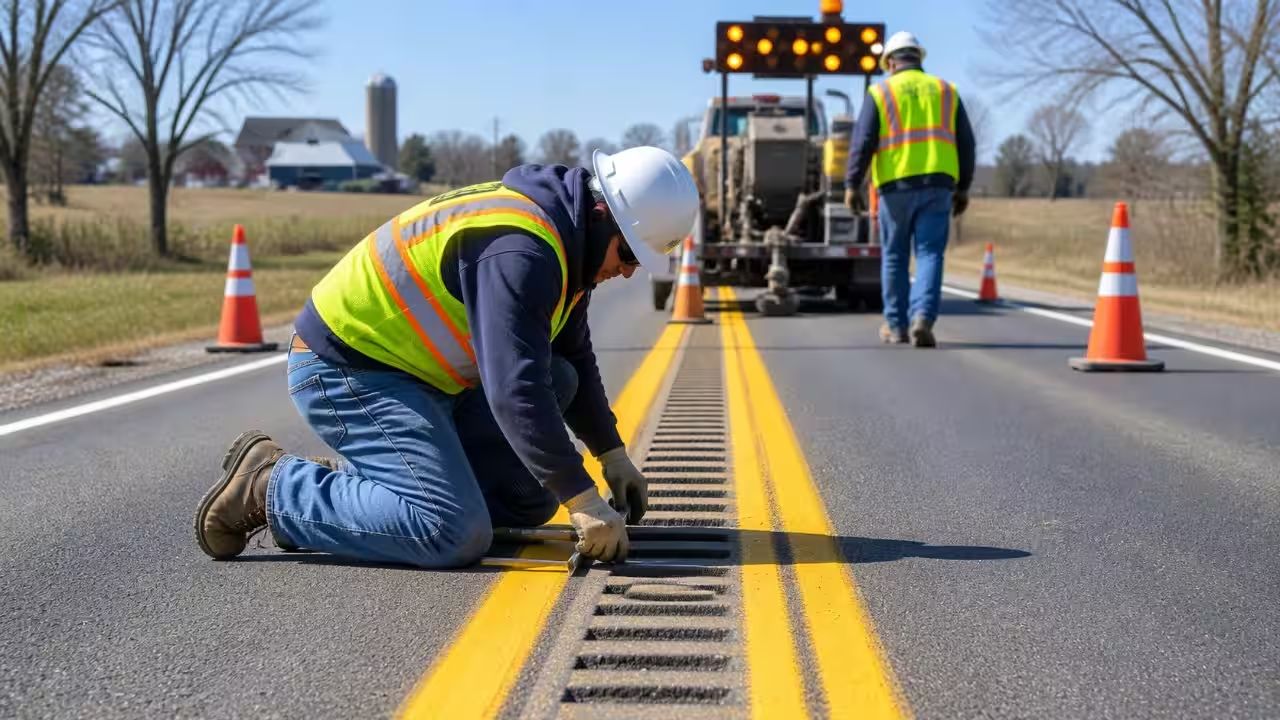
One simple application of roadside safety innovations yielded strong outcomes across nearly 5,400 miles of rural roads in Michigan. Centerline rumble strips reduced target crashes by 47% and fatal crashes by 51%. The initiative, led by the Michigan Department of Transportation, emphasises control to avoid vehicles crossing the centerline into the traffic lane. The study compared crash data from the three years before and the three years after the improvements. The findings emphasised that modest improvements in road surfacing, which are relatively low cost, can make a difference for some of the worst crashes occurring on rural high-speed roads.How centerline rumble strips workCentreline rumble strips are small, shallow grooves that are cut into the pavement surface along the road centreline, generally under or near the centreline markings. Tires rolling across the grooves vibrate and rattle, and this sound and vibration notify drivers that their vehicle may be leaving the lane.The warning is most effective when the driver becomes distracted or tired and loses concentration for a time. Instead of having to spot the marking on the road themselves, the grooves act as a physical reminder for the driver to realign the steering before moving into the oncoming traffic lane. Rumble strips can be installed on existing roads as a post-construction road engineering measure, and they are seen as a relatively inexpensive option for roads where opposing traffic flows are not physically separated.What the Michigan evaluation foundMDOT initiated and completed the state-wide centerline rumble strip installation project between 2008 and 2010. The department installed the strips on rural non-freeway highways with a posted speed limit of 55 miles per hour. The project was 54 miles long, and shoulder rumble strips were also installed along some of the wider shoulders.The study considered 3 crash types: head-on crashes, side-swipe crashes between vehicles moving in opposite directions, and single-vehicle crashes where the driver departs the road to the left. The data reveal 2,488 target crashes for the before period and 1,306 in the after period. The study revealed a statistically significant reduction in all three types of crashes and a 51% decrease in fatalities within the target group.The researchers controlled for snowfall variation by excluding crashes in which snowy or icy pavement was noted as a contributing factor, reducing the chance that winter weather would distort the comparison. The researchers also show the programme's worth. Their benefit-cost ratio, ranging from 18:1 to 58:1 depending on the discount rate applied in the analysis, showed potential financial gain from preventing severe crashes far exceeded installation costs.Research supports the wider use of rumble stripsMichigan's findings are consistent with research conducted in other parts of the United States. A study published in Accident Analysis & Prevention in 2025 examined centreline rumble strips on rural two-lane roads in Maine. It found reductions of between 28% and 48% in head-on, opposite-direction side-Y collisions, with an estimated benefit at least 14 times the installation cost. Another study published in the Journal of Transportation Engineering in 2016 examined the effectiveness of centreline and shoulder rumble strips on rural roads in Kentucky, Missouri, and Pennsylvania. Overall, the report detected A 36.8% reduction in head-on crashes, but the combined reduction in lane-departure crashes was a test assessed to be in the order of 27%Findings from the studies suggest that Rumble strips can provide quantifiable safety benefits for various types of road systems, but rumble strips do not work equally well on all roads, with the design of installation and the type of crashes targeted as factors. The program also showed how safety can integrate into the day-to-day work of road maintenance, and Michigan MDOT is transitioning to a contract for annual payment, marking a more efficient installation process and eliminating the need for dedicated construction projects.You use AI every day. Now get your AI Quotient. Take the AIQ test.
Topics in this story
Gathered from external sources. Rights to this text belong to whoever originally published it.