India needs different financing model for Commercial EVs than it used for cars
This article is authored by Mahesh Babu, Managing Director, Olectra Greentech Ltd. India is entering a new phase in the way it moves people and goods.
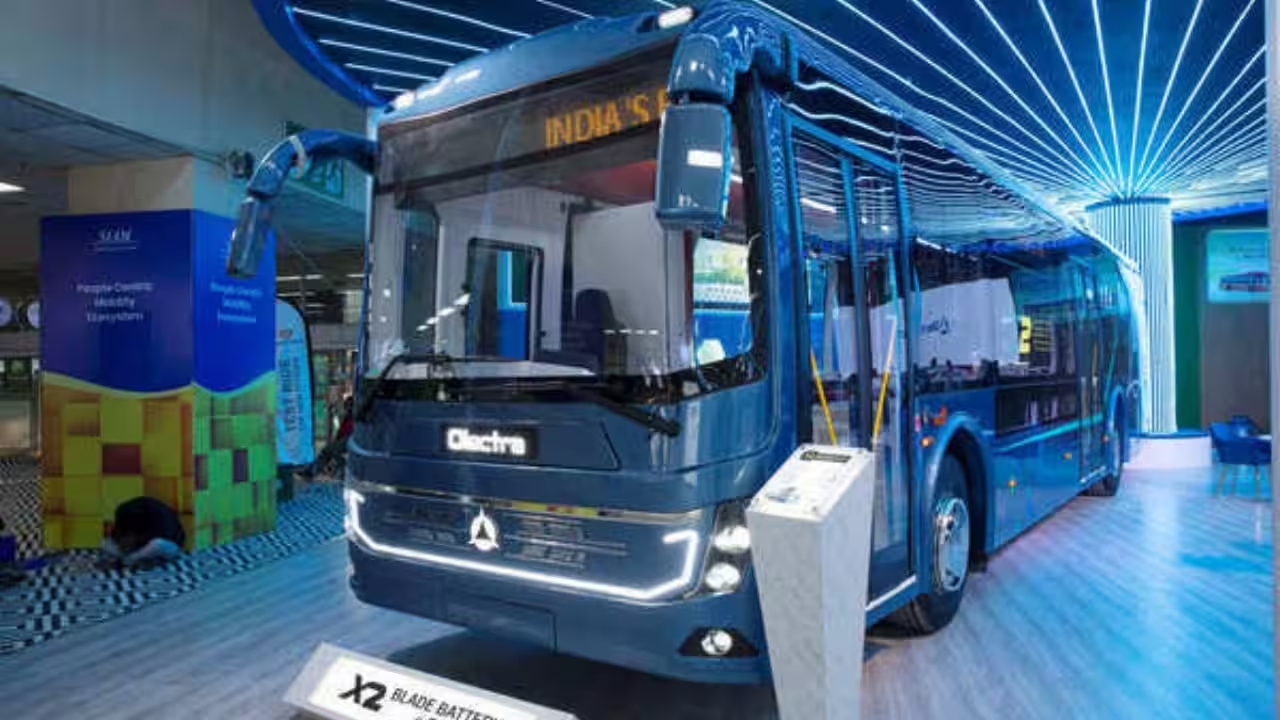
This article is authored by Mahesh Babu, Managing Director, Olectra Greentech Ltd.India is entering a new phase in the way it moves people and goods. The scale of this transformation is immense: the country transports approximately 4.6 billion tonnes of freight every year, with road transport carrying around 70% of domestic freight demand, measured in tonne-kilometres. And this demand is only set to grow. The road freight activity could reach approximately 9.6 trillion tonne-kilometres by 2050. While, on the other hand, 40 crores of passengers move everyday in the buses.This growth presents India with a remarkable opportunity; not just to move more, but to move smarter and more sustainably. The vehicles at the heart of India’s economy are also among the most intensively used on its roads. Trucks and buses move millions of people and tonnes of goods every day, while together accounting for around 60% of India’s diesel consumption.That makes the electrification of trucks and buses one of the most significant opportunities in India’s transition to cleaner mobility. The opportunity goes far beyond replacing diesel with electricity. Electrifying these high-utilisation vehicles can help reduce dependence on imported fossil fuels, lower transport emissions, improve operating economics and strengthen India’s energy security.India has the chance to turn the scale of its freight and public transport networks into an advantage building a cleaner, more efficient and more resilient mobility system for the decades ahead.Policy is already creating the foundation for this transition. Under PM E DRIVE,₹4,391 crore has been allocated for 14,028 electric buses, ₹500 crore for 5,643 electric trucks and ₹2,000 crore for public charging infrastructure. The PM e Bus Sewa Payment Security Mechanism has a further outlay of ₹3,435 crore and aims to support more than 38,000 electric buses.The opportunity is substantial. Converting it into adoption at scale will require technology, charging infrastructure and financing to progress together.Three important Pillars to power the EV Revolution in IndiaThe next phase of electric vehicle adoption will depend on three key pillars:Technology, Charging infrastructure and Financing.Vehicle technology is advancing rapidly. Improvements in battery performance, driving range, energy efficiency and connected-vehicle capabilities are makingEVs increasingly practical for a wider range of consumers. At the same time, charging infrastructure is expanding, supported by growing public and private investment.The third pillar-financing becomes the third and very important enabler. The right financing models, competitive lending products and easier access to credit can help make electric passenger vehicles more affordable and accessible to consumers. As the technology and charging ecosystem mature, ensuring that customers can finance EVs as easily as conventional vehicles will be critical to accelerating adoption.An electric commercial vehicle is a productive asset that generates revenue every day over several years. Its financing structure should therefore reflect its earning potential and productive life.This is particularly important because the acquisition cost of an electric truck or bus can currently be around 2.5 times that of a comparable with fossil fuel commercial vehicles. Financing can also carry an interest premium of 2% to 4%, together with shorter tenures.When a higher asset cost is amortised over a conventional four- or five-year financing period, monthly repayments can become challenging even when the vehicle offers attractive economics over its full operating life.A financing horizon of around six to seven years, depending on the application and asset, can better align repayment with the productive life of the vehicle and the operator’s cash flows.Financial Innovation Must Now Move Alongside Technology Innovation.Financing should follow the earning life of the asset. Commercial EV financing can increasingly be based on the productive value of the vehicle.Daily kilometres, assured utilisation, energy cost, uptime, maintenance requirements and operating revenue provide a strong picture of the economics of a commercial asset.An electric bus operating under a long-term contract with assured kilometres offers visibility of utilisation and cash flows. Similarly, an electric truck operating on a defined logistics corridor can build a predictable operating profile.Financing structures that recognise these cash flows can make EV adoption more accessible.This becomes particularly important in India, where around 70% of truck operators have fleets of five vehicles or fewer. For these operators, predictable monthly cash flow is critical.The financing model therefore needs to align with both the productive life of the vehicle and the economics of the operator.Leasing can widen accessLong term leasing can become another important enabler.Instead of carrying the entire acquisition cost upfront, operators can access vehicles through models that convert a larger part of the investment into predictable operating expenditure.Vehicle leasing and Battery as a Service can also distribute technology and residual value risks among participants better equipped to manage them. These both models are potential pathways for accelerating electric truck adoption, particularly among smaller operators.This can make commercial EVs more accessible while allowing operators to focus on keeping vehicles productive and generating revenue.Connected vehicles can make financing smarterTechnology can also strengthen one of the most important elements of vehicle financing: residual value.Electric commercial vehicles are increasingly connected assets. Battery State of Health, charging cycles, kilometres travelled, energy efficiency, uptime and maintenance history can be continuously measured.This data can create a transparent digital health record for the vehicle, giving lenders greater visibility into asset performance throughout its operating life.The same digital technology transforming the vehicle can also transform the way the vehicle is financed.A robust battery health and vehicle performance framework can strengthen residual value assessment, support the secondary market and improve lender confidence.Financial innovation can accelerate adoptionIndia can build commercial electric mobility at scale. Technology will continue to advance, charging infrastructure will expand and policy support is creating the foundation for growth.Financing can become the multiplier.Longer tenure loans, long term leasing, cash flow-based financing, connected vehicle data and stronger residual value frameworks can make electric buses and trucks increasingly bankable and accessible.When financing is aligned with the productive life and earning potential of the asset, commercial EVs become a stronger business proposition for operators and financiers alike.Technology will enable the transition. Infrastructure will support it. Financial innovation can accelerate commercial EV adoption at scale.Disclaimer: Views and opinions expressed in this article are solely those of the original author and do not represent any of The Times Group or its employees.
Topics in this story
Gathered from external sources. Rights to this text belong to whoever originally published it.