North Korea defies sanctions push, rejects report on overseas workers and nuclear funding
Rest of World News: North Korea has rejected international efforts to tighten enforcement of sanctions against it, saying such measures cannot stop the country's developm.
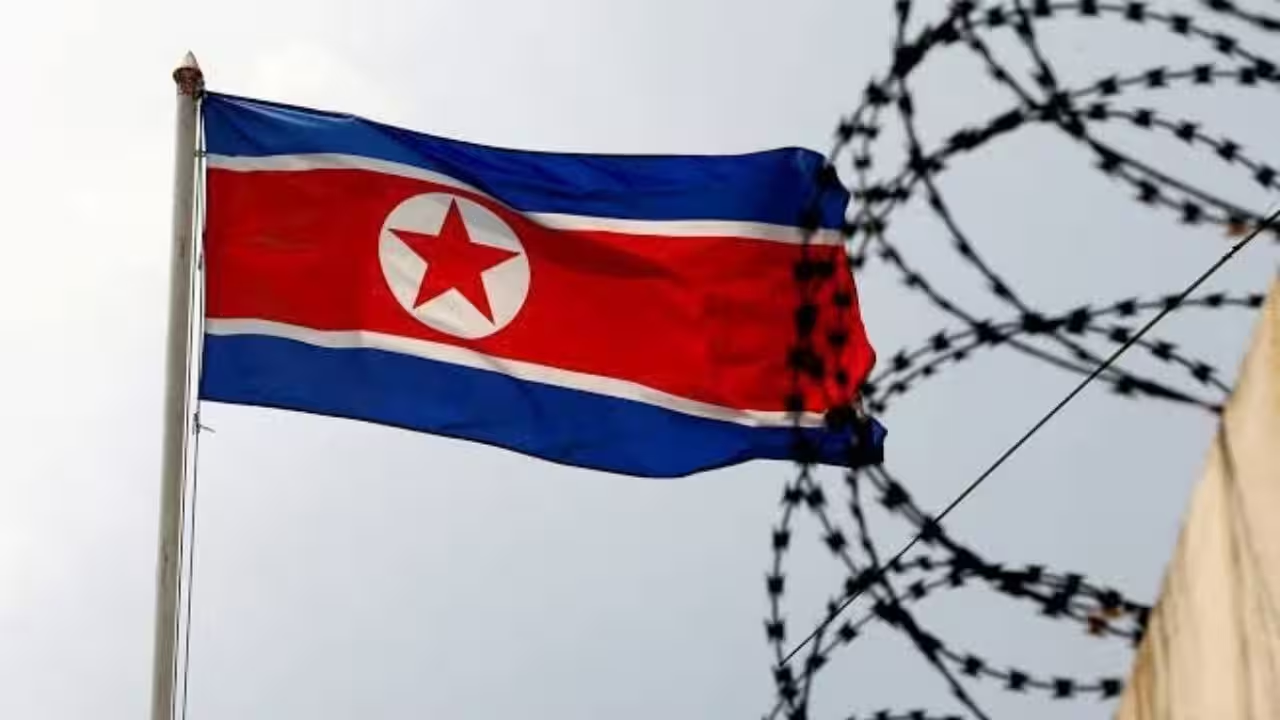
North Korea has rejected international efforts to tighten enforcement of sanctions against it, saying such measures cannot stop the country's development or prevent it from defending what it calls its core interests, state media KCNA reported on Monday.According to Reuters, the statement came from a North Korean foreign ministry spokesperson, who accused the Multilateral Sanctions Monitoring Team (MSMT) of fabricating a report aimed at portraying what Pyongyang described as normal and mutually beneficial economic cooperation with other countries as illegal.The MSMT, an 11-country group that monitors violations and evasion of UN sanctions, said in a report issued on September 16 that North Korea continued to send workers overseas in breach of UN Security Council resolutions.The group estimated that the workers generated between $450 million and $800 million in 2025, potentially providing revenue for North Korea's nuclear weapons and ballistic missile programmes."The DPRK's relations of exchange and cooperation with other countries cannot be subject to interference or investigation of a third party," a North Korean Foreign Ministry spokesperson said in a statement. Pyongyang described its overseas economic activities as legitimate cooperation under bilateral and multilateral agreements.Reuters reported that the MSMT estimated between 35,600 and 101,280 North Korean workers remained active in at least 17 countries, mainly China and Russia. The group called on countries to enforce UN resolutions by repatriating North Korean workers and refusing to issue them new work permits.Sanctions on North KoreaThe United Nations sanctions regime against North Korea was first imposed in 2006 after Pyongyang's nuclear test. Since then, the UN Security Council has adopted a series of resolutions expanding restrictions in response to North Korea's nuclear weapons and ballistic missile programmes.The sanctions cover a broad range of military and economic activities. They include an arms embargo, restrictions on the transfer of nuclear and missile-related technology and assistance, asset freezes and travel bans on designated individuals and entities, and restrictions on financial services and banking relationships linked to North Korea.The measures have also targeted North Korea's sources of foreign currency by banning or restricting exports of commodities including coal, iron, iron ore, seafood, lead, copper, nickel, silver and zinc. The sanctions also place limits on North Korea's access to crude oil and refined petroleum products and restrict shipping and the transportation of prohibited goods.The sanctions further restrict joint ventures, investment and certain forms of technical and scientific cooperation with North Korean entities. Countries are also required to take action against vessels and companies involved in sanctions evasion and the movement of prohibited goods.Catch the latest World News and Live updates. Download the TOI app.
Topics in this story
Gathered from external sources. Rights to this text belong to whoever originally published it.