In 2014, a Kentucky sinkhole opened beneath the National Corvette Museum before dawn and swallowed eight rare Corvettes from its Skydome exhibit
US News: In a dramatic turn of events, a sinkhole opened up beneath the National Corvette Museum in Kentucky, swallowing eight rare Corvettes, including prototypes and classic models, before dawn on February 12, 2014. Discover how this incident transformed into a permanent exhibit and a major attraction.
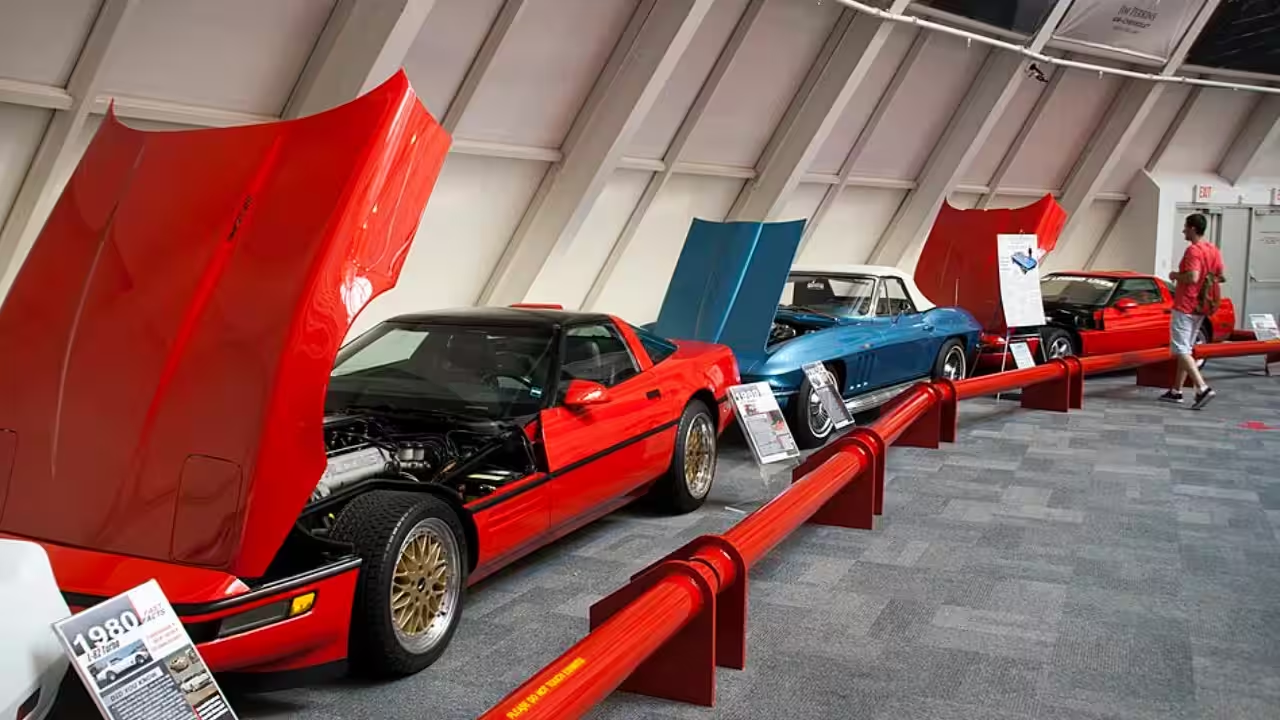
On February 12, 2014, before daybreak, the floor of the Skydome exhibit hall in the National Corvette Museum in Bowling Green, Kentucky, collapsed, exposing a large sinkhole measuring 40 feet in width, 60 feet in length, and 30 feet in depth, according to the National Corvette Museum. Eight Corvettes on display fell into the hole along with slabs of concrete and display stands. Nobody got injured because it took place at about 5:38 a.m., before the museum had opened for its guests, as per the statement from the National Corvette Museum.The collapse struck before dawn on February 12, 2014Betty Hardison, the museum's security guard, was the first to learn of trouble at the Skydome when the alarm went off. Arriving at the scene, she found dust and smoke everywhere but no clear cause. Firefighters who responded soon after determined that part of the floor had collapsed, taking the eight cars down with it. According to the National Corvette Museum's own account of the event, the sinkhole's dimensions captured global attention almost immediately, and news crews and crowds gathered outside within hours.A collapsing limestone cave, not a structural failure, caused the holeConsequently, a later geological investigation discovered that the collapse resulted from the roof of a karst cave in the area under the Skydome that had slowly grown larger due to the erosive nature of the groundwater, according to Cars and Karst: Investigating the National Corvette Museum Sinkhole by Polk et al. (2015). It is because of this fact that when the roof of this limestone cave could no longer hold up the weight on top of it, it caved in.Eight cars, including a GM prototype, fell into the holeThe eight Corvettes that were victims of the sinkhole were spread across years of the car's existence. These cars included a 1962 Tuxedo Black Corvette, a 1984 PPG Pace Car, a 1992 One-Millionth Corvette, a 1993 40th Anniversary Corvette, a 1993 ZR-1 Spyder concept car, a 2001 Mallett Hammer Z06 donated by Kevin and Linda Helmintoller, and a 2009 ZR1 Blue Devil prototype on loan from General Motors. The car valuation company Hagerty valued the loss of all the vehicles at over $1 million.Recovery crews used cranes to lift the cars out over two monthsThe process of recovery commenced in March 2014 with cranes and workers being placed into the hole with the purpose of securing each car within a sling for removal back to the surface. The 2009 Blue Devil prototype, the 1962 Tuxedo Black Corvette, the 1984 PPG Pace Car, the 1993 40th Anniversary Corvette, and the 1992 One-Millionth Corvette were among those recovered in March 2014, according to the museum's official timeline. The rest of the cars were recovered in April 2014. The Blue Devil was in relatively good mechanical condition after being pulled from the hole, though it still required months of cosmetic and structural refurbishment by GM before its public unveiling, whereas some other cars needed far more extensive repair to become operational at all.Restoration took over a year for the most heavily damaged carsWhile some were restored quite fast, there were other cars that needed a lot of effort for the restoration. The Blue Devil was refurbished by GM and unveiled at the museum in February 2015, one year after the accident. The One Millionth Corvette took even longer, not returning to display until September 2015, after more than 1,200 hours of restoration work. Out of the eight cars that were found, five were not able to be fully restored because of heavy damage sustained during the fall.The site became a permanent exhibit rather than being erasedRather than erasing all trace of it, the museum's board opted to preserve part of the sinkhole's story as a permanent attraction. Much of the hole was filled in and floored over by mid-2015 for structural safety, leaving only an outlined footprint and a small viewing opening. The Corvette Cave-In exhibit, built around that footprint, opened in February 2016, exactly two years after the collapse, letting visitors see where the hole once was alongside the cars it damaged. Soil and stone samples taken from the sinkhole are sold in the gift shop of the museum at $10 per piece, and according to reports from the Associated Press and All That’s Interesting, thousands of pieces have been sold since the opening of the exhibition.From being a catastrophe for a specialized car museum in Bowling Green, the incident became one of its biggest draws. Over a decade later, the sinkhole continues to be a permanent fixture of the museum's collection, a reminder that even structures designed to house some of the rarest cars in American history can fall prey to the karstic formation in much of Kentucky's landscape.Catch the latest World News and Live updates. Download the TOI app.
Topics in this story
Gathered from external sources. Rights to this text belong to whoever originally published it.