An 800-year-old Spanish monastery was dismantled, packed into 11,000 crates and shipped to America; decades later, its stones were rebuilt in Florida
Discover the incredible story of an 800-year-old Spanish monastery that was dismantled, shipped to America, and rebuilt in Florida. Learn about its historical significance and cultural impact.
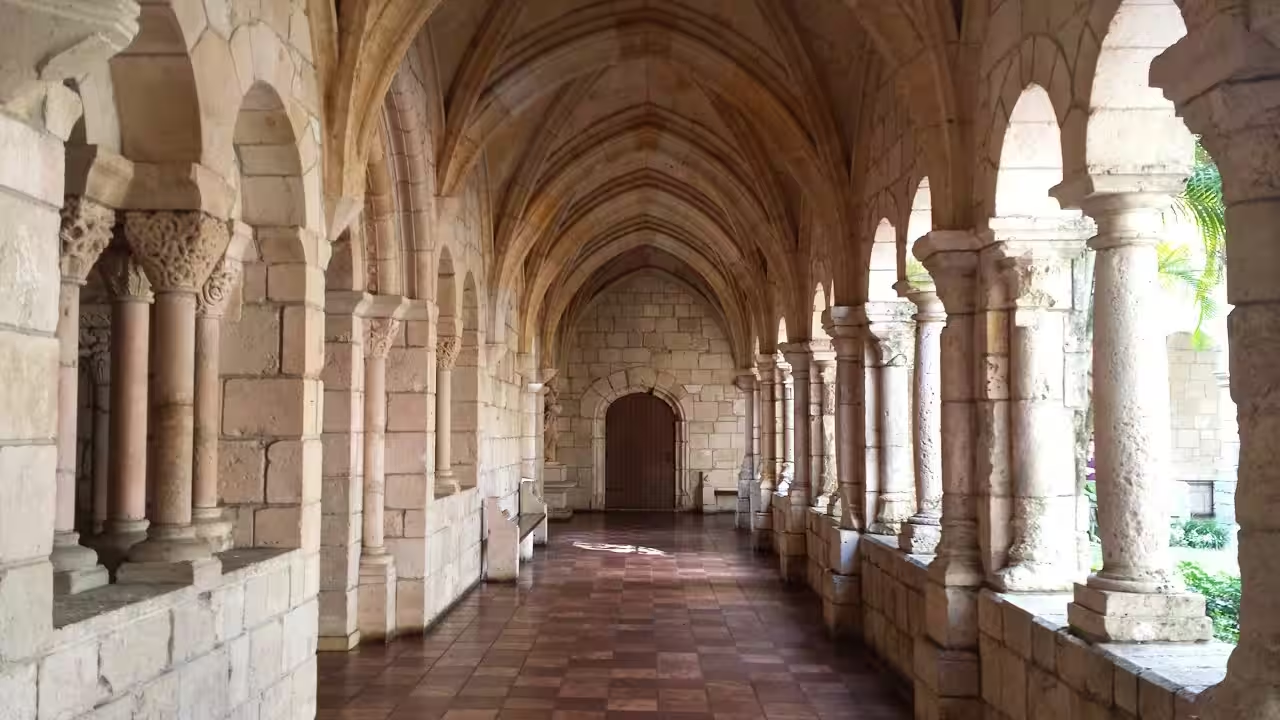
A 12th-century Spanish monastery made an unusual journey across the Atlantic in the 1920s. According to The Cultural Landscape Foundation, workers dismantled its stone cloisters and several other structures, packed them into approximately 11,000 wooden crates and shipped them to the United States. The plan was to rebuild the medieval complex in California. Instead, the stones lay in storage in New York for 26 years until they were moved to their current location in Florida. Nowadays, this rebuilt complex is called the Ancient Spanish Monastery. It can be found in North Miami Beach, far away from its original site in Spain.A monastery built in medieval SpainAccording to SAH Archipedia, the foundation date of the monastery is 1133 A.D. and it was located in Sacramenia, which is close to Segovia, northern Spain. Its construction was completed in 1141. According to SAH Archipedia, the monastery was originally built as the Cistercian Monastery of Our Lady, Queen of the Angels. It was renamed in honour of Bernard of Clairvaux when he was canonized in 1174. Cistercian monks inhabited the monastery for many years. The simplicity principle of these religious orders was illustrated in the Romanesque and Gothic style of the monastery. The relationship between the owners of the property and the community had altered during the ecclesiastical confiscations that occurred in the 1830s. According to the historical record of the monastery, the cloisters had been confiscated and sold afterward, and the premises were used as a granary and a stable.William Randolph Hearst bought the monasteryIn 1925, American newspaper magnate William Randolph Hearst bought the monastery's cloisters as well as some additional buildings, according to the Greater Miami Convention & Visitors Bureau. He intended to move them to his Californian mansion of San Simeon and reconstruct them in that location. The buildings were taken apart stone by stone. They were numbered to ease their identification in the future, then wrapped in hay and put into roughly 11,000 wooden boxes and about 33,000 stone blocks were in the shipment. The boxes landed in New York, but an outbreak of hoof and mouth disease in Spain led to difficulties. According to Florida International University's student news site, the U.S. Department of Agriculture had the crates dismantled and the hay burned to avoid spreading the disease. Once the hay was burned, the stones were put back into the boxes in the wrong order, which scrambled the number sequence and complicated the stones' identification. Another factor that prevented Hearst from fulfilling his project was the Great Depression.The stones found a new home in FloridaFollowing the death of Hearst in 1951, Florida businessman Raymond Moss and William Edgemon bought the dismantled remains in 1952. They intended to reconstruct the building as an attraction in South Florida. The containers were shipped to Miami, where the stonemason Allan Carswell oversaw the reconstruction process. It involved the fitting of several thousand stones without depending on the numbering system.The project took 19 months and cost 1.5 million dollars at the time, according to the Society of Architectural Historians. The rebuilt complex included the original cloisters, chapter house, and refectory. The original church and other monastery structures remained in Spain. The Florida site was therefore for a reconstruction using medieval components rather than an entire monastery moved intact across the ocean.A medieval landmark in modern FloridaBishop Henry Louttit bought the monastery in 1964 for the Episcopal Diocese of South Florida. Financial difficulties later forced the Diocese of South Florida to sell the complex to Colonel Robert Pentland Jr., who donated it to the newly formed Episcopal Diocese of Southeast Florida. It became the Parish of Saint Bernard de Clairvaux and continues to be a functioning house of worship, with grounds dating back to the 1950s that recreate Spanish monastic gardens with paved paths, fountains and neatly kept plantings. This place was placed on the National Register of Historic Places in 1972. Visitors can stroll along its cloisters and gardens situated in North Miami Beach today. The history of the monastery includes several decades of uncertainty, a messed-up numbering and a long period of reconstruction. Presently, the medieval stones serve as part of a functioning church in Florida, thousands of miles away from the Spanish settlement where the buildings originally belonged.You use AI every day. Now get your AI Quotient. Take the AIQ test.
Topics in this story
Gathered from external sources. Rights to this text belong to whoever originally published it.