Haitian gangs release 13 captives after mass kidnapping in Kenscoff
The attack in Kenscoff killed at least 47 people and resulted in the kidnapping of more than 50, as gangs exert control.
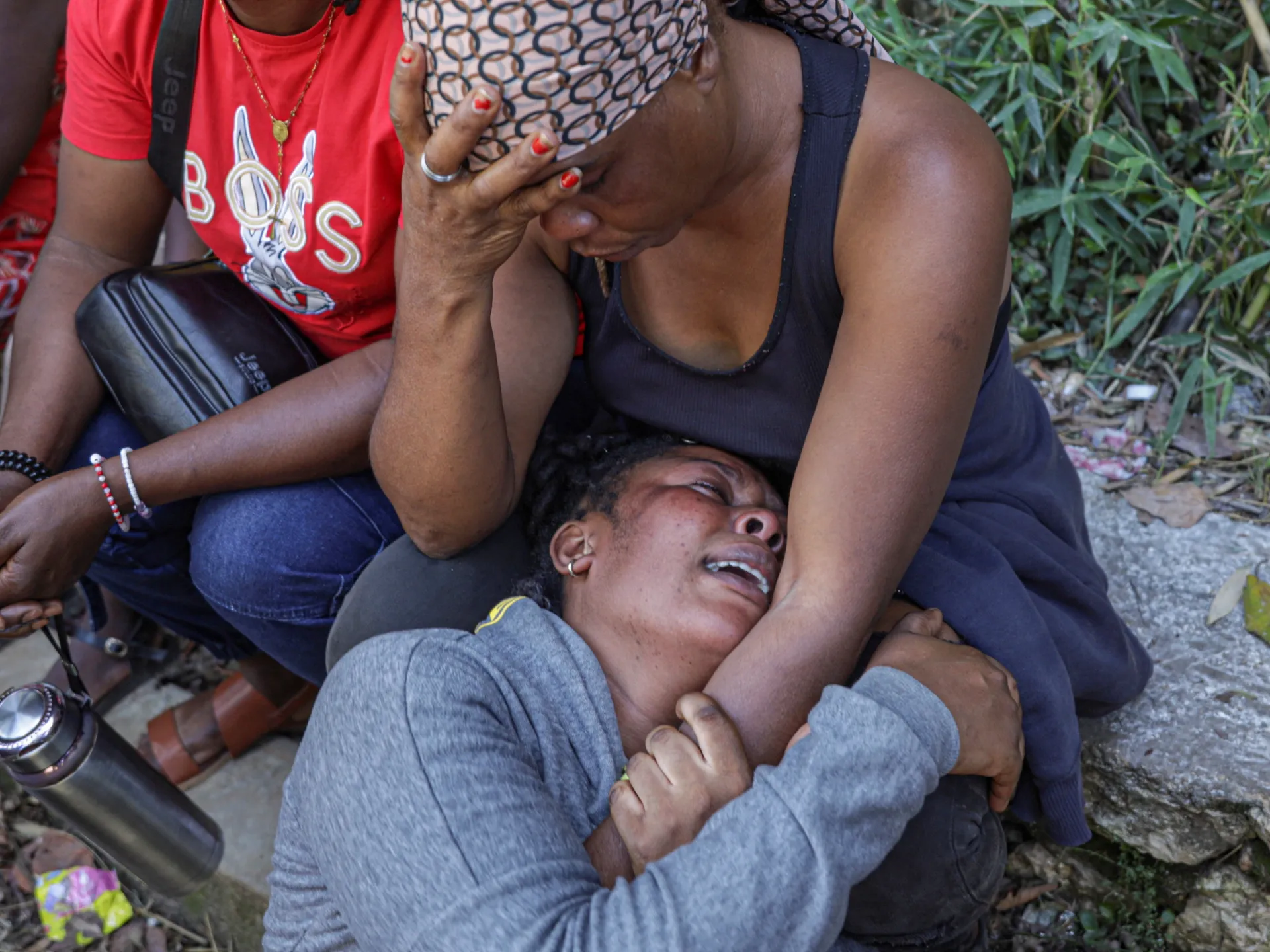
The United Nations has announced that six children and seven women kidnapped last week in the hillside community of Kenscoff, Haiti, have been released.
In a statement late on Friday, representatives from the UN Children’s Fund (UNICEF) used the news to call attention to the ongoing crisis unfolding in Haiti — and the toll it has taken on the country’s youth.
“This release offers a rare moment of hope amid the violence threatening children in Haiti,” said Yannig Dussart, the group’s deputy representative in Haiti.
“The Kenscoff abduction was not an isolated incident but another stark reminder of the scale and frequency of attacks on children across the country.”
The freed captives were part of one of the largest mass abductions in recent memory in Haiti.
On the night of August 23, an estimated 150 armed gang members are believed to have attacked Kenscoff, which sits on the hillsides overlooking the capital Port-au-Prince and the suburb of Petionville.
Reports from the UN indicate that the armed attackers opened fire on residents in the streets and pursued some locals into a nearby Protestant church.
There, those who had taken shelter were forced outside. Some attempted to flee. The UN estimates 22 were killed in the church’s courtyard, and another dozen behind the building.
At least 47 people were killed in total. More than 50 were kidnapped. An estimated 2,647 residents were displaced from their homes, fleeing the violence for safety in neighbouring communities. Some of their houses were set on fire.
The victims of the August 23 attack add to the ever-growing death toll in Haiti, which has struggled with an uptick in organised violence since the start of the decade.
Armed groups have long had a presence in Haiti, the most impoverished country in the Western Hemisphere.
But their influence has grown, as Haiti has suffered a succession of natural disasters like hurricanes and earthquakes. Other crises have also gripped the country: UN peacekeepers, for example, are believed to have caused a deadly cholera outbreak in 2010, which killed more than 10,000 people.
Instability in the national government, however, is widely believed to have created an opening for armed actors to take control of parts of the country.
In 2021, Haitian President Jovenel Moise was assassinated at his home in the capital. The country’s leadership fell to an unelected figure, Prime Minister Ariel Henry, who struggled with questions about his mandate to lead.
The last elected national figures, a group of senators, saw their terms expire in 2023. The last presidential election the country held was in 2016.
Henry ultimately resigned in 2024, paving the way for the creation of a short-lived Transitional Presidential Council. But that council dissolved this year before it could organise a vote.
Currently, a general election is scheduled for December of this year, after multiple postponements.
As Haiti’s national government struggles with a crisis of legitimacy, armed groups have expanded their reach. At one point, as much as 90 percent of Port-au-Prince had fallen to gang control.
The violence has displaced some 1.47 million people in Haiti, as of May. Between April and June alone, some 1,408 people were killed in the gang violence, and 656 were injured, according to the UN.
Advocates have also warned that armed groups have used sexual violence as a means of imposing control. During the same three-month period, the UN documented 326 instances of sexual violence.
Haitian police and international forces have attempted to tamp down the crisis, with little success so far.
In April, the first members of a UN-backed Gang Suppression Force (GSF) arrived in Haiti to help dismantle the gangs and restore peace in the country.
But after the mass kidnapping in Kenscoff, some gang members reportedly threatened on social media to execute some of the captives if security operations against their organisations continued.
The Haitian government, however, pledged to surge forces to the Kenscoff area to restore order.
“All security forces are placed in a state of maximum alert,” the prime minister’s office said in a statement the day after the attack.
“Reinforcements are deployed. The orders are clear: protect, secure, intervene. The authority of the government will be reestablished, without weakness or delay, throughout the whole of the Kenscoff territory.”
During an emergency meeting of the UN Security Council on Friday, Carlos Ruiz Massieu, the special representative for the UN’s secretary-general in Haiti, pushed for more kidnapped residents to be released.
“I call for the immediate and unconditional release of all persons who were abducted, including women and children,” Ruiz Massieu said. “This massacre is deeply shocking. But it’s not an isolated tragedy.”
“It is the latest in a series of attacks affecting the community of Kenscoff since early 2025 and demonstrates the continued capacity and determination of gangs to terrorise the population, expand their influence beyond the capital and pose a direct challenge to state authority.”
Topics in this story
Gathered from external sources. Rights to this text belong to whoever originally published it.