In 1984–85, scientists moved 100 rare frogs into restored forest on New Zealand’s Maud Island; nearly 20 years later, 70 founders had been recaptured, and the frogs were heavier and breeding
Rest of World News: Discover how the translocation of Maud Island frogs in 1984 resulted in a successful breeding population, contributing to endangered species conservation in New Zealand.
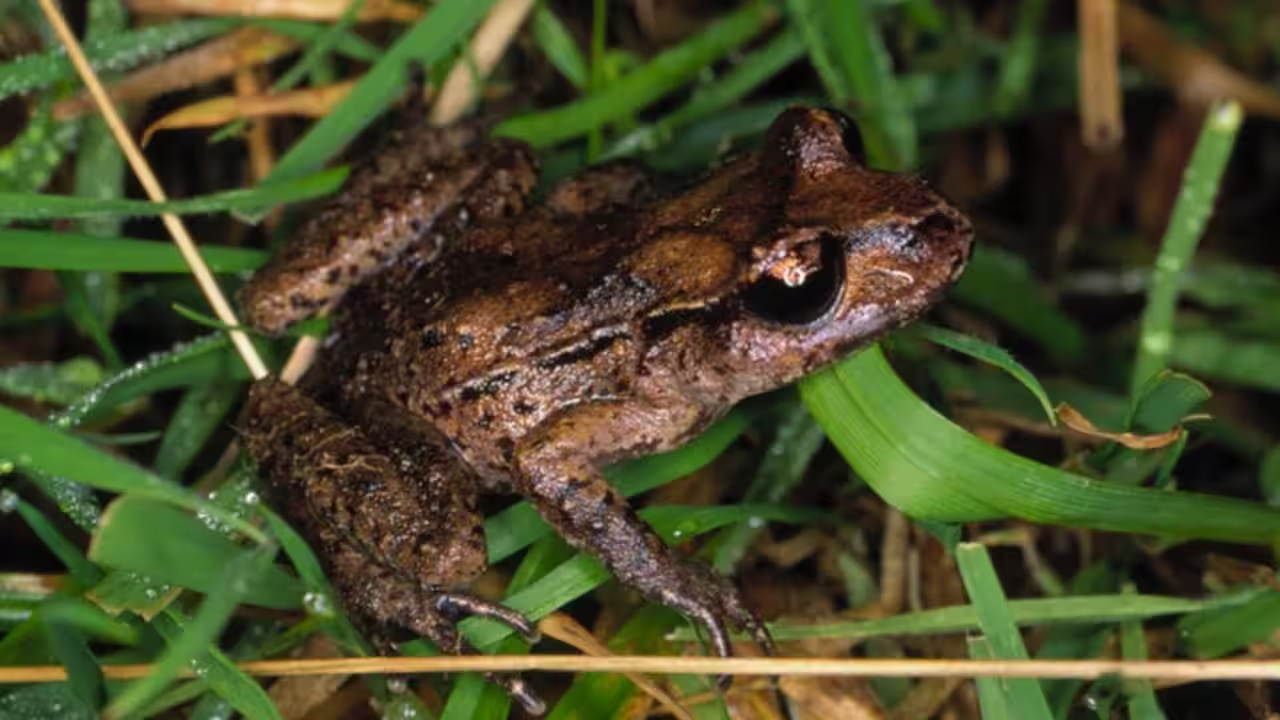
In 1984, conservationists in New Zealand's Marlborough Sounds moved a population of Maud Island frogs that was confined to a small 15- to 16-hectare area of native forest. The hundred frogs were moved in two consignments to the newly restored habitat in a different location on Maud Island, creating a second population to lessen the species' reliance on one forest fragment. A taxonomic note is also worth mentioning, which is that the species was originally described as Leiopelma pakeka, the scientific name in the first publication on the translocation of the species. The Department of Conservation in New Zealand now usually treats it as a population of Hamilton's frog (Leiopelma hamiltoni).The 1984-85 translocation from Home Bush to Boat BayFrogs were moved in batches: 43 frogs in May 1984 and 57 frogs in May 1985 from the forest patch called Home Bush to the rehabilitated site in Boat Bay, which is half a kilometer distant from the original site. The study was published in the New Zealand Journal of Zoology by Ben D. Bell, Shirley Pledger, and Penelope L. Dewhurst. The researchers have also pointed out that frogs released in 1984 tended to settle nearer to their release site compared to frogs released in 1985, as the latter seemed to avoid the former.Nearly two decades of mark-recapture monitoringSeveral mark–recapture surveys were conducted over a period of almost two decades following the 1984-85 translocation, which allowed the scientists to determine the longevity, dispersal and recruitment of frogs. Seventy of the 100 translocated frogs, as well as 35 recruits born into the population, were recaptured by August 2002. Most of the frogs remained near their release location, while a few moved away from it.Body condition and a high post-settlement survival rateHowever, the translocated individuals went further than just surviving. As the above study indicates, frogs in the Boat Bay area were relatively heavier compared to the frogs in the control group. The researchers attribute this finding, with caution, to low density and high food availability per individual frog. The population initially declined as some founders died, but it later stabilized as recruitment from the local population offset those losses. High survival was recorded following the first period of settlement, but there is no adequate information available from the accessible sources to independently confirm the commonly quoted figures of a 97% survival rate and 33 years life expectancy.A longer view: Two decades of population dataThat longevity is reflected in Bell’s later work. In his 2010 review, The threatened leiopelmatid frogs of New Zealand: Natural history integrates with conservation, published in Herpetological Conservation and Biology, Bell discussed more than two decades of demographic monitoring on Maud Island. He described the long-term work as an unusually extensive study of a wild frog population.According to the Department of Conservation, Hamilton's frog can live for up to 45 years, making it one of the longest-living frogs in the wild. Besides, they have the smallest habitat, moving their centre by just 1.3 metres over a period of 10 years. The study also included cumulative recruitment data after the 1984-85 translocation.Why the translocation still mattersThe Boat Bay project provided lessons for future conservation efforts. In 1997, 300 frogs from the Maud Island population were moved to Motuara Island; according to the Department of Conservation, this was the first time a native New Zealand frog was ever translocated between islands. However, its status depends on biosecurity measures, as the agency has also reported at least one case of mice entering Maud Island in the years since the project. The frogs survived, produced offspring and established a population after being moved to suitable habitat. Few, if any, other New Zealand amphibian conservation projects have been monitored for as long, and the Boat Bay population has become an important case study in New Zealand amphibian conservation.Catch the latest World News and Live updates. Download the TOI app.
Topics in this story
Gathered from external sources. Rights to this text belong to whoever originally published it.