He was born with an underdeveloped arm and faced hurtful comments as a child; at 18, he built a working LEGO prosthetic, helping an 8-year-old boy with similar limb differences
David Aguilar, an inventor from Andorra known as “Hand Solo”, turned his childhood fascination with LEGO bricks into a working prosthetic arm after
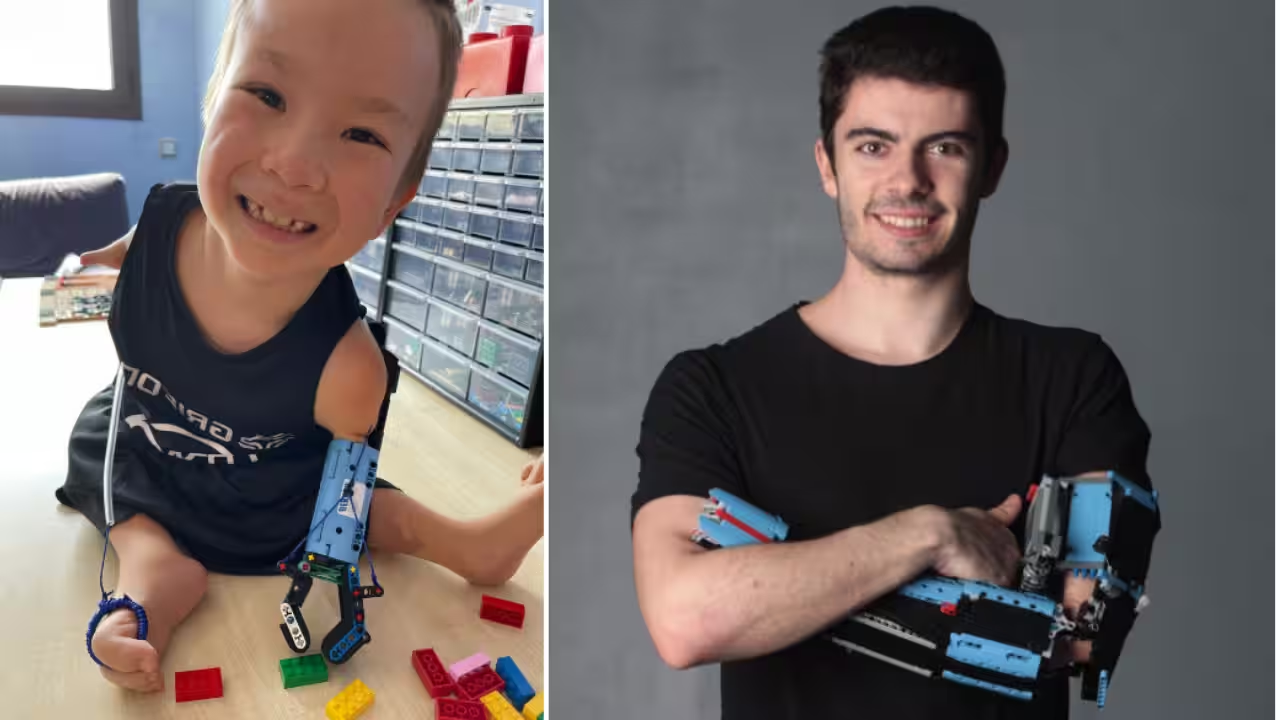
David Aguilar, an inventor from Andorra known as “Hand Solo”, turned his childhood fascination with LEGO bricks into a working prosthetic arm after growing up with an underdeveloped right forearm. Born with Poland syndrome, a congenital condition that affected the development of his right arm and pectoral muscle, Aguilar recalled facing insensitive comments from other children. He began experimenting with LEGO prosthetics at the age of nine, although his first attempt was too heavy to work properly. In 2017, aged 18, he built a functional mechanical arm using pieces from a LEGO Technic helicopter set. His invention later helped another child, eight-year-old Beknur Zhanibekuly, who was born with both arms underdeveloped.From hurtful comments to a working LEGO prostheticAguilar’s interest in building things began when he was young. LEGO became a way for him to explore possibilities and work towards a practical solution for his limb difference. At nine, he attempted to build an arm using the construction bricks, but the design was too heavy and did not function properly. Rather than abandon the idea, he continued experimenting as he grew older.Nine years later, he created the MK-I, a mechanical prosthetic made from pieces of a LEGO Technic Rescue Helicopter set. It featured a movable elbow joint and a grabber that allowed him to pick up objects by bending his elbow. In January 2017, he earned a Guinness World Records title for creating the first functional LEGO prosthetic arm.How his invention reached another childIn 2021, Aguilar’s work caught the attention of Beknur’s mother, Zaure Bektemissova, who contacted him after learning about his LEGO prosthetic. Beknur, who was born with both arms underdeveloped, had struggled to find prosthetic devices that worked for him. Aguilar took on the challenge with support from his father, Ferran, and developed two LEGO-based devices for the eight-year-old.The first, called the MK-Beknur, featured a gripping mechanism controlled by a cord connected to one of Beknur’s feet. The second, named the eMK-Beknur, incorporated a stylus that allowed him to operate capacitive touchscreens on devices such as mobile phones and tablets. Beknur and his mother travelled from France to Andorra to receive the prosthetics in August 2021.A low-cost alternative with a practical purposeAccording to Guinness World Records, the LEGO pieces used to build the foot-controlled MK-Beknur cost about €15. The device was designed to help Beknur pick up small objects, while the stylus-equipped version enabled him to use touchscreen devices. The two designs earned separate Guinness World Records titles in 2021 for the first functional foot-controlled LEGO prosthetic arm and the first functional LEGO prosthetic arm with a stylus.His goal of making prosthetics more accessibleAguilar has continued developing different versions of his LEGO prosthetic arms, working to improve their comfort and functionality. His later models include the MK-V, a motorised design with five fingers controlled through subtle movements of his residual arm. He has also shared building instructions online, allowing others to explore how LEGO components can be used to create prosthetic devices.A bioengineering student and advocate for inclusion, Aguilar aims to make prosthetic technology more affordable and accessible. His work with Beknur showed how an invention originally developed to address his own needs could be adapted to help another child. What began as a childhood experiment with LEGO bricks became a practical engineering project with a wider purpose: helping people with limb differences find new ways to carry out everyday tasksYou use AI every day. Now get your AI Quotient. Take the AIQ test.
Topics in this story
Gathered from external sources. Rights to this text belong to whoever originally published it.