An 8-year-old girl waited for her mother who never arrived in 1987; nearly 40 years later, DNA evidence links a convicted killer to her disappearance, but her body remains missing
For nearly four decades, the disappearance of a Washington mother remained an unanswered question for her family.
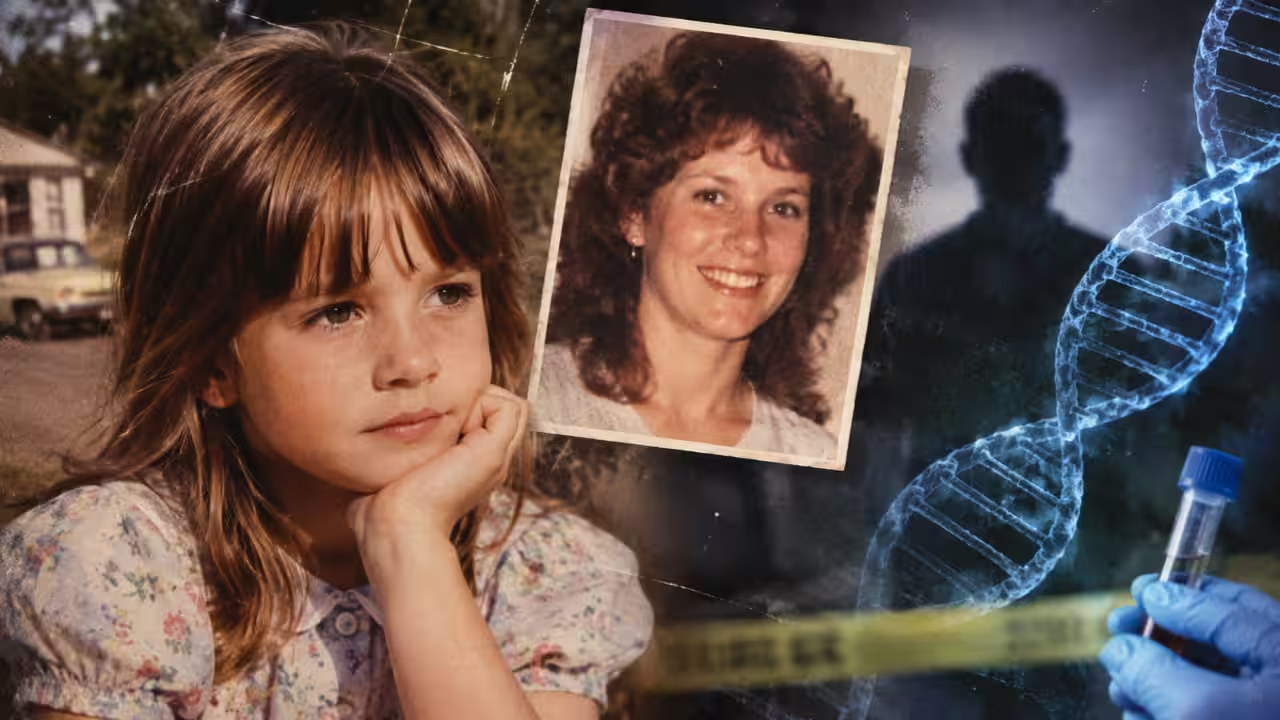
For nearly four decades, the disappearance of a Washington mother remained an unanswered question for her family. Wendy Aughe was 29 when she vanished in April 1987, leaving behind an eight-year-old daughter who had been waiting for her to arrive at a babysitter's home. Her body was never found, and investigators spent years trying to establish what had happened. The case remained unresolved until DNA evidence eventually linked a convicted murderer, already serving time in an Oregon prison, to evidence recovered from Aughe's bedroom. Now, almost 40 years after she disappeared, Darren Dee O'Neall has pleaded guilty to first-degree manslaughter in her death. He has received a 12-year prison sentence, but her remains have still not been recovered.Aughe's disappearance and the disturbing evidence found at her homeAs reported by The Bellingham Herald, Aughe was last seen on April 25, 1987, after spending time with a man she had met earlier that day. That man was Darren Dee O'Neall, who was 66 when he appeared in court in November 2026. According to court documents, the two had gone on a date, and O'Neall was subsequently seen driving Aughe's car without her.Concern grew when Aughe failed to collect her eight-year-old daughter from a babysitter. She was officially reported missing to Bellingham police on April 28, prompting officers to look into her disappearance. A visit to Aughe's home produced evidence that suggested something far more serious than an unexplained absence. The babysitter, accompanied by a police officer, went to the property to collect clothing for the child. Inside the bedroom, they discovered dried blood around the head of the bed. Investigators also found a semen stain on the bedsheet.Despite the evidence, the case did not immediately lead to a conviction for Aughe's disappearance. Her whereabouts remained unknown, while her family was left without an explanation for what had happened.DNA evidence brought investigators back to the caseA significant development came in August 2015, when the Washington State Patrol Crime Laboratory completed testing that connected O'Neall to the evidence collected from Aughe's bedroom. The laboratory confirmed a DNA match between O'Neall and the semen stain found on the bedsheet. Testing of a bloodstain on the upper-left corner of the bedsheet produced a partial DNA profile belonging to a single female. Investigators found that it matched Aughe's presumed DNA profile, according to court records.The findings gave investigators a direct forensic link to a man whose criminal history already included serious violent offences. Yet it would take several more years before he was formally charged in connection with Aughe's presumed death.On October 11, 2022, prosecutors charged O'Neall with her killing. The case was filed as second-degree murder, although he initially denied the charge. In March 2023, authorities brought him from Two Rivers Correctional Institution in Umatilla, Oregon, to Whatcom County, Washington, to face the proceedings.Earlier convictions put investigators on O'Neall's trailAughe's disappearance was not the first killing associated with O'Neall. In February 1989, he was convicted of first-degree murder in the death of Robin P. Smith, whose killing took place in Pierce County, Washington, in 1987. The circumstances of Smith's death were described as similar to those surrounding Aughe's disappearance, according to previous reporting by The Bellingham Herald. O'Neall was later convicted in August 1990 in a separate case involving a 14-year-old girl in Portland. He had kidnapped and repeatedly sexually assaulted the teenager in 1987. The conviction resulted in a 135-year prison sentence, as reported by The Bellingham Herald.His criminal record and suspected involvement in other violent offences also attracted attention from investigators in several states. Earlier reporting described him as a suspect in multiple killings and missing-person cases, and noted that he had once been among the FBI's Most Wanted.According to court records cited by The Bellingham Herald, O'Neall's earliest release date from the Oregon prison was May 2033.Nearly 40 years later, he admits responsibilityThe case finally reached a resolution of sorts in November 2026, when O'Neall appeared before a Whatcom County Superior Court judge. Rather than proceed with the original murder charge, he entered a guilty plea to an amended charge of first-degree manslaughter. The hearing attracted current and former Bellingham police officers, including detectives who had worked on the investigation, alongside members of Aughe's extended family.His lawyer, Peter Ramey, told the court that O'Neall wanted to acknowledge the suffering experienced by the family and accept responsibility. However, he also pointed out that a conviction at trial had not been certain, given the time that had passed since the alleged killing and the difficulties associated with prosecuting a case nearly four decades later. O'Neall did not make a personal statement during the hearing.Judge Robert Olson imposed the agreed sentence of 12 years in prison, followed by three years of community custody. The order also prohibits O'Neall from contacting Aughe's daughter, Charlina Johnson. The sentence was supported by Aughe's family and the Bellingham Police Department. Although the original charge carried the possibility of a more serious conviction, the manslaughter plea brought the long-running prosecution to an end.Daughters' family speaks of decades of loss and unanswered questionsFor Johnson, the hearing was about more than the outcome of a criminal case. She had spent most of her life without knowing what had happened to her mother, and the absence had shaped her childhood and adult years. She attended the sentencing carrying a framed photograph of Aughe taken shortly before she disappeared. The picture showed her mother around the time of Johnson's eighth birthday, just days before the two were separated. Johnson also brought a scrapbook assembled by her great-grandmother. It contained newspaper reports documenting the disappearance and the subsequent legal proceedings involving O'Neall.Addressing the judge, she spoke about the ordinary experiences she had missed, including the possibility of having her mother alongside her as she grew older and raised a family of her own. She also described the particular difficulty of living without a grave or a known resting place to visit.Her sister, Aughe's other daughter, died four years earlier, shortly after learning that O'Neall had been charged in connection with their mother's death. Johnson said she wished her sister could have been present for the sentencing. Her niece, Savannah Fields, also addressed the court, recalling the years her mother had spent trying to understand the disappearance and cope with the uncertainty surrounding Aughe's fate.Guilty plea brings legal closure, but Aughe's body remains missingDuring sentencing, Judge Olson referred to O'Neall's extensive record of violent offences and described his criminal history in particularly severe terms. The court ultimately accepted the jointly recommended punishment rather than proceeding to a trial. Speaking to The Bellingham Herald after the hearing, Johnson said she had been involved in discussions surrounding the plea agreement and already knew what sentence had been recommended. Hearing the decision formally delivered nevertheless brought a sense of relief. For her, the outcome meant she could begin moving forward without the same uncertainty about whether her mother's disappearance would ever be addressed in court.Disclaimer: This article is based on publicly available reports by The Bellingham Herald and other sources. The Times of India has not independently verified all the details.You use AI every day. Now get your AI Quotient. Take the AIQ test.
Topics in this story
Gathered from external sources. Rights to this text belong to whoever originally published it.