In 1992, a trucker paid $5 for a drip painting at a San Bernardino thrift shop; a fingerprint said Pollock, experts said no, and she died in 2019 refusing $50 million
In 1992, Teri Horton bought an oil painting for $5 at a thrift shop, igniting a decades-long debate over its connection to Jackson Pollock. Despite forensic evidence, experts dispute its authenticity. Horton declined offers up to $50 million before her death in 2019, leaving the painting's origins shrouded in mystery.
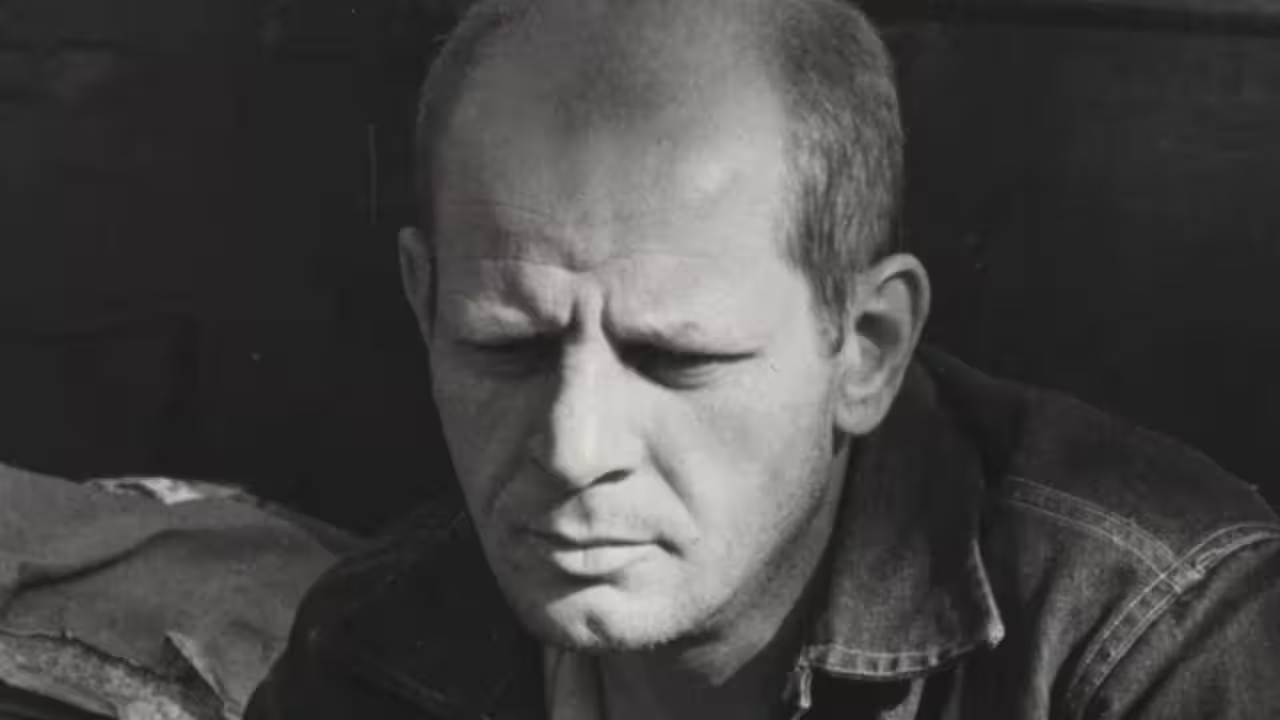
An oil painting purchased at a thrift store in California for $5 dollars, sparked a legal battle over its provenance as a work by the most famous American abstract painter. Teri Horton, a truck driver from California, purchased the painting to give it as a present to a friend. At the time, she had no idea that the artwork might be an original painting by Jackson Pollock, whose works have sold for millions of dollars. The story started in 1992; however, arguments about the painting’s origins have gone on far beyond that year. Although forensic art expert Paul Biro claimed that a fingerprint on the painting matched one found on a paint can in Pollock’s former studio, the evidence did not establish that Pollock had created the artwork.A $5 thrift shop purchase led to an unexpected discovery According to the Los Angeles Times, Horton bought the 66-by-48-inch painting for $5 at Dot’s Thrift Shop in San Bernardino, California, in 1992. Her plan was to give the canvas to her friend. However, it was too big to pass through the entrance of her friend's trailer. Later on, she decided to sell the canvas at a yard sale. Upon observing the canvas, an art teacher proposed that the artwork could be one of Pollock’s works. Initially, Horton was unaware of Pollock as an artist. Nevertheless, the suggestion urged her to find out more about it. He became popular by using drips, pours and splashes of paint on huge canvases. It seemed reasonable due to Pollock's style. However, the only thing visual similarities could not prove was the painter.A fingerprint examination pointed towards Pollock’s studio Eventually, Horton contacted forensic art expert Paul Biro from Canada. During his examination, Biro reported finding a partial fingerprint in paint on the back of the canvas. According to CNN’s 2007 report, Biro compared the fingerprint found on the back of Horton’s canvas with one he identified on a paint can in Pollock’s former studio in East Hampton, New York. Biro claimed that the partial fingerprints on the canvas matched a print on a paint can from Pollock’s former East Hampton studio. He argued that the match connected the painting to the artist’s studio, although he did not independently establish Pollock as its creator. André Turcotte, a retired fingerprint examiner with the Royal Canadian Mounted Police, supported Biro’s fingerprint comparison.However, apart from studying the prints, Biro analysed the paintings, material composition and condition as well. According to his conclusion, the painting had enough similarities to be made by Pollock, but this conclusion didn’t confirm the artist's authenticity without doubt. After consulting a team of Pollock specialists, IFAR concluded that the painting was not by Jackson Pollock. According to CBS News, IFAR’s expert acknowledged that the painting had some strong similarities to authentic Pollock works, but concluded that it was not by his hand.Art specialists rejected the Pollock attributionIFAR tested the painting and sought the views of experts acquainted with Pollock’s style of painting. After consulting a team of Pollock’s specialists, there were issues related to provenance that added more complications to the case.The painting had no signature and had no ownership history linking it to Pollock. By the time Horton started investigating the painting's origin, Dot’s Thrift Shop had been torn down and its owner had died. It was hard for anyone to trace the origins of the painting or know how it came into the hands of the owners of the thrift shop.Horton declined millions, but never sold the paintingNevertheless, Horton was sure that the canvas was authentic. There is a difference in the reports about the potential buyers’ offers; CBS reported that there was at least one art collector willing to pay $2 million, while the Los Angeles Times mentioned the art dealers as the source of the offer. Horton also reportedly rejected a $9 million offer from a Saudi collector, according to The New Yorker. In a 2007 interview with CBS News, Horton said she believed the painting was worth at least $50 million, although no independent valuation or confirmed offer of that amount was established. This amount referred to the price, which she expected from the sale of the canvas. The story became well known through the documentary film Who the $&% Is Jackson Pollock? That described her attempts to prove the authenticity of the work. Horton passed away on July 8, 2019, being 86 years old. At the time of her death, the artist of the canvas was not established. It remained disputable and unauthenticated and there was no conclusion about the artist who created it.You use AI every day. Now get your AI Quotient. Take the AIQ test.
Topics in this story
Gathered from external sources. Rights to this text belong to whoever originally published it.