COP17 puts Armenia’s environmental record in the spotlight
As Yerevan hosts the global biodiversity summit, concerns over mining and environmental protection deserve scrutiny.
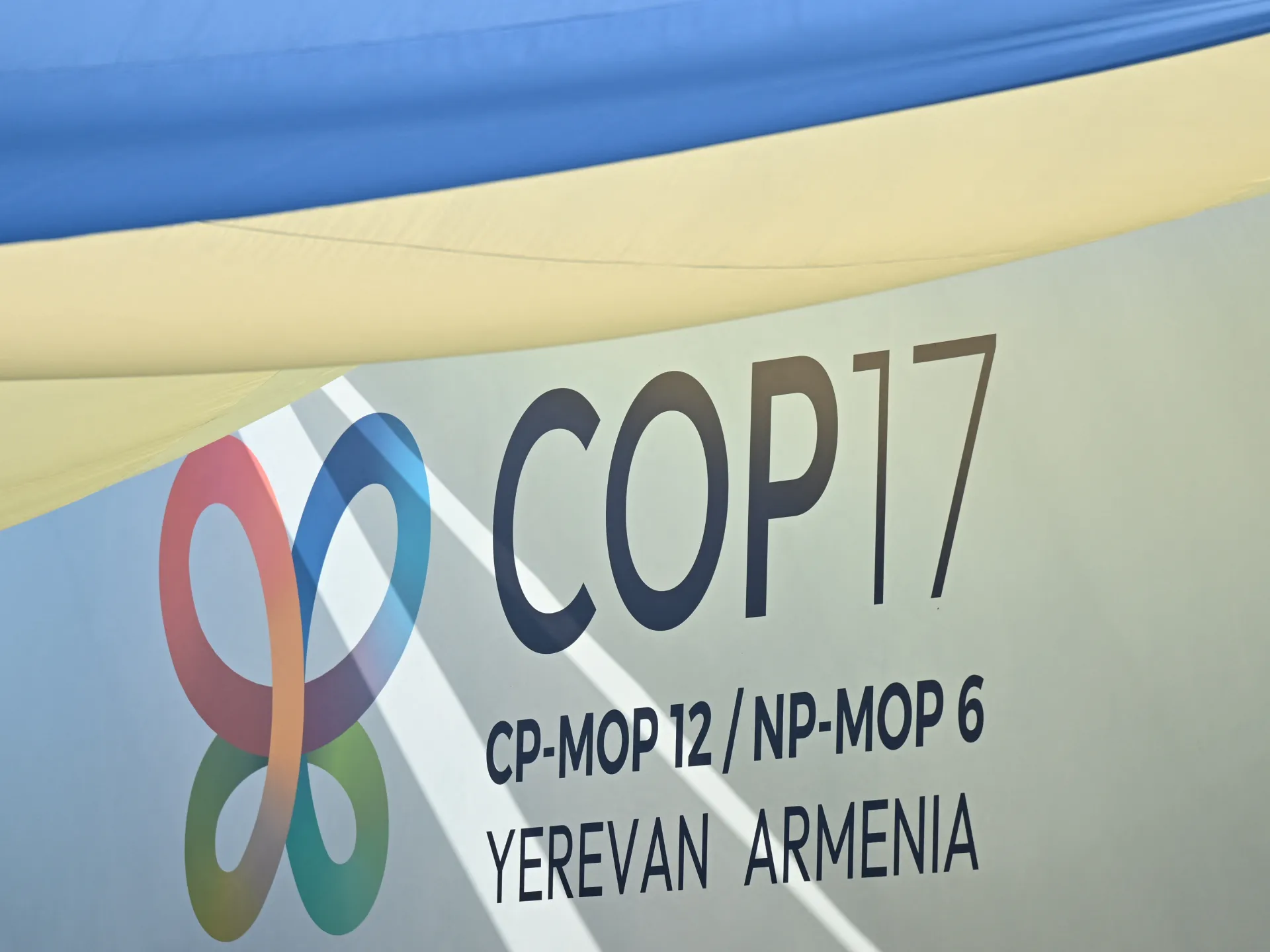
Last weekend, the 17th meeting of the Conference of the Parties to the Convention on Biological Diversity (COP17) opened in Yerevan with a lavish ceremony. It is the first time the summit has been hosted by a former Soviet republic, an occasion the Armenian government has celebrated as an opportunity to establish the country as a leader in environmental protection. But Armenia’s own ecological record raises serious questions about its suitability for this role.
When Yerevan was awarded the right to host COP17 in 2024, the Armenian authorities celebrated the decision as recognition of the country’s environmental ambitions. Yet Armenia has struggled for decades to develop effective conservation policies, and its record remains poor in several important areas. In Yale University’s 2026 Environmental Performance Index , Armenia ranks 75th out of 177 countries, compared with first place for Estonia, another former Soviet republic.
Its performance is particularly poor on waste management, where it ranks 164th, and wastewater treatment, where it ranks 165th. These figures point to serious shortcomings in basic environmental protection.
The contrast raises an obvious question: why was a country facing such serious environmental challenges chosen to host one of the world’s most important biodiversity conferences? The selection might have offered an opportunity to encourage change, but there is little indication that the Armenian authorities have used the occasion to address the country’s longstanding problems.
A major obstacle is the structure of Armenia’s economy, in which mining plays an important role, alongside ageing industrial facilities and inadequate environmental regulation. The country’s largest mining operations, including the Zangezur, Agarak and Teghut copper-molybdenum mines, extract ore using open-pit methods that generate large quantities of waste and pose serious pollution risks. The World Bank has identified mining as a significant source of environmental pollution in Armenia. Open-pit gold mining has also been licensed at Meghrasar, on land that originally overlapped with Arevik National Park, before the government reduced the park’s boundaries in 2015. The Artsvanik tailings reservoir, which holds millions of tonnes of mining waste, has also been linked to heavy-metal contamination in nearby waterways.
Armenia’s environmental problems extend beyond mining. Forests cover only 11.1 percent of the country, while in Yerevan, levels of harmful fine particle air pollution are about five times the World Health Organization’s recommended limit.
Armenia’s dependence on Russian-linked businesses in some of its most important industrial sectors further complicates efforts to strengthen environmental regulation. These companies are not only major investors and employers, but also important contributors to the state budget, giving the government a powerful economic incentive to protect their operations. Russian-linked investors hold a controlling stake in the Zangezur copper-molybdenum complex, which was Armenia’s largest taxpayer in the first half of 2026.
That conflict between economic interests and environmental protection was on display just days before COP17, when Armenia inaugurated the controversial Amulsar gold mine. Environmental organisations, including the Global Forest Coalition and various Armenian civil society groups, have condemned the move, arguing that it disregards longstanding environmental concerns and recommendations under the Bern Convention.
Human rights organisations have documented intimidation and lawsuits targeting activists campaigning against Amulsar. Armenia’s Economy Minister has defended the project on economic grounds, saying it could contribute between 1.5 and 2 percent of the country’s GDP and generate approximately $130m annually in taxes and other payments to the state budget. The projected revenues expose the contradiction between the government’s determination to expand mining and its ambition to present Armenia as an international leader in biodiversity protection.
These competing priorities are particularly important as Armenia seeks closer relations with the European Union and distances itself from Moscow. The EU–Armenia Strategic Agenda identifies the need for stronger implementation of environmental impact assessment legislation, improvements to waste management, and further action on air quality, water protection and industrial emissions. Progress on these commitments should be central to the EU’s assessment of Armenia’s efforts towards closer integration.
At COP17, governments are reviewing progress under the Kunming-Montreal Global Biodiversity Framework, which aims to halt and reverse nature loss by 2030. The summit is expected to finalise a “Yerevan Pathway” to accelerate implementation of its targets. The prospects are already bleak. The State of Biodiversity Action report , launched before the summit, found that fewer than half of assessed national targets are on track.
Financing remains a major obstacle. Developed countries have provided about $16bn annually in international biodiversity finance, falling short of the $20bn target for 2025. Meanwhile, the Cali Fund, established with the goal of collecting $1bn in annual contributions from companies profiting from genetic data derived from nature, has received just $6,000. These shortfalls illustrate the difficulties facing governments as they seek to turn their biodiversity commitments into action.
As host of COP17, Armenia should be prepared to demonstrate that the commitments being discussed in Yerevan also apply to its own mining industry, environmental regulations and treatment of conservation activists. Participating governments should use the summit to press the Armenian authorities to strengthen environmental protections, enforce pollution controls, ensure credible environmental impact assessments and address the concerns raised by civil society over projects such as Amulsar.
The views expressed in this article are the author’s own and do not necessarily reflect Al Jazeera’s editorial stance.
Topics in this story
Gathered from external sources. Rights to this text belong to whoever originally published it.