In 2017, an artist placed 48 figures in a circle off Indonesia to highlight coral-reef loss; within a year, soft corals and sponges had colonized them
Discover how British artist Jason deCaires Taylor's underwater sculpture installation, Nest, off the coast of Gili Meno, Indonesia, is transforming marine habitats and raising awareness about coral reef loss.
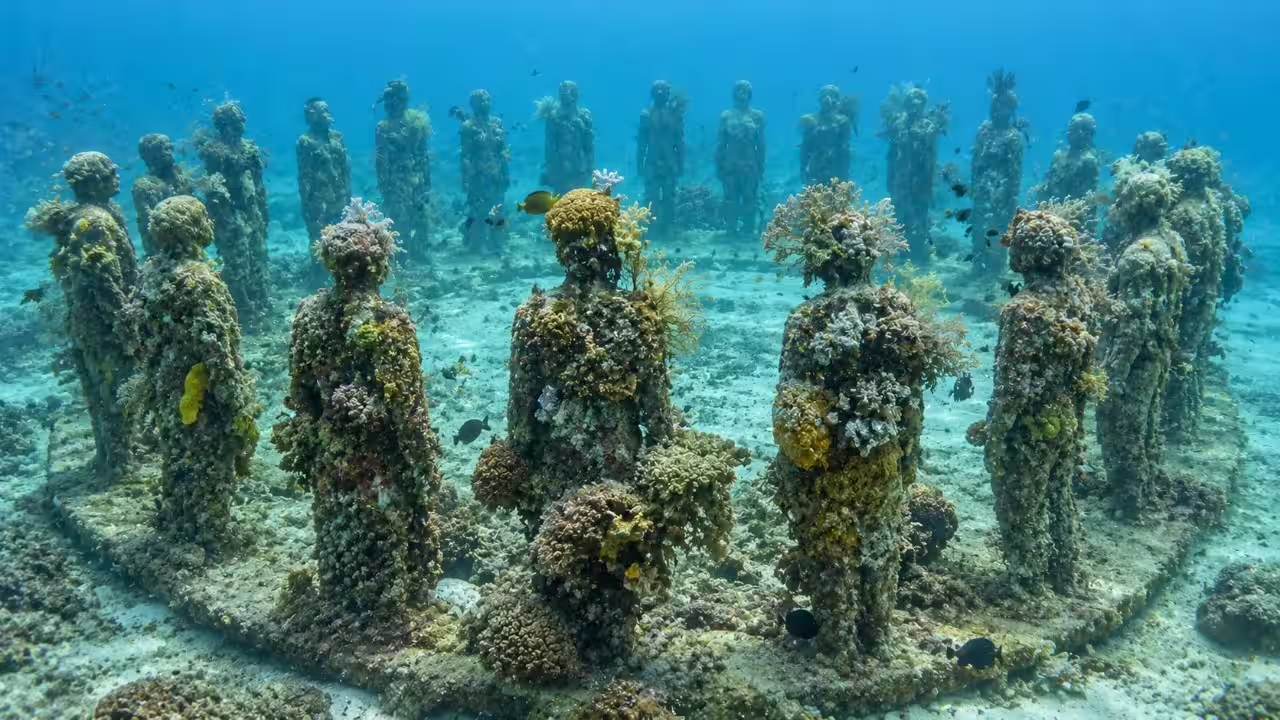
Beneath the ocean’s surface, human figures stand where marine life would typically thrive. Their very existence broaches an unusual question: can artwork become part of the ecosystem it occupies?According to Underwater Sculpture’s report in 2017, 48 human figures were placed four metres beneath the waters of Gili Meno, an Indonesian island between Bali and Lombok. Arranged in a circle on the seabed, the sculptures formed Nest, an underwater installation by British artist Jason deCaires Taylor. The work was designed to provide a surface for marine organisms to settle, bearing in mind the eventual formation of a reef intended to give the installation an ecological function beyond its aesthetic appeal. Taylor’s project merged both sculpture and marine habitat creation. Each figure was life-size, including embracing couples curled up on the seabed.An art gallery in shallow watersThe installation sat about four metres below the surface, making it accessible to snorkellers. Gili Meno is one of the three islands in the Gili group, situated between Bali and Lombok. Its clear waters and turtle population are among the natural features identified in the project’s description.According to a Wandering Educators report in 2017, after the final figures had been installed, they were opened to the public. The work was one of Taylor’s most ambitious installations and his first project in the Asian region, the outlet reported.Before he made Nest, Taylor had spent more than a decade creating underwater installations in locations including the Caribbean, the Canary Islands and the River Thames. His earlier projects included Museo Atlántico in Lanzarote and the Museo Subacuático de Arte in Mexico, as reported by Wandering Educators.Sustainable by design The figures were made using pH-neutral, environmental-grade concrete, while other materials included stainless steel, basalt and aggregates. The concrete was selected to provide a suitable surface for marine organisms such as corals, sponges and filter-feeding organisms.The plans of BASK Gili Meno, the resort developer, also shaped the context for the sculptures. The resort was planned to comprise villas featuring energy-saving technology, sustainable materials and architecture intended to respect the island’s natural surroundings and local culture, Wandering Educators reported, sustainable materials and architecture intended to respect the island’s natural surroundings and local culture, Wandering Educators reported.Turning underwater art into ocean awareness The project was conceived against a backdrop of declining coral populations. According to Wandering Educators, about 40% of the world’s coral reefs had been lost over the preceding decades, and scientists had warned that further losses were likely to occur. Taylor intended the installation to evoke a sense of awareness in visitors about what lay beneath the water and the vulnerability of marine habitats. For Taylor, the sculptures represented a connection between people and the natural environment. In an interview with Wandering Educators in 2017, he said: “First and foremost, Nest is an environmental space.But Nest is also a bridge between the human and marine worlds.”The installation was commissioned by BASK Gili Meno. Its position within swimming distance of a publicly accessible beach meant that visitors could observe the figures underwater. Visitors did not need access to a restricted resort facility.You use AI every day. Now get your AI Quotient. Take the AIQ test.
Topics in this story
Gathered from external sources. Rights to this text belong to whoever originally published it.