Meet Nathan Davies, the UK father who won £98,000 on a quiz show and set a world record by eating 15 fish fingers in 60 seconds
Most people who win money on a television quiz show spend the prize on something sensible. Nathan Davies chose a rather different route.
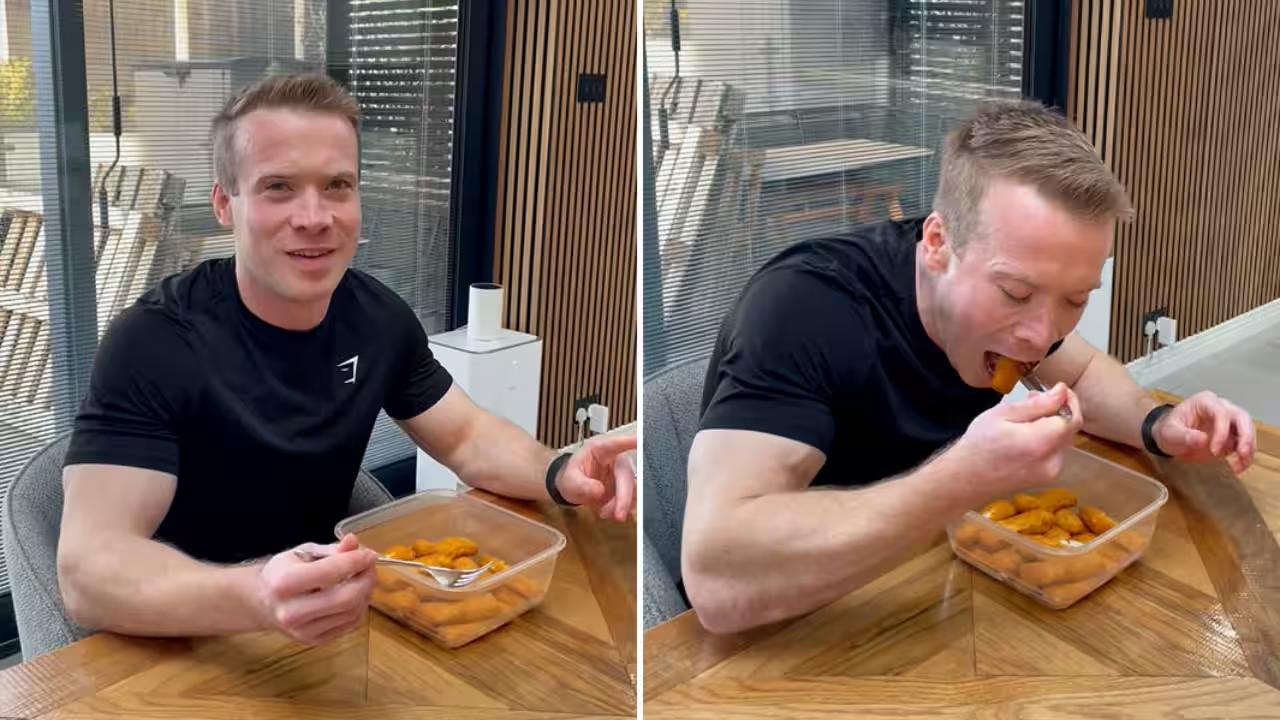
Most people who win money on a television quiz show spend the prize on something sensible. Nathan Davies chose a rather different route. After winning £98,000 on The 1% Club, the proud father of two kept a promise he had made on national television, he would break a world record. His chosen challenge was gloriously ordinary, a household staple eaten against the clock. In a single minute, he swallowed fifteen fish fingers and earned an official title. Here is how the attempt came about, why he chose that food, what he said afterwards, and which records could tempt him next.How a promise made to host Lee Mack on The 1% Club became an official Guinness World Records attemptTelevision quiz shows rarely end with a viewer promising to chase a world record, yet that is exactly what happened when Nathan Davies appeared on The 1% Club. The father of two from the United Kingdom won £98,000 on the programme, and during his appearance he told its host, Lee Mack, that he wanted to break a world record. According to Guinness World Records, Davies did not let the remark fade into television trivia. He followed through on the promise he had made on national television and secured the title for the most fish fingers eaten in one minute. The total that earned him the record was fifteen, achieved in sixty seconds.Why fish fingers, a household staple for a father of two young boys, suited a speed eating challengeThe 32-year-old project manager did not pick his food at random. Davies told Guinness World Records that fish fingers felt achievable because he already held a few less formal eating records, which made the challenge feel like familiar territory. There was also a very practical reason rooted in family life: fish fingers are a staple in his home because of his young boys. Before committing, he ran a small test to see how quickly he could eat four of them, then decided the full attempt was worth a go. For readers weighing up their own record ideas, his approach offers a useful lesson. Choose something you know well, check your pace in advance, and only then step up to the main event.What Nathan Davies said after the record: pride, a cooling regret and a joking warning from his wifeDavies was candid about how the achievement felt. He told Guinness World Records that holding a world record felt a little strange and made him very proud, though somewhat less proud given that the subject was fish fingers. He also admitted to a touch of disappointment about his final count of fifteen. Davies told the organisation that he believes he could have eaten more if he had allowed the fish fingers to cool for longer before starting, but he stressed that he was simply happy to have the record. When asked whether more attempts might follow, he joked, telling the publication, "Not if my wife has any say!" The writer's own verdict was kind, there is nothing wrong with fish fingers, and he should be proud.The other Guinness World Records titles Davies could also chase nextShould Davies ever fancy another fish finger challenge, Guinness World Records points to two intriguing options. The first is the largest fish finger, a giant measuring 2 metres (6 feet 6 inches) in length and weighing 136 kilograms (299 pounds 13 ounces), almost the same weight as a giant panda. Michael Gorich of Germany cooked it in 2009. The second is the most expensive fish fingers, a title set in 2004 by Barry Coutts' Bistro in Aberdeen, Scotland. Those luxury versions were made with smoked halibut, king scallops, crayfish, monkfish and Beluga caviar, and each cost £100. The organisation suggests Davies could spend some of his game show winnings on them, though it also suspects his wife may have something to say about that.You use AI every day. Now get your AI Quotient. Take the AIQ test.
Topics in this story
Gathered from external sources. Rights to this text belong to whoever originally published it.