Congo's Ebola death toll crosses 3,000 amid worst outbreak in country's history; cases top 6,100
Rest of World News: More than 3,000 people have died in the Democratic Republic of Congo's Ebola outbreak, with confirmed cases crossing 6,100 as authorities struggle to .
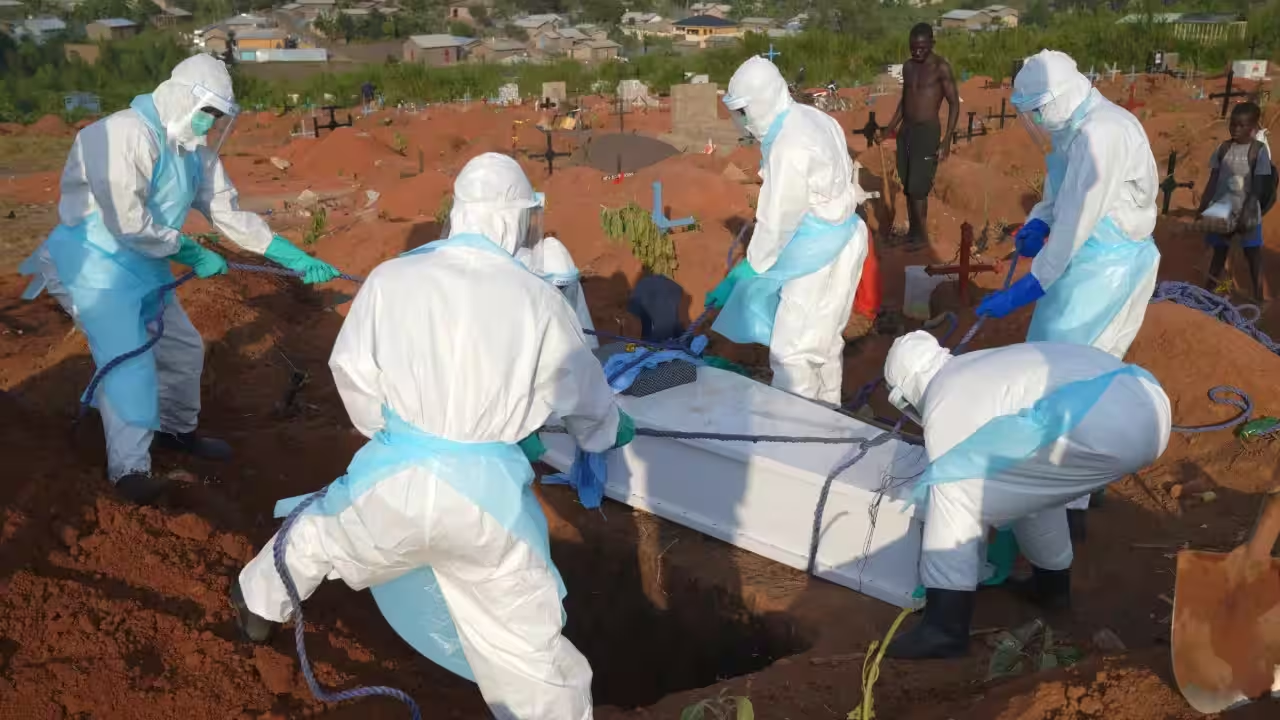
More than 3,000 people have died in the Democratic Republic of Congo's Ebola outbreak, with confirmed cases crossing 6,100 as authorities struggle to contain the country's worst-ever epidemic.Latest data from Congo's ministry of health showed that 6,186 confirmed cases and 3,007 deaths have been recorded since the outbreak was declared in Ituri province on May 15.According to Reuters, some health officials and experts believe the outbreak may have begun as early as January.The outbreak, caused by the rare Bundibugyo species of Ebola, has become the largest and deadliest in Congo's history after surpassing the 2018-2020 epidemic.It has spread to six provinces and remains the fastest-growing Ebola outbreak ever, according to news agency AP.Efforts to contain outbreak face major challengesHealth experts have cited weak surveillance systems, insecurity and community resistance among the factors hampering efforts to identify and treat patients early.The World Health Organisation estimates that around 60% of deaths occur outside treatment centres, according to Reuters, underlining the difficulty of detecting cases before patients succumb to the disease.Conflict in eastern Congo, where the outbreak is concentrated, attacks on health workers, inadequate health infrastructure and constant movement among miners have further complicated the response.The World Health Organisation has said the outbreak is on track to exceed the deadliest Ebola epidemic on record, the West African outbreak between 2014 and 2016, which infected more than 28,600 people and killed over 11,000 across Guinea, Liberia and Sierra Leone.Schools reopen amid transmission concernsThe start of a new academic year has also raised concerns about possible transmission in classrooms. Schools reopened across Congo on Tuesday despite calls from the teachers' union in Ituri, the epicentre of the outbreak, to delay the resumption of classes.Some government-owned schools in Ituri recorded low attendance, while a parent in Bunia said she was keeping her child at home.“I do not really see an increase in prevention measures,” said Aimerance Vahweka, a parent in Bunia, as cited by AP.Education officials said some schools were being equipped with noncontact infrared thermometers, hand sanitisers and hand-washing basins.“We also raise student awareness about adhering to hygiene protocols, particularly regular handwashing and the use of hand sanitiser,” said Etienne Ndjabu, a teacher at a private school in Bunia.However, many schools lack access to clean water and funding remains below target. “There are also significant logistical challenges, particularly in remote areas, where the delivery of equipment and learning materials may be delayed,” Greg Ramm, director for Save the Children in Congo, said.According to available health data, children aged four and below have the highest case-fatality rate of any age group in the outbreak, at 60%.No approved vaccine or treatment for BundibugyoThere is currently no approved vaccine or treatment specifically for the Bundibugyo species of Ebola that caused the outbreak.Several vaccines are under development, including candidates from the University of Oxford and the International AIDS Vaccine Initiative, according to Reuters.Congolese authorities have begun vaccinating frontline health workers with Merck's Ervebo vaccine, which is licensed against the Zaire species of Ebola and is believed to offer some cross-protection against Bundibugyo.Britain, meanwhile, announced more than £50 million ($67.56 million) in new funding on Tuesday to support efforts to contain the outbreak.The latest commitment brings Britain's total contribution to £78 million, with the funding aimed at supporting disease surveillance, frontline health workers, treatment access, infection control, community outreach and safe burials.“As the outbreak intensifies, we are accelerating our response to match the pace and scale of the challenge,” Britain's minister for Africa Kirsty McNeill said.Catch the latest World News and Live updates. Download the TOI app.
Topics in this story
- Ebola outbreak Democratic Republic of Congo
- Ebola deaths 3000
- Bundibugyo species Ebola
- health officials Ebola Congo
- Ebola vaccine development
- World Health Organisation Congo Ebola
- Ebola containment challenges
- Congo schools reopened Ebola
- children Ebola case fatality rate
- UK funding Ebola outbreak
- World news
- World news today
Gathered from external sources. Rights to this text belong to whoever originally published it.