Northern Ireland cancer wait times 'dangerously long', says patient
The Department of Health says while cancer waiting times are "not where we want them to be", work is "underway to improve performance".
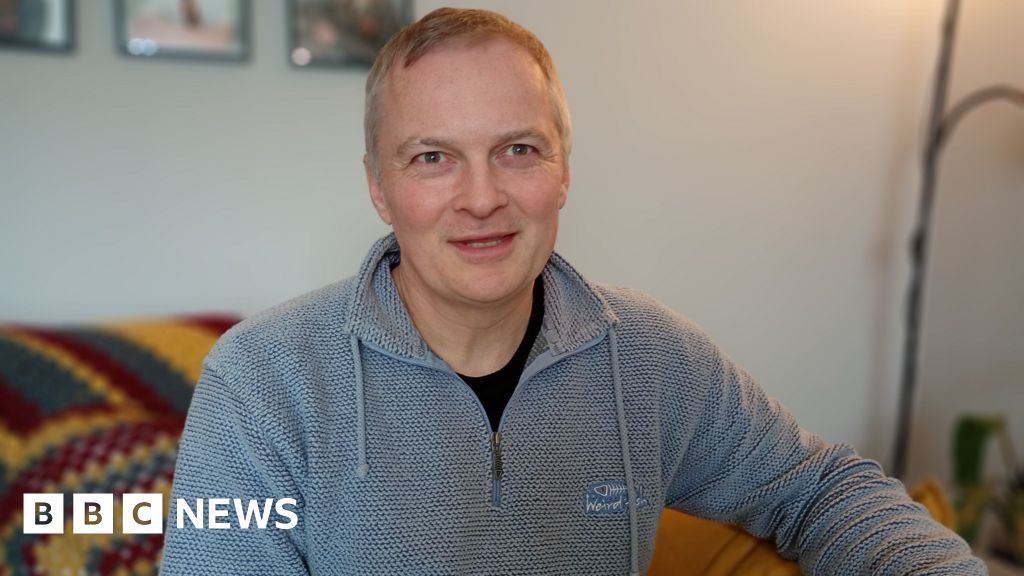
A man who has been fighting incurable cancer for seven years has said increased times between scans and results are becoming "dangerously long" for himself and other patients.
John McClean said waiting for medical outcomes meant he was "constantly on a knife-edge". A lack of radiologists in Northern Ireland meant scans had to be sent to Australia to be analysed, leading to further delay, he said.
Campaigners, survivors and experts have gathered at Stormont to call on the executive to make a commitment to reduce the cancer death rate by 15% by 2040.
The Department of Health (DoH) said while cancer waiting times are "not where we want them to be", work is "underway to improve performance".
McClean is backing the manifesto by Cancer Research UK.
The 51-year-old Antrim man was originally diagnosed with skin cancer but later developed tumours in his brain.
The Longer Better Lives campaign - being launched at Stormont on Tuesday - says the move would prevent around 5,900 cancer deaths between now and 2040.
Among its key recommendations are the urgent tackling of NI's "unacceptably long cancer waiting times", targeted lung screening, extending the age range of the bowel screening programme to 50-74 year olds, and quicker access to tests and scans to detect cancer.
McClean underwent stereotactic radiosurgery, which is a precise form of radiotherapy that delivers a high dose of radiation to a targeted area within the brain.
He also received neurosurgery after three tumours were discovered in his brain. A fourth tumour was discovered in 2024, which required radiotherapy.
He said he was living well with cancer, but receiving quicker scan results would reduce his high level of stress.
"I'm constantly fearful... my anxiety levels are very high all the time and the waiting lists are a big part of that, because once I have a scan I am always more anxious until I get the results," he said.
"There have been times when I've got the results and it's like I relax, because I know that there's going to be a plan.
"I've been able to do my job, but the anxiety is actually what's holding me back at the minute and that makes my life, my working life, much more difficult."
McClean, who documents his story on YouTube, praised his medical team and said the blame for the state of cancer services in Northern Ireland "is Stormont's fault".
Cancer Research UK is calling on Northern Ireland's political parties to prioritise cancer services in their manifestos ahead of next May's Assembly election.
It said more cancers could be prevented through implementing the Tobacco and Vapes Act, providing better support to stop smoking and increasing the uptake of HPV vaccinations to protect against cervical cancer.
The charity has also urged the NI Executive to introduce minimum unit pricing on alcohol and restrictions on less healthy food and drink promotions.
Its Chief Executive Michelle Mitchell said waiting times for cancer care in Northern Ireland are "unacceptable".
"We really can set an ambition to save 5,900 lives by 2040 and reduce cancer deaths by 15%. We believe that's possible and we think political action and support across all the parties is necessary to make that happen."
She said there was also an economic benefit to preventing deaths as a result of cancer as fewer people would be forced to leave employment and there was "a real opportunity to turn the tide on unacceptable cancer outcomes in Northern Ireland".
In a statement, the Department of Health said it was "committed to reducing waiting times across the system and embedding long term changes that deliver better outcomes for all patients".
"However, the absence of a three-year budget makes a major transformation of the healthcare system harder to deliver, and the minister has called for more certainty on the department's budget position to help plan for the future."
In relation to scans being sent to Australia to be analysed, the department said the increased reliance on "radiology outsourcing" had been driven primarily by growing demand across radiology services.
"Ongoing difficulties in recruiting radiologists have impacted reporting capacity while CT scanning has seen demand increase by 10% annually, adding further pressure to in-house capacity. Outsourcing enables services to continue to provide opportunities for patients to receive scans," it said.
Topics in this story
Gathered from external sources. Rights to this text belong to whoever originally published it.