Japan warns Mount Fuji climbers: You'll be charged for off-season helicopter rescues
One prefecture has announced plans to bill climbers who attempt to scale the mountain during dangerous winter conditions.
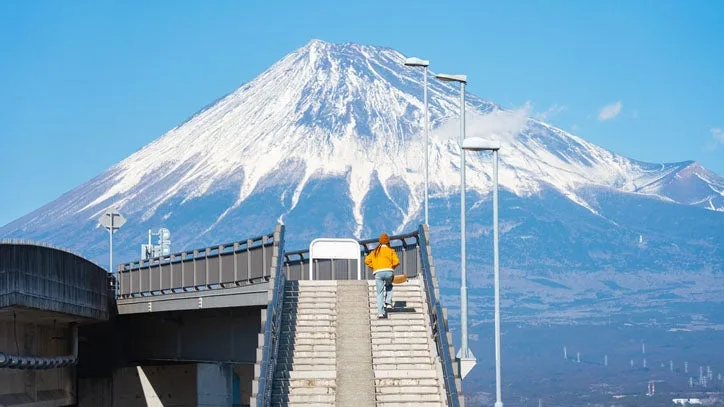
Yamanashi prefecture in Japan plans to charge climbers for helicopter rescues on Mount Fuji during the off-season, starting in September 2027, as a measure to prevent accidents and deter unprepared climbers.
Climbers attempting to climb Mount Fuji during the winter months face severe conditions with temperatures dropping below −4 degrees Fahrenheit and winds exceeding 67 mph, equivalent to a violent Category 4 and 5 hurricane.
Six hikers died on Mount Fuji during the 2027 summer climbing season, prompting stricter rules and restrictions to control crowds at the popular destination where over 200,000 people make the ascent every year.
One prefecture in Japan is warning local and international climbers that it plans to start billing people who require a helicopter rescue after attempting to climb Mount Fuji during the off-season.
The iconic mountain is shared by Yamanashi and Shizuoka prefectures, and both announced plans this week aimed at preventing off-season accidents and deterring unprepared climbers.
Starting in September 2027, Yamanashi plans to charge climbers for chopper rescues, but both regions are making it mandatory for hikers to submit climbing plans in advance. Authorities would then recommend changes to things like routes or equipment.
Climbers who don't submit plans or ignore recommended changes would then be charged a fee if they need to be rescued by helicopter.
"I want people to think about those who have to go and rescue them. This is a matter of common sense. Please spare a thought for those who are called out to carry out rescues at the risk of their own lives, and for the worry that this causes their families," said Yamanashi Gov. Kotaro Nagasaki, according to The Japan Times .
Mount Fuji's climbing season runs from July through early September.
During the winter months, official trails are closed, but some experienced climbers use Mount Fuji's winter conditions to train for extreme ascents.
Those winter conditions can be severe, with temperatures dropping below −4 degrees Fahrenheit (−20°C) and winds exceeding 67 mph (108 kph).
Our meteorologist Jennifer Gray explains that even on an average January or February day, the summit sits around 0 degrees Fahrenheit (−17 to −18°C) with sustained winds near 35 mph (56–57 kph). That's without a storm.
However, winter storms are frequent, and wind gusts atop Fuji have reached 176 mph (284 kph) in January and 145 mph (233 kph) in February — those are speeds equivalent to a violent Category 4 and 5 hurricane.
There's no official word yet on how much the helicopter rescue fees will cost, but one local report says another prefecture with a similar rule charges $52 (8,000 yen) for every five minutes of flight time.
Six hikers died on the mountain during this year's summer climbing season; two of the deaths happened just before this September's closure, according to The Asahi Shimbun .
In 2025, entry fees and more detailed rules and restrictions were enforced to control crowds at the popular destination.
It's estimated that more than 200,000 people make the ascent to Japan's highest peak every year.
Topics in this story
Gathered from external sources. Rights to this text belong to whoever originally published it.