In 1989, businessman Adrian Gardiner bought a roughly 3,000-acre South African farm as a family retreat; it grew into a 61,800-acre reserve supporting more than 5,000 animals
Rest of World News: Adrian Gardiner bought a single farm in South Africa’s Eastern Cape in 1989 as a weekend retreat for his family. The property covered about 1,200 hect.
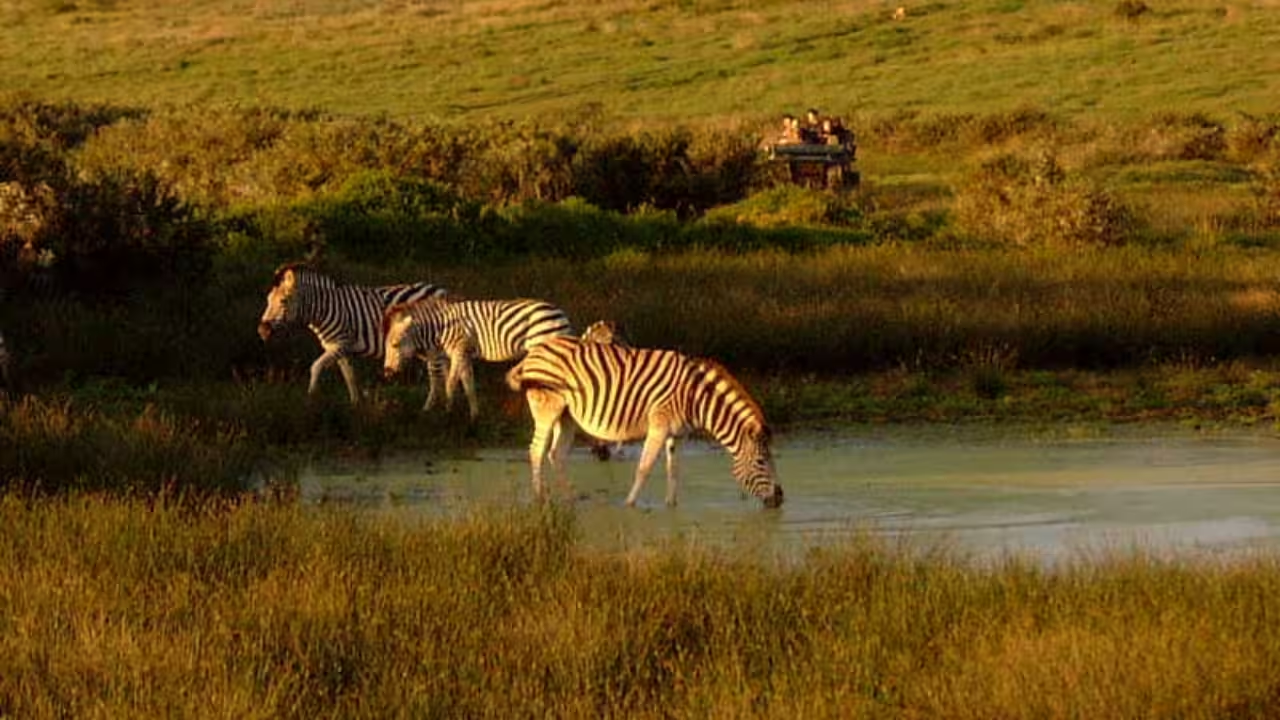
Adrian Gardiner bought a single farm in South Africa’s Eastern Cape in 1989 as a weekend retreat for his family. The property covered about 1,200 hectares, but Gardiner soon began buying neighbouring farms and looking at what the land had been like before years of agriculture, hunting and drought caused a reduction in its wildlife.That project became Shamwari Game Reserve, which today covers about 25,000 hectares, or roughly 61,800 acres, in the Eastern Cape. The reserve is now home to more than 5,000 head of game, according to conservation and tourism records.A family farm became a larger planThe official history of Founders Lodge says that Gardiner bought the Eastern Cape farm as a family weekend retreat in 1989, and three years later, he founded Shamwari Game Reserve. In a 2013 interview with Rhino Africa, he said he kept buying farms until he had accumulated about 10,000 hectares and realised he needed to find a way to use the land. The property had been heavily farmed and overgrazed, which left Gardiner with a landscape that required more than simply putting animals back onto it.Upon researching the region’s earlier wildlife, it was found that species such as lions and other large animals had once occupied the area. Gardiner decided to try to rebuild that ecosystem rather than continue using the land as conventional farmland.Rebuilding an ecosystemGardiner worked with conservationists, including Ian Player, on the effort to recreate parts of the Eastern Cape ecosystem, and this involved more than introducing large mammals. Rhino Africa’s account describes the process as rebuilding an entire ecological system, which began with plant and insect life and eventually extended to larger animals. Gardiner recalled that wild dogs introduced to the property killed large numbers of prey animals because they could use the reserve’s fences to their advantage during hunts, and managing the returning wildlife became part of the broader conservation work.The reserve finally reached a point where it could support large predators, and in October 2000, the first lions were reintroduced to Shamwari as part of a systematic wildlife program. The effort was also tied to tourism, since Gardiner wanted the reserve to generate enough income to sustain conservation, rather than depend entirely on outside funding. The model combined wildlife restoration with safari lodges and employment for people from surrounding communities.From farmland to 25,000 hectaresShamwari opened to its first guests in October 1992, when the reserve consisted of a single lodge and game drives across about 3,500 hectares of restored farmland. The property continued to expand as more surrounding farms were purchased and rehabilitated. Shamwari’s own account says the reserve eventually grew to its current 25,000 hectares, which is equivalent to about 61,800 acres, more than 20 times the size of the original 1,200-hectare farm Gardiner bought in 1989.Earlier conservation records put the wildlife number at more than 5,000 head of game, which included animals that were bred on the reserve and species brought back through reintroduction programs. The project eventually became associated with the return of the Big Five (lion, leopard, elephant, rhino and buffalo) to an area where intensive farming had greatly reduced wildlife.The project expanded well beyond ShamwariGardiner later became involved in other conservation and tourism projects and founded the Mantis Collection in 2000, building a group of hotels, lodges and game reserves around conservation-led tourism. He provided space to the Born Free Foundation for lions and leopards rescued from captivity, which gave the animals large enclosures in the Eastern Cape rather than returning them to conventional captive facilities.He sold Shamwari in 2008 but retained a portion of the original family property, and that land became the Founders Reserve, next to Shamwari, while the Gardiner family home was eventually converted into Founders Lodge. The lodge opened to guests in 2016 after 21 years as the family’s private home. Shamwari now operates as a private game reserve in the Eastern Cape, with its 25,000-hectare footprint incorporating restored former farmland and wildlife habitat.Catch the latest World News and Live updates. Download the TOI app.
Topics in this story
Gathered from external sources. Rights to this text belong to whoever originally published it.