In a UK road-surface trial, sunflower-oil capsules mixed into asphalt reduced stone loss by about 26% after ageing and lowered ageing-related stiffening by 15–20%
Discover how innovative sunflower oil capsules mixed into asphalt may reduce road wear in the UK by preventing stone loss and lowering stiffness, as revealed by recent trials.
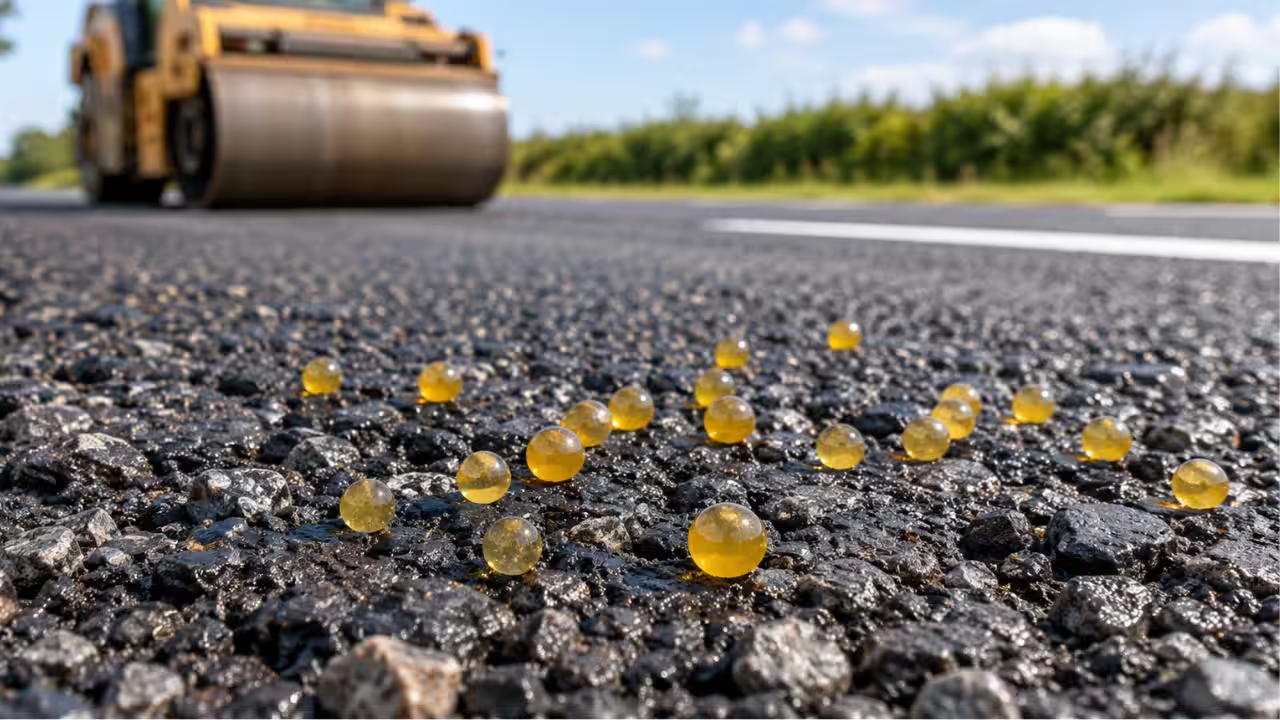
Cracked and crumbling roads are a daily annoyance for anyone who cycles, drives or catches a bus. A trial in the UK has tried out an unusual fix: tiny capsules filled with sunflower oil mixed straight into the asphalt. According to a 2024 Construction and Building Materials paper, this was the first road surface in the UK to use such capsules. The road saw a year of real traffic and the results were then checked in the lab.Why road surfaces wear out Roads have a pretty tough life. They handle heavy traffic daily, while rain, frost and heat make things worse. Over time, the black, sticky substance that holds the road together, bitumen, ages and stiffens. This can lead to stones getting dislodged from the surface. Engineers call this problem ravelling, and the capsules used in the trial were designed to mitigate ravelling. Each of them was a spherical capsule about 1.5 millimetres in diameter, with the porous structure filled with sunflower oil. The paper describes them as a self-healing additive.What the idea builds onAsphalt has a natural ability to heal itself, but it's limited. This is explained in a 2022 paper published in the journal Materials. The researchers selected sunflower oil as the encapsulated rejuvenator and tested it on unaged, short-term aged and long-term aged asphalt beams. They then tested how healing changed with time, temperature and level of ageing. That lab work set the stage for trying the same idea out on a real road.How the road was built and tested The road was built at an asphalt plant with stone mastic asphalt, which is one of the most widely used surface materials in the UK. Each tonne of asphalt contained 5 kilograms of capsules. There were eight test sections, with four binder contents of 6.4%, 5.9%, 5.5% and 5.2%, each prepared with and without capsules. This allowed for a direct comparison between mixes. Then the road handled one year of traffic at temperatures ranging from below 0°C to 35°C. The depth of rutting and macrotexture of the pavement surface were measured along with core samples obtained before and after traffic and ageing.What the results showedThe capsules delayed fretting, a kind of early surface wear. There was no significant difference in rutting between materials. In the lab, the material with the capsules lost up to about 30% less stones before ageing, and about 26% less after ageing, with the size of the gain varying by binder content. The stiffening that comes with ageing was reduced by 15% to 20%, with the clearest difference in the mixes that had the least binder. The fatigue life, which is a measure of the ability of asphalt to resist repeated loading, stayed similar with and without the capsules.What the trial cannot say yet This was only one trial conducted on one type of asphalt for only one year. Roads are supposed to last for many years, so it would take longer monitoring to show how the capsules perform over time. The study also provides no cost estimate for the capsules, and lists cost and environmental impact as questions for future work. The results are encouraging, but they do not show that sunflower oil can solve all the problems of road wear.Why it matters for everyday lifeRoads affect daily life, from the commute to work, to the school run or even weekend cycling. A material that holds its stones better and ages more slowly could cut down the amount of work roads require. It can be a hopeful idea, and it comes from a simple ingredient found in most kitchens. However, it is still early days, and more testing will be needed to see if the idea can go beyond a single road.You use AI every day. Now get your AI Quotient. Take the AIQ test.
Topics in this story
Gathered from external sources. Rights to this text belong to whoever originally published it.