In 1898, Canada's Bennett City filled with thousands of gold seekers built boats for Dawson City; a year later, railway changed the Klondike gold rush route and the town's future
In the winter of 1897 and the spring that followed, the shores of Lake Bennett in north-western Canada filled with tents, timber and thousands of people
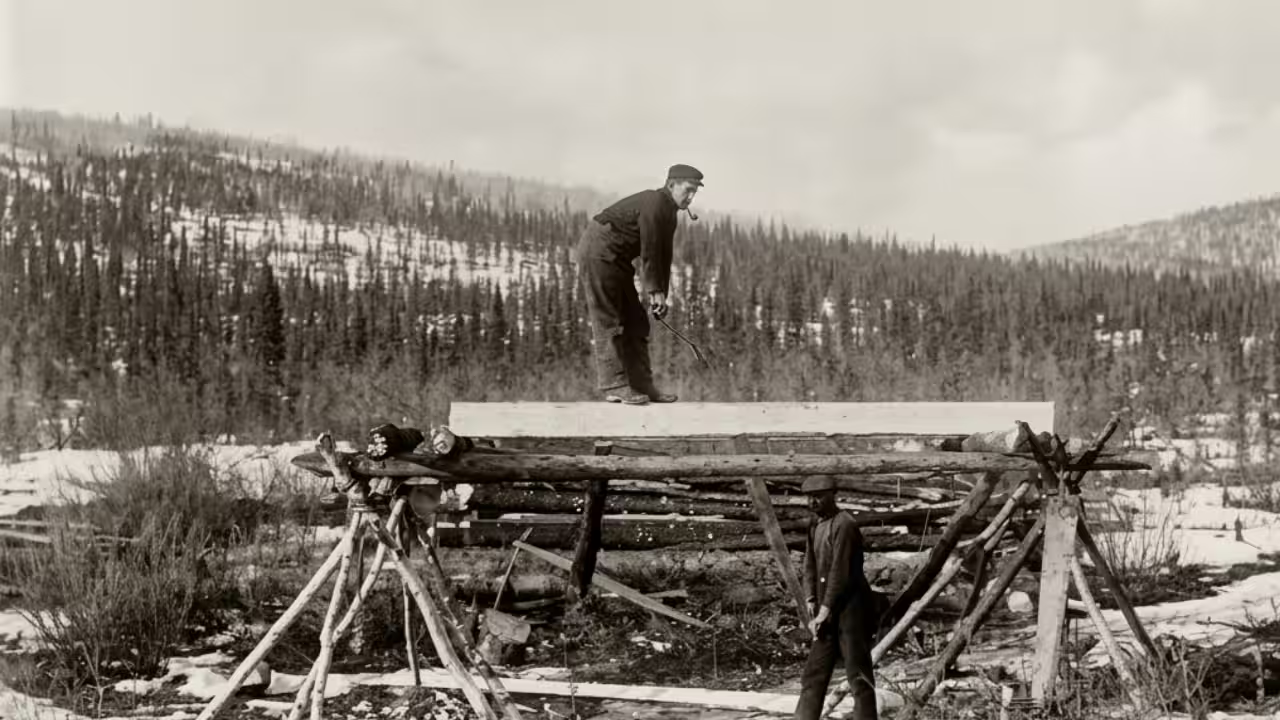
In the winter of 1897 and the spring that followed, the shores of Lake Bennett in north-western Canada filled with tents, timber and thousands of people hoping to reach the Klondike goldfields. The settlement that grew there became a temporary centre of life for gold seekers who had crossed difficult mountain trails carrying food, equipment and whatever else they could manage. Some had spent months getting that far. Their next challenge was to build boats and wait for the ice to clear, allowing them to travel down the Yukon River towards Dawson City. The rush created a crowded settlement almost overnight, but its fortunes depended on a journey that was soon to change.How Bennett City became a crowded stopping point on the Klondike gold rush routeBennett occupied an important position on the route taken by people heading towards the Klondike. The settlement stood where Lake Bennett met the trails leading over the coastal mountains from Skagway, Alaska, and Dyea. One route crossed the White Pass; the other followed the Chilkoot Pass. Both demanded considerable physical effort, and travellers had to carry large quantities of provisions before they could continue into the Yukon interior.The people arriving at the lakes were not all experienced prospectors. Clerks, farmers, labourers and others who had left their ordinary lives behind found themselves in a landscape where even basic preparations took time. Many had hauled their supplies over steep, difficult ground, sometimes moving loads in several trips. Reaching Bennett did not mean the hardest part of the journey was over.During the winter of 1897–98, tents spread along the lake shore as the number of arrivals increased. The settlement became known as Bennett City, a temporary community whose population swelled with the arrival of each new group. Accounts of the period describe crowded camps at both Bennett and nearby Lake Lindeman, where people waited for the spring thaw.How 10,000 gold seekers built thousands of boats at Bennett CityFor many stampeders, the next task was to construct a boat. Carrying a finished vessel across the mountain passes was difficult, and some had decided to leave that option behind before setting out. Once they reached the lakes, they had to find timber, learn basic boatbuilding skills and put together something capable of surviving the journey downriver.By early spring 1898, roughly 10,000 gold seekers were camped along the shore of Lake Bennett, according to the Museum of History & Industry (MOHAI). They were waiting for the ice to clear while assembling supplies and building boats and scows for the journey towards the Klondike goldfields. The scale of the effort was considerable, with the US National Park Service recording that more than 7,000 boats were built during the winter of 1897–98.The work transformed the lakeside camps. Timber was cut from the surrounding forests, and men used long saws to turn logs into planks. A method known as whipsawing required two people to operate a saw from opposite sides of a log, with one working above and the other below. It was physically demanding work, particularly for people who had little previous experience with it.The demand for wood extended beyond boatbuilding. Campers needed fuel to cook and keep warm, as well as timber for temporary shelters and other structures. Photographs taken during the gold rush show tents and boats packed along the shoreline, with the surrounding landscape stripped of much of its accessible timber. The environmental effects of those months remained visible long after the crowds had gone.How the spring thaw sent thousands of stampeders towards Dawson CityThe camps were crowded, supplies had to be managed and news from home was difficult to obtain. Letters were particularly valuable to people who had travelled far from their families. Some relied on private carriers to transport their correspondence from Sheep Camp, where official US mail was delivered, to the settlements beside the lakes. A letter could cost 15 cents to bring the remaining distance, as reported by the Smithsonian National Postal Museum.By late May 1898, the long wait was ending. The Yukon River route could not be used safely until the ice began to break up, and rumours about conditions spread quickly through the camps. Some people set off too early and became caught in ice jams. Once the waterway was sufficiently clear, however, departures gathered pace.By the end of May, the river had opened enough for boats to begin leaving in large numbers. Hundreds set off each day, carrying people and the provisions they had spent months hauling across the mountains. For many, the prospect of finally moving towards Dawson City brought relief after a long winter spent building boats and waiting for the thaw.The railway reached Bennett City and changed its role in the gold rushConstruction of the White Pass and Yukon Route railway began in 1898, with the aim of creating a more direct transport link from the coastal port of Skagway into the Yukon. Building a railway through the steep mountain terrain was a major undertaking, but its arrival promised to remove much of the physical burden associated with hauling supplies over the passes.The railway reached Lake Bennett on 6 July 1899. For a short period, the town benefited from the new connection. Bennett became a transport point where passengers and freight could transfer between the railway and river services. Businesses serving travellers had a reason to remain, and the town experienced a fresh burst of activity.A growing railway network left the town behindBennett's short-lived prominence was tied to the period when people needed to cross the mountains, build boats and wait for the waterways to open. The railway altered that sequence. In 1900, the line reached Whitehorse, extending the railway connection farther into the Yukon before travellers transferred to river transport. Bennett and other settlements that had served as transfer points became less important.The railway's expansion coincided with a shift in the gold rush itself. Many of those who had travelled north in search of a fortune found that the most promising claims had already been taken. Some stayed to work for established miners or businesses, while others moved on in search of fresh opportunities. By 1899, the initial stampede was losing momentum, and new destinations were drawing people away from the original routes.What remains of Bennett's gold-rush yearsThe historical record offers a glimpse of a settlement that was both improvised and remarkably busy. Photographs show long rows of tents, boats gathered beside the water and people working in the cold to prepare for the journey ahead. Letters and diaries describe the uncertainty of waiting for mail, the difficulty of moving supplies and the anticipation surrounding the spring thaw.Those accounts also show how much effort went into reaching the goldfields. For many stampeders, the journey involved months of preparation and physical labour before they ever arrived in Dawson City. Bennett was the place where that effort paused, where boats were built and where people waited for conditions to allow them to move on.You use AI every day. Now get your AI Quotient. Take the AIQ test.
Topics in this story
Gathered from external sources. Rights to this text belong to whoever originally published it.