Bill Gates says getting countries to agree on AI regulations will be harder than Cold War-era nuclear negotiations
Bill Gates called on the U.S. to lead in the global regulation of AI growth but warned agreeing on a global AI regulation could be “more difficult” than Cold War-era nuclear negotiations.
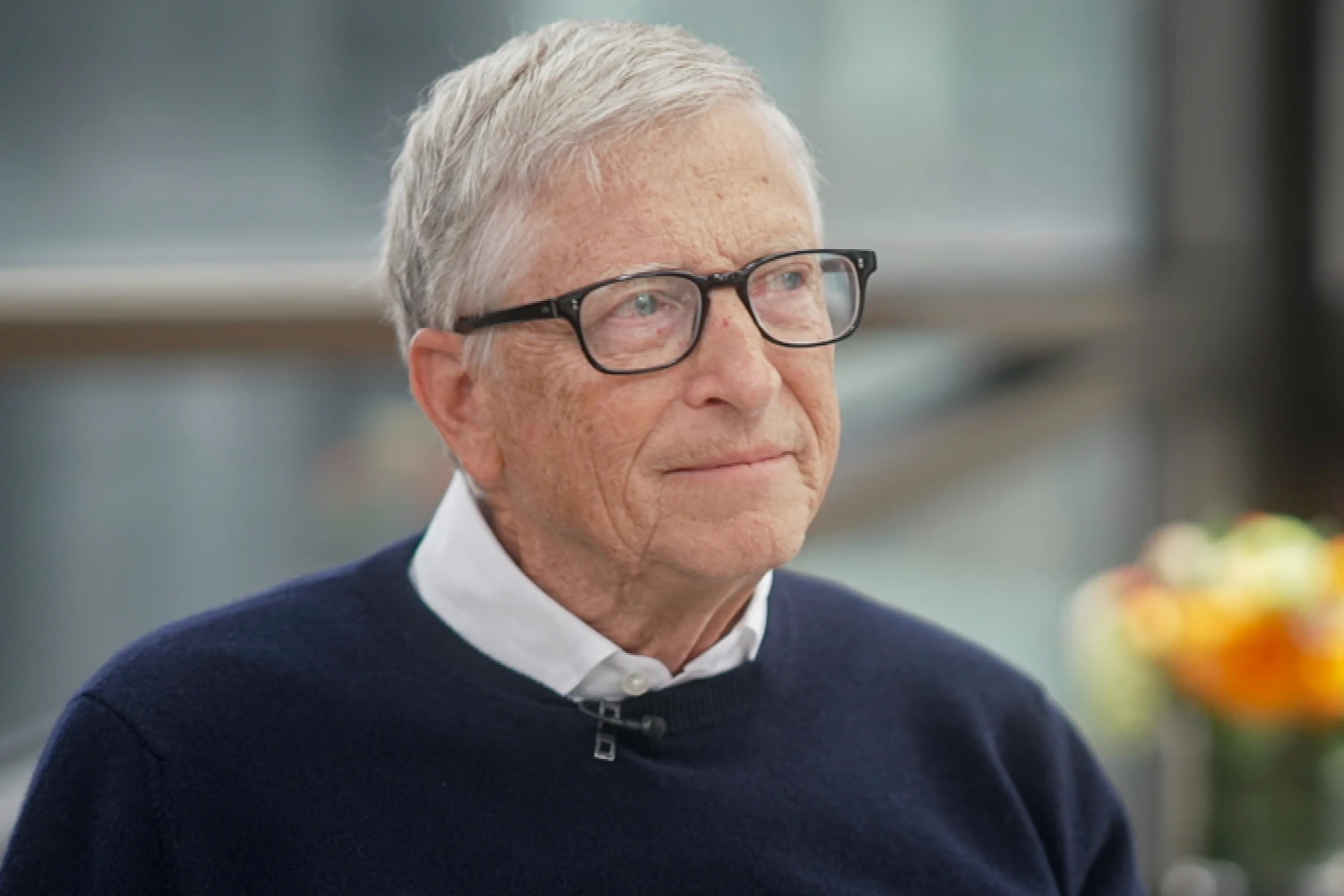
Microsoft co-founder and billionaire philanthropist Bill Gates called on the U.S. to be a leader in regulating the growth of artificial intelligence but warned that getting countries to agree on a global framework could be “more difficult” than Cold War-era negotiations to limit nuclear weapons. “This is more difficult than that was,” Gates told NBC News’ “Meet the Press” on Wednesday during a wide-ranging discussion on AI that aired Sunday. His remarks came as he spoke about President Donald Trump’s stance against regulating AI. The president earlier this month rejected calls for the federal government to impose guardrails for companies building AI models, saying in a post on Truth Social, “WHOEVER WINS AI, WINS! We are leading China, and all others, and will continue to do so.” Gates argued Wednesday that regulating AI companies by imposing monitoring systems would not hamper the U.S. in any race with China to develop superior technology. “What he said is fine, but I think after he hears from me and other people, including that this does not handicap us in whatever he thinks the nation-state race is, that, you know, we will come to a consensus,” the tech mogul said. Gates later pointed to other times the U.S. has led the world in coming up with broad agreements to protect humanity. “Since World War II, the U.S. should be very proud that when there have been global challenges, we, in a way that was benign, where we had friends and allies coming along with us, you know, aviation safety, ozone layer, nuclear weapons, a lot of things where we played the fair actor, not aggrandizing whatever our unique strengths were,” he told moderator Kristen Welker. “And AI is one we’re going to have to go back to this, ‘Hey, humanity is all in this together.’” Concerns about AI reached a fever pitch this month after Jacob Coxon, a whistleblower who had recently resigned from Anthropic, issued a public warning: “The people building AI earnestly believe that it could kill us all by the end of the decade.” Days later, two of the nation’s leading AI CEOs — Dario Amodei of Anthropic and Sam Altman of OpenAI — agreed there is a need to slow the pace of AI development amid fears the tech would soon be capable of “superintelligence” that outpaces human thinking. In a blog post, Amodei wrote that “frontier” AI companies must slow down the pace of AI development but only to a point where the companies still lead China. He also urged global coordination between democratic and authoritarian governments to create regulations. In recent weeks, both companies have announced plans to track the behavior of AI agents after OpenAI flagged multiple incidents in which its agents behaved in a concerning way, including by hacking an outside company without being told to do so. In a post on Truth Social ahead of a meeting with Chinese President Xi Jinping on Thursday, Trump wrote: “Super Intelligence (SI) will be a big topic of discussion, but I want to leave it exactly where it is. That is China’s position also.” Addressing immediate concerns about AI While many have been calling for regulations that would limit AI from destroying humanity, Gates said on “Meet the Press” that he believes there should be guardrails in place to prevent mass-casualty events that could be coordinated with the help of AI today. “The most dangerous thing we’re facing right now is people with bad intent using AI. You know, so somebody who wants to defraud an individual or wants to shut down the electric network or scramble bank accounts, they are now empowered,” the philanthropist said. “Historically, countries had cyberattack teams and they could think of things like bioterror weapons,” he said. “Now, small groups with AI can do what only the biggest countries could do. So it’s really the bad intent plus AI that looms as a major threat. Unless governments insist on various safeguards, you know, we will see a lot of big, negative things because we’re not safeguarding.” Gates specifically said monitoring, “where you’re watching what the AI is doing,” is an important safeguard to introduce in each AI lab. “Law enforcement is going to get called up on all these fraud events or, you know, transmission shutdown events,” he added. “And their ability to see what’s going on is going to be nil unless the monitoring and safeguards are built into the AI.” Plus, Gates said, these kinds of safety features can be added to current AI systems without slowing down the pace of development. “That’s another debate — of should we slow down or not,” he said. “But deciding to put the safeguards and monitoring in, that’s a choice we have. And the only question is, Do we do that before or after there’s some large-scale cyberattacks or bioattacks?” One bipartisan proposal in Congress would require a “kill switch,” or a way for AI companies to immediately suspend or shut down their AI services if a dangerous situation occurs. Gates said “it’s not enough to have a kill switch” and renewed his calls for internal monitoring and safeguards. “I would never want to say I’m against a kill switch,” he added. “But when you’re trying to moderate the bad behavior, you need insight and records of what’s being done. So the kill switch alone would not prevent these tragedies.” The Gates Foundation and AI The philanthropist, who now leads the Gates Foundation, also spoke about the group’s work expanding AI access to countries where English isn’t the primary language. “AI models have gotten very good at recognizing English and about a dozen other mainstream languages. And so as you talk about your health, it’s going to accurately record that and be able to help you. In African languages, the error rate will be about 10 times higher,” he said, adding that errors can be “very dangerous.” The Gates Foundation, he added, is working with 60 AI companies to expand the reliable languages they offer. “We have a very concrete timeline to improve the quality, to benchmark and then say, ‘OK, this is good enough. You can do a health interview or an education session in this language,’” he added, saying he hopes that within five years every language that a million or more people speak will be close to the quality of English on these platforms. Gates said his foundation is also using AI in its own work. “It’s helping me in the foundation work,” he said. “You know, ‘What’s the latest on malaria? What’s the latest on malnutrition?’ It’s allowing the Gates Foundation, which will spend all its money over the next 19 years — you know, it’s got a bit over $200 billion — that money will be far, far better spent because we’re using AI to guide our work.” A ‘regrettable’ relationship with Jeffrey Epstein In the last year, Gates has also faced scrutiny for his ties to the late Jeffrey Epstein, the disgraced financier and convicted sex offender. When the Justice Department released a trove of files related to Epstein at the direction of federal lawmakers, Gates’ name appeared multiple times, including in emails from Epstein suggesting that Gates had extramarital affairs. The Microsoft co-founder has since called his past relationship with Epstein “foolish” and testified to House lawmakers in June that he did not engage in illegal activity with Epstein. On Wednesday, Gates accused Epstein of using their friendship to boost his reputation. “I was told by Jeffrey after I met him that he could help raise billions of dollars for global health — you know, he wouldn’t be paid, he would have no role. That proved to be a complete dead end. So my spending time with him, like many other people, kind of helped his reputation. You know, that’s very regrettable,” he said.
Topics in this story
Gathered from external sources. Rights to this text belong to whoever originally published it.