In the 1850s, gold mining turned Australia's Steiglitz into a booming town with gold-bearing quartz roads; by 1904, only 150 people remained
Gold discoveries in the 1850s transformed Steiglitz in Victoria, Australia, into a thriving mining settlement that attracted workers, businesses and
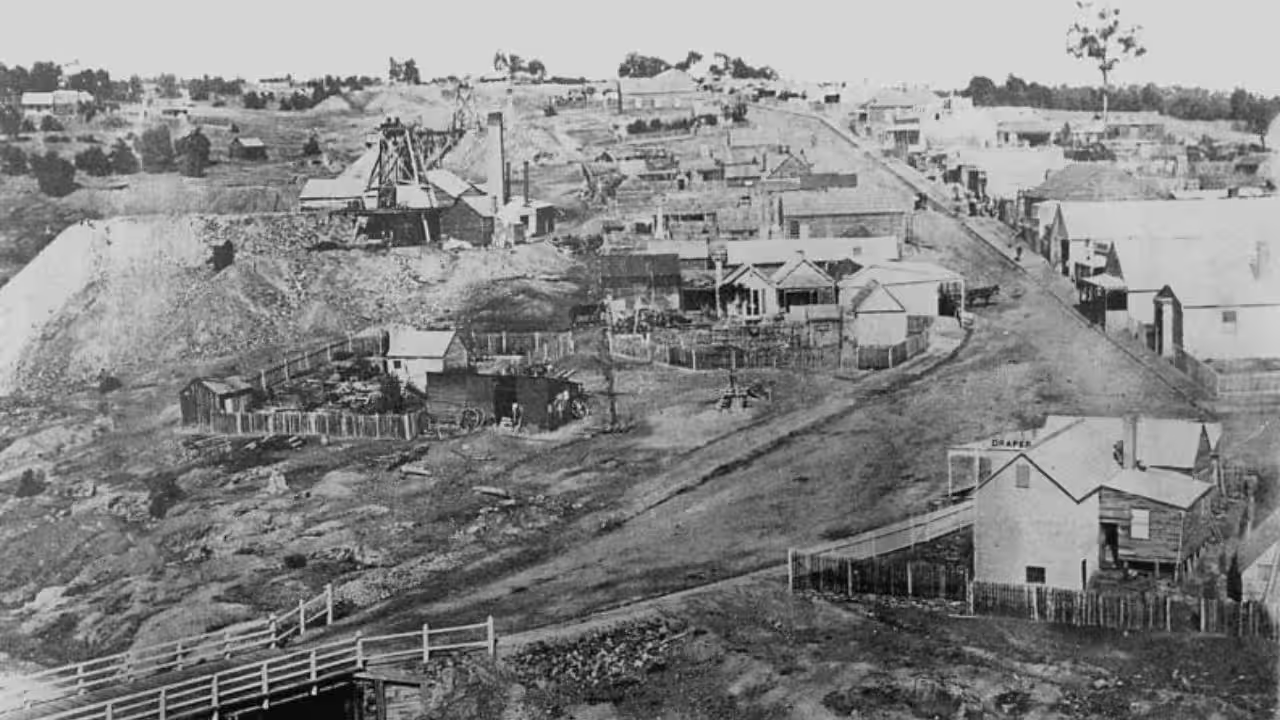
Gold discoveries in the 1850s transformed Steiglitz in Victoria, Australia, into a thriving mining settlement that attracted workers, businesses and families. The town became known for its rich quartz reefs, and its roads were reportedly paved with quartz containing visible gold specks. Steiglitz built hotels, shops, schools and other public buildings as the mining increased. But its wealth was mainly derived from gold mining. As mining activity declined, residents moved away slowly. In 1904, only 150 people remained, deserting a settlement that would one day become a historic park.How did gold turn Steiglitz into a thriving mining townAccording to Victorian Places, gold was discovered around Sutherland Creek in 1854, laying the foundations for Steiglitz's development. The discovery attracted prospectors hoping to find valuable deposits in the surrounding area.A richer quartz reef discovered by miners Hooley and Davis in late 1855 brought further attention to the goldfield. Heritage Victoria's report records that an assay of the reef yielded 72 ounces of gold per ton, encouraging more miners to arrive.Mining progressed quickly and several quartz reefs were found in the area. By 1856 the goldfield was producing significant quantities of gold. The Golden Plains heritage study records a weekly yield of around 1,000 ounces that year, illustrating the importance of the discoveries to the developing settlement.The industry attracted workers with different backgrounds and encouraged the growth of mining operations. By the early 1860s, companies employed many miners, while around 220 Chinese workers were engaged in alluvial mining.Steiglitz was described as a town paved with goldSteiglitz gained a distinctive reputation because gold-bearing quartz was found throughout its mining landscape. The Golden Plains heritage study explains that the town's roads were once made with quartz containing visible specks of gold, leading to its description as a town paved with gold.The phrase reflected the richness of the surrounding goldfield rather than roads made from solid gold. Quartz mining became central to the local economy, and crushing plants processed rock to extract the precious metal.The settlement grew quickly enough to support a range of community institutions. Within a few years of the initial discoveries, it had a courthouse, a Wesleyan chapel and schools associated with several Christian denominations.By the 1860s, Steiglitz had developed beyond a mining camp into an established township. Its population exceeded 1,500 during the gold rush, while 4 hotels, numerous shops, a newspaper and an undertaker served residents and visiting miners.Steiglitz developed a busy social and civic lifeThe town's growth extended beyond mining. A recreation reserve established in 1863 provided space for cricket and football, while a racetrack and tennis club offered additional activities, as recorded by Victorian Places.Steiglitz also gained formal local government status. Its borough council was proclaimed on 27 October 1865, administering an area of approximately 23 square kilometres.However, the mining boom began weakening during the same period. The Golden Plains planning documents describe a downturn in prosperity from 1866, when miners faced growing difficulties and some companies sold their claims at reduced prices.The decline continued into the 1870s. A new courthouse opened in 1875, but falling gold production weakened the town's economy. Victorian Places records that the borough was amalgamated with Meredith Shire in 1879.A second gold rush briefly revived the settlementSteiglitz experienced renewed mining activity during the 1890s, when several mines reopened. This revival sustained the settlement for approximately a decade.The renewed activity also supported local businesses and community organisations. Public Record Office Victoria records that 7 mines were operating in the area during the early 1890s. The Steiglitz Miner began publication in June 1893, reflecting the town's continuing commercial and social life.Mining companies also tried new methods to recover gold from waste left behind by earlier operations. Cyanide-processing plants helped extract gold from mine tailings, but the technology could not reverse the wider decline.Despite the temporary revival, the industry struggled to regain its earlier strength. Mining returns remained insufficient to sustain the settlement's former population and commercial activity.Why did Steiglitz lose most of its residents by 1904The town's dependence on gold left it vulnerable when mining became less profitable. As operations contracted, workers and families gradually left to seek opportunities elsewhere.Heritage Victoria records that Steiglitz's population had fallen to about 150 by 1904. The figure marked a dramatic change from the more than 1,500 residents recorded at the height of the 1860s gold rush.Mining continued in limited forms after the population decline, but it never restored the town's former prosperity. Victorian Places records that the last mine closed in 1941. Some remaining residents turned to activities such as grazing and firewood cutting.Buildings were gradually removed as the community became smaller. The local school eventually closed permanently in 1960, reflecting the long-term decline in the settlement's population.The historic park preserves Steiglitz's gold rush legacyToday, Steiglitz is almost a ghost town, but traces of its mining history remain. Parks Victoria manages the historic park, where visitors can explore the former township and surrounding goldfields.According to Parks Victoria, 2 churches, a former hotel and a small number of houses survive. Signs mark locations where shops and other buildings once stood, while the cemetery provides another reminder of the community that developed around the gold rush. The courthouse, built in 1875, is among the settlement's most important historic structures.You use AI every day. Now get your AI Quotient. Take the AIQ test.
Topics in this story
Gathered from external sources. Rights to this text belong to whoever originally published it.