Netanyahu’s reign may not be over, but it should be
Another Netanyahu government would not bode well either for Israel or for the U.S.
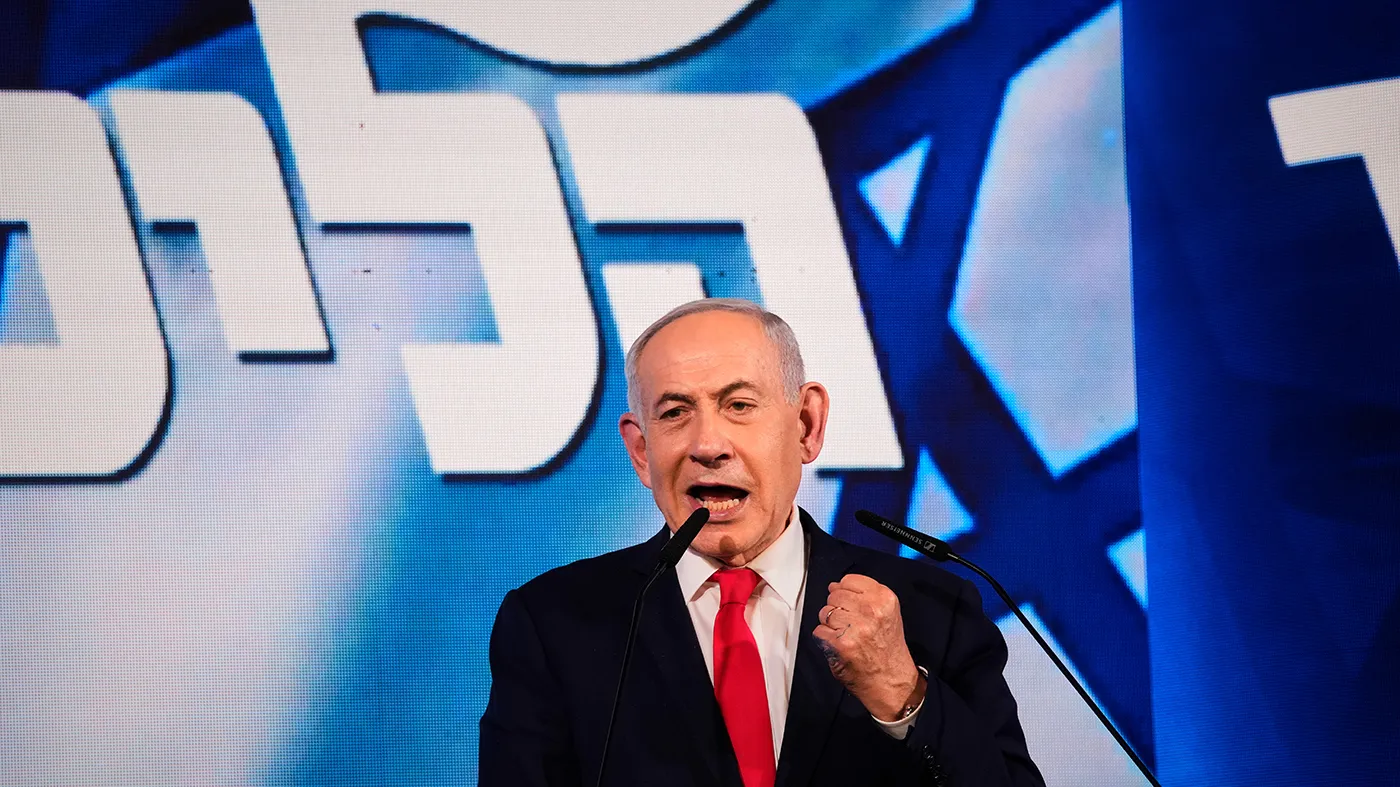
Israeli Prime Minister Benjamin Netanyahu may not have won a majority of Knesset seats in Israel’s latest election, but he has never done so. That has not prevented him from being Israel’s longest-serving prime minister.
Once again, he will try to stitch together a coalition of non-Arab parties, no matter how distasteful their leaders might be, in order to remain in power. Not coincidentally, success means that he can avoid facing the prospect of conviction in his long-running trial for corruption and bribery .
Netanyahu’s Likud party won a plurality of Knesset seats but fell short of its current representation in the parliament. On the other hand, the opposition coalition, led by former Israeli Defense Force chief of staff Gadi Eisenkot, won a larger plurality, although his own party won fewer seats than Likud. Unless Eisenkot can demonstrate that his coalition could garner a majority of 61 seats, Israeli President Isaac Herzog may have little choice but to ask Netanyahu to attempt to form a new government.
Another Netanyahu government would not bode well either for Israel or for the U.S. The Israeli leader has been pushing President Trump to launch another aerial assault on Iran. Netanyahu did so prior to the election , presumably hoping that, were Israel engaged in operations against the Tehran regime, Israeli voters would rally round his leadership. That did not happen.
Once the elections were over, but prior to the American congressional elections, Netanyahu, now a caretaker prime minister, in what was termed a “candid” conversation between the two leaders, Trump again rebuffed Netanyahu. With the American elections over, Trump is now facing the prospect of a far more hostile Congress that likely will throttle his legislative initiatives and perhaps even his political appointments. Trump will therefore devote most of his attention to foreign affairs, where he would have greater freedom from Congressional restraint and may then be more inclined to accede to Netanyahu’s urgent pleas.
Should Eisenkot successfully put together a governing coalition, he is unlikely to pressure Trump as Netanyahu has done. The challenge Eisenkot faces, however, is how to cobble together a government without including the Arab parties that together won 19 seats and thus became the key to any outright government majority.
Eisenkot, like Netanyahu, publicly opposes including Arab parties in his government; only three Israeli Arabs (one of them Druze) have ever served as Israeli ministers since Israel’s independence in 1948. Unlike Netanyahu, however, Eisenkot appears to be somewhat more flexible on this issue. Whereas Netanyahu might be comfortable with a deadlocked Knesset that would prompt him to call for another election, Eisenkot recognizes that, like many who led the opposition to the wily prime minister in previous elections, he may have no second chance if he fails.
Former Defense Minister Avigdor Liberman has announced that he will not serve in a government that includes Israeli Arabs. Eisenkot must therefore weigh whether he is prepared to include one more more of the Arab parties in his government while cajoling Lieberman to reverse his stance.
Eisenkot has three options that could enable him to form a government. Netanyahu has called for a “national unity” government that would allow him to remain prime minister. It is unlikely that Eisenkot would agree to such an arrangement, which could leave him sidelined, even if he is a government minister. Alternatively, he could reach an agreement with the Arab parties to support his minority government, in exchange for a variety of concessions such as directing more government resources to support currently underfunded programs to support the living conditions of Israel’s Arab citizens. Finally, he could offer Ra’am party leader Mansour Abbas in particular a job as either deputy minister (perhaps for foreign affairs) or director general of the Foreign Ministry. Doing so would win Ra’am’s support and likely further undergird Israel’s ties with the Gulf Arab states.
There is a precedent for such an arrangement. For years, Israel’s ultra-orthodox religious parties stated that they refused to take ministerial posts in any Israeli government (they have since done so). On the other hand, they were prepared to, and did, fill deputy ministerships during that period. Such an arrangement, this time with Arab deputy ministerships, might sufficiently mollify Liberman to make him agree to join an Eisenkot-led government.
Netanyahu may have overtaken David Ben Gurion’s record as Israel’s longest-serving prime minister, but in recent years he has seriously damaged Israel’s international standing. He has also exhausted his military with multi-front wars and overseen a dual-track economy that has undermined the standard of living and purchasing power of the majority of his country’s population. His departure would not be missed, not only by many (and perhaps most) Israelis, but also by many Americans, including a majority of Jewish Americans.
Dov S. Zakheim is a senior adviser at the Center for Strategic and International Studies and vice chairman of the board for the Foreign Policy Research Institute. He was undersecretary of Defense (comptroller) and chief financial officer for the Department of Defense from 2001 to 2004 and a deputy undersecretary of Defense from 1985 to 1987.
Topics in this story
Gathered from external sources. Rights to this text belong to whoever originally published it.