In 1913, Ohio parents found their 10-pound baby fit under the new 11-pound Parcel Post limit; they sent James Beagle to his grandmother for 15 cents, insured him for $50, and a rural mail carrier delivered him safely
In 1913, an Ohio couple found a practical answer to a simple family problem.
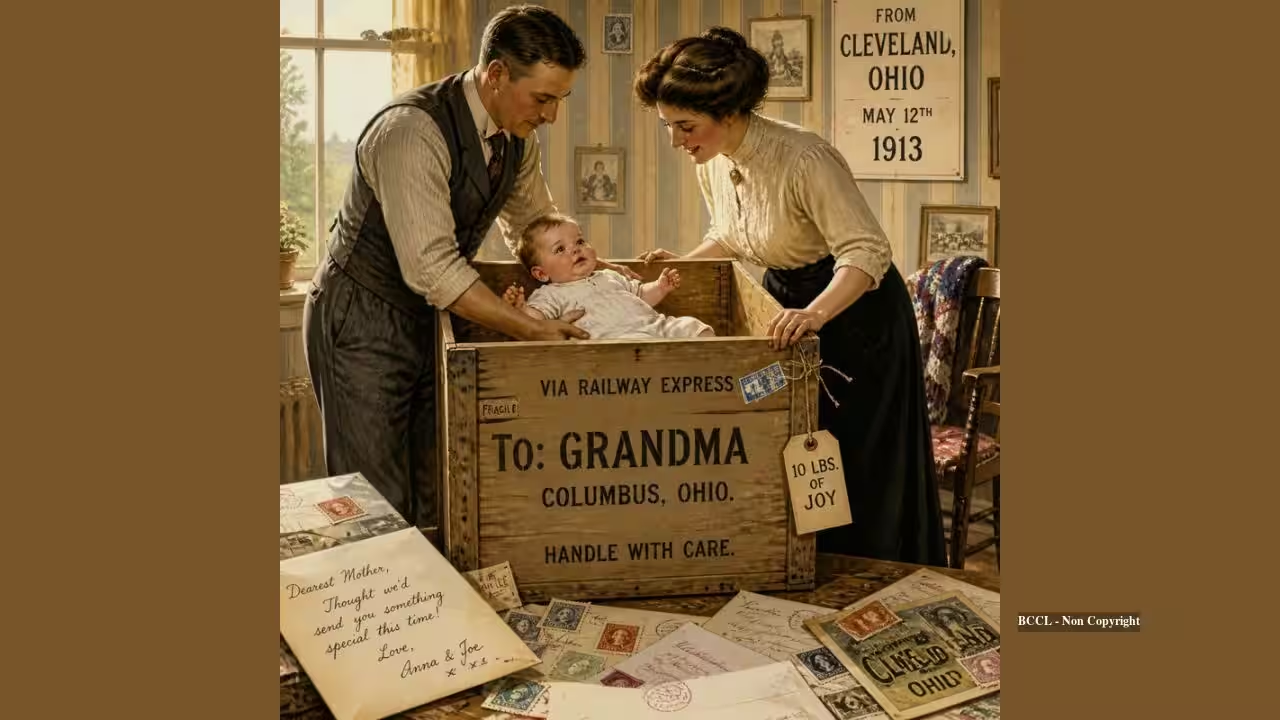
In 1913, an Ohio couple found a practical answer to a simple family problem. Their eight month old son, James Beagle, weighed just under the new 11 pound Parcel Post limit, so they sent him to his grandmother in nearby Batavia for 15 cents in postage and insured him for $50, according to Futura Sciences, the Smithsonian National Postal Museum, and the U.S. Postal Service.Rural Free Delivery carrier Vernon Lytle carried James about a mile to his grandmother’s home. The trip became one of the earliest known cases of a child being sent through the U.S. mail, though it looked very different from the image of a baby packed in a mailbag. Read more about this unusual incident, as per the reports, here:Why the family used the mailParcel Post began on January 1, 1913. It expanded the kinds of packages Americans could send and gave rural households easier access to mail order goods.In its early years, customers and postal officials were still learning how the service could be used. Some families saw it as a cheaper alternative to a train ticket when they needed to send a child to a relative. And so, the Beagle family’s case was not about putting a child in a sack. James travelled with a trusted local carrier who knew the route and the family.How the delivery workedJames was carried by Vernon Lytle, a Rural Free Delivery carrier. The trip covered only about a mile, from the Beagle home in Glen Este to his grandmother’s house in Batavia. The parents paid 15 cents for postage and insured their son for $50. James was delivered safely, and the story attracted attention because it was unusual and, in the words of Smithsonian historian Jenny Lynch, “probably because it was so cute.”The case became known as the first documented example of a child being sent through the mail in the United States. It was followed by other cases in Pennsylvania, Idaho, Maryland, Florida, Missouri, and Kentucky.Why it did not lastThe Post Office Department moved quickly to close the loophole. After May Pierstorff’s trip in 1914 and a separate inquiry about mailing children, Postmaster General Albert Burleson directed postmasters to bar all human beings from the mail, the reports suggest.Despite the ban, some rural carriers continued to transport children. In March 1914, a Maryland carrier carried a 14 pound baby 12 miles from Clear Spring to Indian Springs. In 1915, six year old Edna Neff travelled by railway mail train from Pensacola, Florida, to Christianburg, Virginia. Her trip cost 15 cents, and she weighed just under the 50 pound Parcel Post limit.What the cases showThe stories show how rural communities relied on postal workers they knew. Carriers often served isolated households and were seen as trusted links between neighbours and family members. The cases also reflect the uncertainty around a new service. Parcel Post opened up new possibilities, but the rules had not yet caught up with every possible use.The final known case involved three year old Maud Smith in 1915. After that, postal officials investigated the trip, and the practice appears to have ended.What the story means todayToday, the idea of mailing a child sounds alarming. But the historical record shows that these were not cases of children being packed and shipped like parcels. They were cases of parents using a new service in a way that made sense at the time to them. The children travelled with trusted carriers, and the trips were often short.The U.S. Postal Service now makes clear that children cannot be sent through the mail. The early Parcel Post cases remain a strange but fascinating chapter in the history of American delivery.You use AI every day. Now get your AI Quotient. Take the AIQ test.
Topics in this story
Gathered from external sources. Rights to this text belong to whoever originally published it.