Croydon woman had no hot water or heating for most of pregnancy
Residents living in flats in Croydon are in limbo having have been without gas since March.
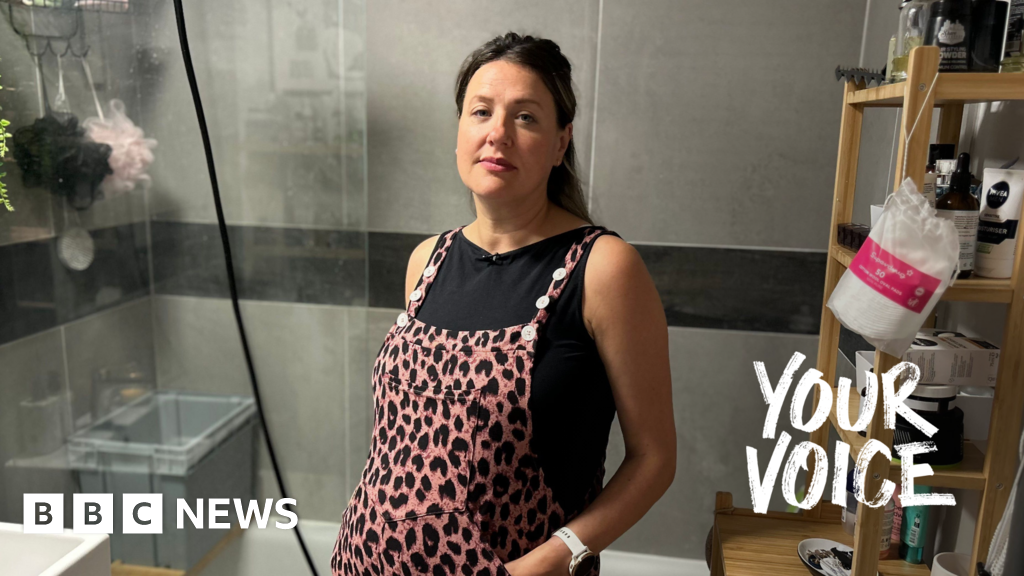
Samantha Banner and her partner have been living without heating or hot water for most of her pregnancy, relying on washing in buckets filled with kettle-boiled water, camping showers, or travelling elsewhere.
The couple are leaseholders of a flat at Admiral Court in Croydon, south London, where residents across the mixed-tenure development have been without a gas supply since 4 March due to "potentially dangerous leaks".
They say they've been caught up in layers of bureaucracy among the freeholder, the housing association, managing agents and the developer over who is responsible for the cost of remedial works, making it "hard to get answers."
With the original developer having gone into liquidation, the dispute over who should pay has left residents in the 65 flats facing uncertainty over whether the cost of replacing the pipework could ultimately fall on them.
Samantha, who discovered she was pregnant at the start of January, says the situation has made everyday life "extremely difficult".
For months, the couple were unable to shower at home, although they now have a camping shower involving a "big bucket of water that we fill up with a kettle, and have a really quick shower".
They were also preparing to exchange and move to a bigger family home when their buyer pulled out due to a combination of increased service charges and ongoing gas problems.
"We are in absolute limbo. We can't put it back on the market because of the situation with the gas."
She says there is still no clear time frame for the gas to be restored.
"It's going to be expensive, I get it, but no-one is claiming any liability on it. We're just left waiting for them to make their decisions."
Samantha isn't the only resident who feels trapped and unable to sell.
Zainab Ottun is a shared owner who was among the first residents to move into the building when it was completed in 2019.
She bought a 25% share of her £310,000 property, expecting it to be a "stepping stone" towards buying a larger home, but instead "it's not sellable".
She says there have been multiple gas leaks over the years, with the supply repeatedly cut off and reinstated as "weaknesses in the infrastructure were detected".
When the gas was switched off in March, Zainab was recovering from Achilles surgery and using crutches. Without hot water, she had to wash using a bucket.
"You don't buy a new build expecting it to crumble right before your eyes as you're living in it."
Akira Pascall, a paediatric nurse, is another resident of the block and lives with her partner and three-year-old son in a shared ownership flat.
The family initially boiled kettles to fill up buckets to wash and clean the dishes, but they've now invested in a camping shower.
"After long shifts you have to come home and fill up the shower. Work is stressful enough and you want to come home to a safe haven.
"You can't have people to stay. It takes so long to get ready. Three-year-olds are messy and you just want to stick them in the bath sometimes," she says.
Pascall is also angry that it's been suggested that residents may have to fund the cost.
"This is meant to be affordable housing. If we had that much money to re-pipe a building we would build our own block of flats," she says.
In August 2026, five months after the gas was switched off, an expert witness report commissioned by the freeholder, Groundinvest 101 (Limited), and managing agent Warwick Estates found that the gas supply pipework "has not been installed in compliance" with the standards set by the Institution of Gas Engineers and Managers (Igem).
The freeholder has now contacted a number of companies it says are "associated" with the original developer seeking to recover the cost of the remedial work.
The building was initially developed in 2019 by company UK Land Assets, which has since been liquidated.
The managing agent, Warwick Estates, says neither it "nor the freeholder" was involved with this development until some time after "substandard construction work" was originally carried out.
It says while "our foremost concern" is the residents, "significant obstacles... have led to delays in remediation".
It claims that under the terms of the lease, gas pipes "fall to the direct responsibility of the individual leaseholders", but "we and the freeholder appreciate that it is not a simple case of advising the leaseholders to raise their own claims or arrange their own repairs".
It adds that the defects are not covered by the building's warranty.
"We are now seeking further expert advice regarding the potential installation of electric heating and hot water for each flat. We are hopeful that this advice together with costs will be available in the coming weeks."
Leaseholders charity, the Leasehold Knowledge Partnership, believes there are "too many" similar cases, where taking legal action against the developer becomes difficult, if not impossible.
Martin Boyd, from the charity, says that since the Grenfell fire, it has become clear that "the law is still stacked against the leaseholders who have a limited means of redress for building defects".
This includes not having the "legal right to survey the building when they buy, so they have no means of knowing if a site has problems", he explains.
The charity has called on the government to strengthen the warranty schemes on new developments.
A spokesperson for the Ministry of Housing, Communities and Local Government said: "The situation at Admiral Court is completely unacceptable and we strongly urge those responsible to carry out vital building works urgently.
"Through our Commonhold and Leasehold Reform Bill, we are going further to strengthen protections for leaseholders, including making commonhold the default tenure for new flats – giving people full ownership and control over their buildings from the outset."
'I'm still paying a mortgage for a home destroyed by a fire'
'I lost thousands in savings and my partner's money is in limbo'
The 'constant fear' of living in an overheated home with a baby
A spokesperson for Croydon Churches Housing Association (CCHA), which is the leaseholder of 22 apartments at Admiral Court, claims the freeholder is "responsible for identifying and implementing an effective long-term solution".
CCHA says it has been in regular contact with the freeholder and managing agent, and has pressed for urgent action and clarity on when heating and hot water will be restored.
In the meantime, CCHA says it has moved some tenants into alternative accommodation, provided electric heaters to all residents and offered temporary electric showers.
Shared ownership leaseholders have also received vouchers for essential items, with CCHA offering to cover additional electricity costs.
The BBC contacted Grangeford Asset Management, which manages the freehold and the company that built the flats, Cube Construction, for comment.
For residents like Samantha there is still no clear timetable for when the issues might be resolved.
Listen to the best of BBC Radio London on Sounds and follow BBC London on Facebook , X and Instagram . Send your story ideas to hello.bbclondon@bbc.co.uk
Ministry of Housing, Communities and Local Government
Topics in this story
Gathered from external sources. Rights to this text belong to whoever originally published it.