'The Fault in Our Stars' author John Green and his family helped fund a Sierra Leone maternity centre; when it opened in February 2026, 27 patients arrived and 13 babies were born in 24 hours
When a new maternity centre opened in Sierra Leone in February 2026, its first day brought a striking measure of demand for care: 27 patients arrived and
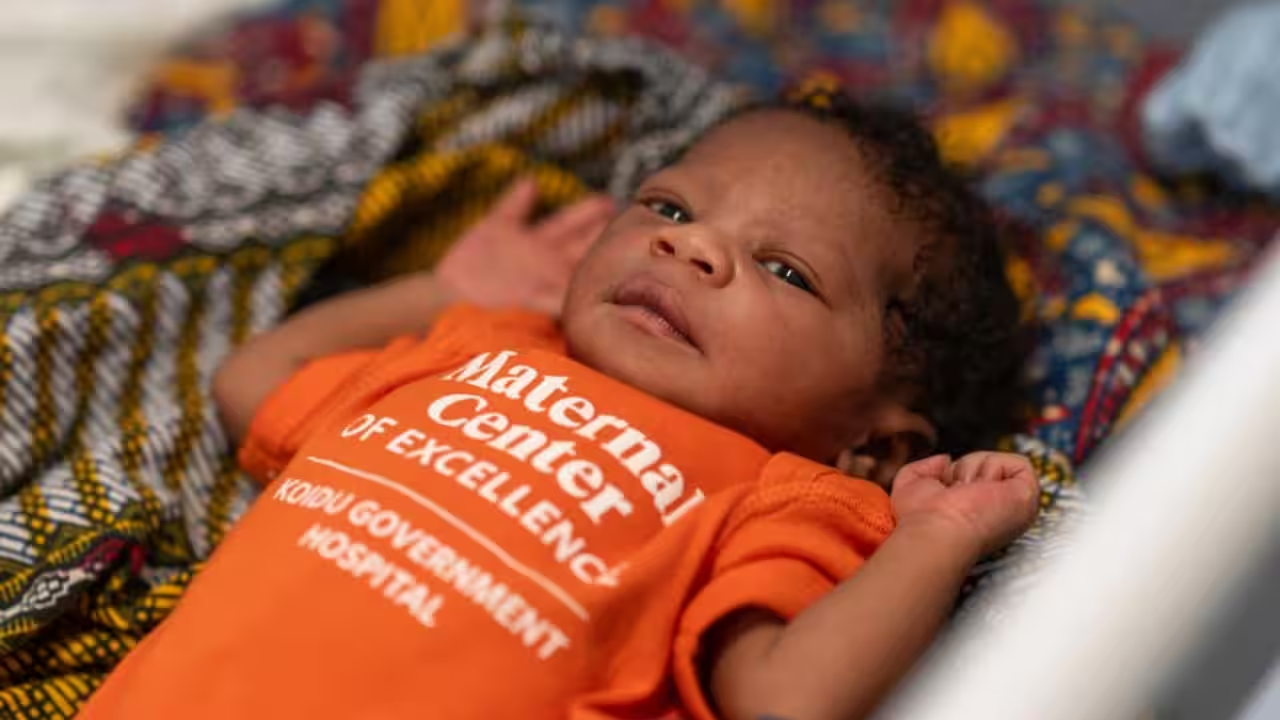
When a new maternity centre opened in Sierra Leone in February 2026, its first day brought a striking measure of demand for care: 27 patients arrived and 13 babies were born within 24 hours. The facility, supported by bestselling author John Green, his brother Hank Green and their families and supporters, was built to expand access to specialised maternal and newborn healthcare in a country that continues to face serious challenges in preventing deaths related to pregnancy and childbirth.The Paul E. Farmer Maternal Center of Excellence opened to patients on February 14, 2026, on the campus of Koidu Government Hospital in Kono District. According to Partners In Health (PIH), the nonprofit organisation supporting the project, seven of the 13 babies born during the centre’s first 24 hours were delivered by caesarean section, while six were born vaginally. The opening marked the transition from years of planning and construction to providing inpatient care for women and newborns.How John Green became involvedGreen, best known for writing 'The Fault in Our Stars', became involved in the maternal health initiative after learning about the challenges facing women in Sierra Leone. According to PIH, a 2017 article in The New Yorker helped bring the issue to his attention.In 2018, Green and his wife, Sarah Green, visited Koidu Government Hospital and were inspired by the vision for a specialised maternal healthcare facility. His brother Hank Green and Hank’s wife, Katherine, also joined the effort to advance maternal health through advocacy and fundraising. The Green family and their supporters pledged to raise $25 million to help make the centre a reality, PIH says. The campaign brought together the brothers’ public platforms and a community of supporters around a project intended to address preventable maternal deaths.The facility was named the Paul E. Farmer Maternal Center of Excellence in honour of the late physician and anthropologist Paul Farmer, who co-founded Partners In Health and championed healthcare access for underserved communities. The Greens’ involvement was part of a broader collaboration rather than a project funded or built by the family alone. Sierra Leone’s Ministry of Health, PIH, construction partner Build Health International, local health officials and community leaders all played roles in developing the centre.What happened on opening dayThe centre began receiving its first patients at 10 am on February 14. The early admissions quickly demonstrated why specialised maternity services were needed.One of the first patients was Wulimatu Koroma, a 25-year-old woman who had travelled from Waterloo, about five hours away by road. At 36 weeks pregnant, she was experiencing chest pain and was admitted to the antenatal ward for continued monitoring. Another early arrival, Fatmata Jalloh from Kono District, was 42 weeks pregnant. Doctors found that the protective fluid surrounding her baby had fallen to a dangerously low level, requiring an emergency caesarean section. She later delivered a healthy baby boy.The centre also received a referral involving a 17-year-old patient, Fanta Jimmy, who was suffering from severe pre-eclampsia and whose baby was in distress. Clinicians prioritised her emergency caesarean section. She delivered the first baby born inside the new centre at 1.21 pm. The premature newborn, weighing 1.72 kilograms, was transferred to the neonatal intensive care unit for specialised care. These cases illustrated the importance of having trained staff, operating theatres and newborn intensive care available under one roof.A specialised facility for mothers and newbornsThe centre expanded the services available at Koidu Government Hospital, increasing the capacity of its existing 48-bed maternal ward and special-care baby unit to a 120-bed facility. It includes three operating theatres and Sierra Leone’s first neonatal intensive care unit, according to PIH.The facility is also equipped with a piped medical gas system, including oxygen, outside the capital, Freetown. Such infrastructure can be critical when newborns need respiratory support or women require urgent surgery.Beyond medical equipment, the centre has been designed to make care more accessible and respectful. It includes dedicated spaces where birth companions can support women during childbirth and a dormitory where mothers can remain close to newborns receiving intensive care. Construction began in April 2021 and took four years. Sierra Leone’s President Julius Maada Bio and First Lady Fatima Maada Bio officially inaugurated the facility on October 25, 2025. Staff then underwent further training and preparations before the centre began admitting patients in February 2026.Why the centre matters for Sierra LeoneSierra Leone has faced a substantial burden of maternal mortality. PIH says women in the country face a one-in-74 lifetime risk of dying in childbirth, underscoring the need for improved access to skilled maternity services and emergency obstetric care. Deaths related to pregnancy and childbirth can occur when complications such as severe bleeding, high blood pressure disorders or obstructed labour are not identified and treated quickly. Access to trained midwives, doctors, surgical facilities, blood supplies and newborn intensive care can make a difference when emergencies arise.The new centre is intended not only to treat patients but also to strengthen the wider health system through clinical training and improved standards of care. Its impact will depend on sustained staffing, reliable supplies, referral networks and the ability of women from remote communities to reach the facility when they need it.You use AI every day. Now get your AI Quotient. Take the AIQ test.
Topics in this story
Gathered from external sources. Rights to this text belong to whoever originally published it.