In 2002, Ray Charles promised seven children $500,000 trusts in exchange for waiving further inheritance claims; 24 years later, his foundation's $3.5 million lawsuit over 51 songs resurfaces
Legendary American singer Ray Charles' complicated family legacy has resurfaced following renewed attention to a legal battle involving seven of his
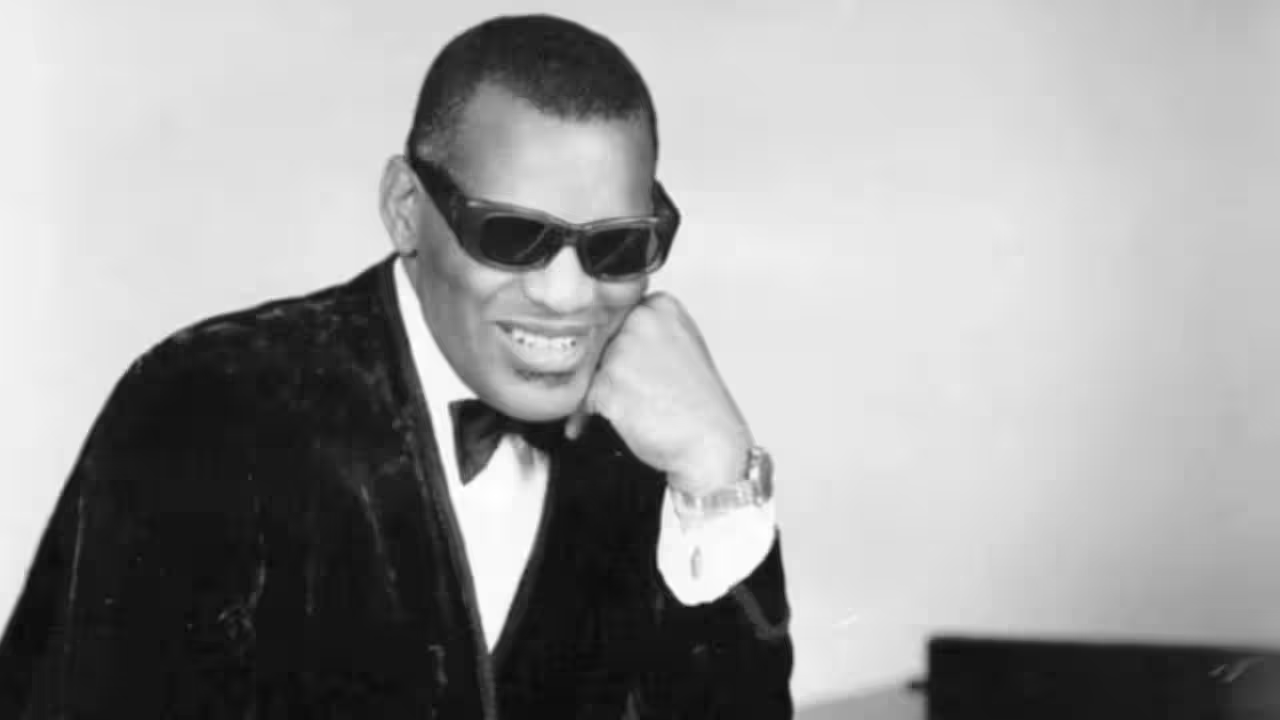
Legendary American singer Ray Charles' complicated family legacy has resurfaced following renewed attention to a legal battle involving seven of his children and the rights to 51 of his musical compositions. In December 2002, Charles reportedly promised seven of his adult children irrevocable trusts worth $500,000 each, on the condition that they agreed not to pursue further inheritance claims against his estate. The arrangement became contentious after his death in 2004, when the children attempted to reclaim copyright interests in songs written or co-written by their father. The Ray Charles Foundation subsequently filed a lawsuit seeking at least $3.5 million, arguing that the copyright claims violated the agreements they had signed. The dispute involved multiple court proceedings and raised questions about the rights of artists' heirs under US copyright law.Ray Charles' $500,000 inheritance agreement with seven childrenAccording to the foundation's lawsuit, Charles informed all 12 of his adult children in 2002 that he intended to establish irrevocable trusts worth $500,000 for each of them if they agreed to waive further claims against his estate.The written agreements stated that the trusts would represent their entire inheritance and that they would not seek any additional share of their father's estate. The foundation's complaint maintained that the arrangement was intended to provide financial security to the children while allowing Charles to direct his remaining estate towards charitable causes.All seven children involved in the subsequent lawsuit signed agreements acknowledging the arrangement. According to the court records, each of them eventually received the promised $500,000 trust.Charles died in June 2004, aged 73. His will named the Ray Charles Foundation as the sole beneficiary of his estate, including his rights under music-related contracts.Why Ray Charles' children sought rights to 51 songsThe disagreement emerged in March 2010, when seven of Charles' children served copyright termination notices on music publishers covering 51 musical compositions written or co-written by their father.The children relied on provisions of the US Copyright Act that allow authors or certain qualifying heirs to terminate earlier copyright transfers after specified periods. These provisions can enable copyright interests to return to the author or eligible heirs, subject to statutory conditions.The seven children filed 39 termination notices covering the 51 compositions. The notices proposed different effective dates, ranging from April 1, 2012, to September 28, 2019.The foundation challenged the notices, arguing that they violated the inheritance agreements and could undermine its rights to royalties from Charles' music. It also questioned whether the compositions qualified for copyright termination, maintaining that some had been created under work-for-hire arrangements.The dispute was therefore not simply about receiving another inheritance. It concerned whether the children could legally reclaim copyright interests in their father's music despite the agreements they had signed.Famous songs included in the copyright disputeThe 51 compositions included several recognisable songs from Charles' career, particularly works he created during the 1950s.Some of the titles specifically identified in the Ninth Circuit Court of Appeals' judgment include:I Got a WomanA Fool for YouBlackjackLeave My Woman AloneHallelujah, I Love Her SoMary AnnWhat'd I SayThe dispute concerns the underlying musical compositions and their publishing copyrights, rather than simply ownership of the original sound recordings. This distinction matters because a song's composition and its recorded performance can have separate copyright ownership.Why the Ray Charles Foundation sought $3.5 millionThe foundation filed its lawsuit in March 2012, accusing the seven children of breaching their written agreements with their father by attempting to reclaim copyright interests in the disputed compositions.It sought at least $500,000 from each of the seven defendants, bringing its total damages demand to $3.5 million.The foundation also requested a court order preventing the children from claiming ownership of the disputed copyrights, transferring those interests to other parties or exploiting the compositions without the necessary permissions.It argued that the copyright notices threatened its ability to receive royalties from Charles' music, which formed an important source of funding for its charitable activities.The legal battle over copyright inheritanceThe case raised questions about Sections 203 and 304(c) of the US Copyright Act, which provide mechanisms for terminating certain copyright transfers after specified periods.These provisions allow authors or qualifying heirs to reclaim some rights previously transferred to publishers, subject to statutory conditions and exceptions.The foundation challenged the children's notices on several grounds. One of its arguments was that certain compositions had been created under work-for-hire arrangements, which could make them ineligible for copyright termination.The case initially faced a setback in January 2013, when a federal district court dismissed the foundation's federal claim and struck its state-law claims under California's anti-SLAPP legislation.However, the foundation appealed. On July 31, 2015, the US Court of Appeals for the Ninth Circuit reversed the dismissal of the federal claim and sent the case back to the lower court for further proceedings.The appeals court ruled that the foundation had sufficient legal standing to challenge the termination notices because the potential loss of copyright-related royalties could affect its financial interests.The decision did not establish that the children had violated their inheritance agreements or that the foundation was entitled to the $3.5 million it demanded. It addressed whether the organisation had the legal right to pursue its challenge.Ray Charles Foundation ordered to pay seven children $89,000 in legal feesThe litigation also produced a financial setback for the foundation. In an earlier district-court ruling, US District Judge Audrey Collins ordered the organisation to pay approximately $89,000 in attorneys' fees to the seven children after they successfully challenged its claims.The children had persuaded the court to dismiss the foundation's federal claim and strike its state-law claims under California's anti-SLAPP law, which protects certain activities involving the exercise of legal and constitutional rights.The foundation objected to the legal-fee calculation, arguing that the children's lawyers had reconstructed their working hours rather than maintaining contemporaneous records. However, the judge found the submitted declarations sufficiently reliable to establish the reasonableness of the fees.The legal-fee award arose from the earlier district-court proceedings and should be distinguished from the Ninth Circuit's subsequent 2015 decision, which revived the foundation's federal challenge.Who was Ray Charles?Ray Charles Robinson, popularly known as Ray Charles, was an American singer, songwriter and pianist widely regarded as one of the pioneers of soul music. Born on September 23, 1930, in Albany, Georgia, he lost his eyesight during childhood and became blind by the age of seven.He rose to international prominence by combining gospel, rhythm and blues, jazz and country influences. His best-known songs include Georgia on My Mind, Hit the Road Jack, Unchain My Heart and What'd I Say.During his career, Charles received 17 Grammy Awards and was inducted into the Rock and Roll Hall of Fame in 1986. He died on June 10, 2004, aged 73, at his home in Beverly Hills, California.He had 12 children, and his estate plan placed significant emphasis on continuing his charitable work through the Ray Charles Foundation.What does the Ray Charles Foundation do?Established by Charles during his lifetime, the Ray Charles Foundation supports scientific, educational and charitable initiatives. Its work includes providing research and scholarship grants benefiting people who are deaf, blind and underprivileged young people.The organisation was intended to continue Charles' philanthropic interests after his death. It relies on royalties generated through the commercial use of his musical works to support its activities.The foundation's interest in the 51 compositions was therefore connected to its ability to generate royalty income and use those funds for charitable programmes.You use AI every day. Now get your AI Quotient. Take the AIQ test.
Topics in this story
Gathered from external sources. Rights to this text belong to whoever originally published it.