Why cats and rabbits hate closed doors
If you live with a cat or a rabbit, you already know that a shut bedroom or bathroom door is practically a personal insult.
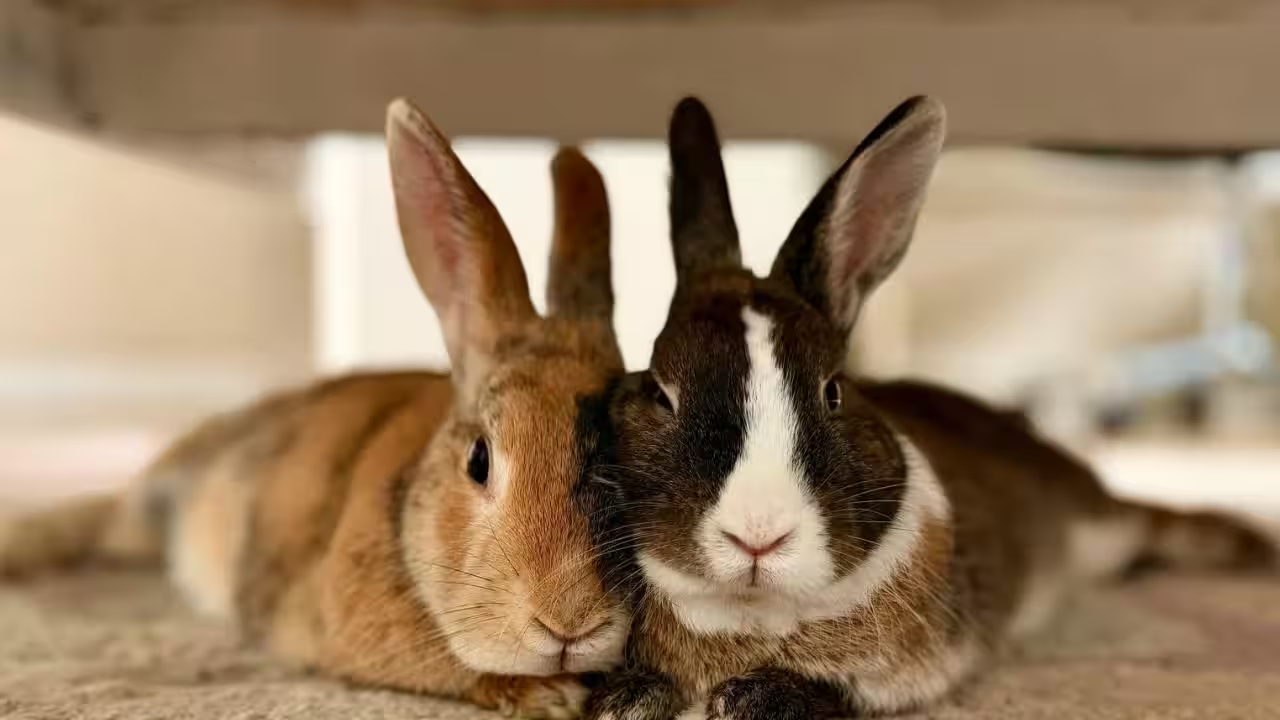
If you live with a cat or a rabbit, you already know that a shut bedroom or bathroom door is practically a personal insult. The moment the latch clicks, paws start scratching at the bottom gap, noses press against the wood, and thumps or meows echo down the way. It is easy to laugh off this behavior as stubbornness or separation anxiety, but both cats and rabbits have deeply rooted biological reasons for despising barriers. Even though cats are predators and rabbits are social prey animals, cats' brains and rabbits' brains are wired to treat a closed door as a direct threat to their daily survival.What happens when you close the door?Territory is everything for cats and rabbits. Both cats and rabbits are fierce creatures that rely on constant patrol routes to feel secure. In the wild, a cat survives by knowing every inch of its hunting grounds, while a rabbit survives by memorizing every escape route and burrow entrance in its warren. When you close a door inside your house, you suddenly slice their established territory in half. From their perspective, a familiar, safe zone has vanished overnight, and they are no longer able to verify that the space is free of intruders or hidden dangers.To refresh scent markersAnimals do not just look at their territory; they map it out with their noses. Cats have scent glands on their cheeks, paws, and flanks, and they spend hours rubbing against doorframes and furniture to leave a comforting chemical signature. Rabbits do the exact same thing using scent glands located directly underneath their chins. A closed door blocks them from refreshing these vital scent markers. They like to keep tabs on their favorite people, even if they just want to sleep quietly in the corner of the same room. When you shut them out, you break that passive connection and leave them wondering why they have been excluded from the group. Rabbits are deeply social animals that naturally live in large, tight-knit colonies. Being separated from their bonded partner or their human caregivers by a solid door goes directly against their natural instinct to stay close to the group for warmth and mutual protection.Simple curiosity and boredomIndoor pets live in environments that rarely change from day to day. Because their world is relatively predictable, any sudden alteration, such as a door swinging shut, immediately becomes the most interesting thing happening in the house. To a cat or a rabbit, the space behind a closed door automatically becomes a forbidden mystery. They want to investigate the smells leaking under the doorframe, check if anything new has appeared inside, and simply satisfy the urge to explore every corner of their home.How to keep the peaceSince you cannot rewrite millions of years of evolutionary wiring, the easiest solution is often just leaving interior doors slightly ajar whenever possible. If you need privacy or want to keep pets out of certain rooms for safety reasons, try distracting them before you close the latch. Tossing a handful of hay into a foraging mat for a rabbit or setting out a puzzle feeder for a cat gives their brains a rewarding task to focus on. Over time, consistent routines will teach them that a closed door is only temporary and that their territory is still completely safe.Get the latest movie news, reviews, and celebrity updates. Download the TOI App.
Topics in this story
Gathered from external sources. Rights to this text belong to whoever originally published it.