Siberia’s Batagaika Crater has grown for decades as permafrost melts, exposing Ice Age animals and ancient landscapes buried for thousands of years
Rest of World News: Deep in northeastern Siberia, a vast scar in the landscape continues to grow as warming temperatures melt the ground that has remained frozen for thou.
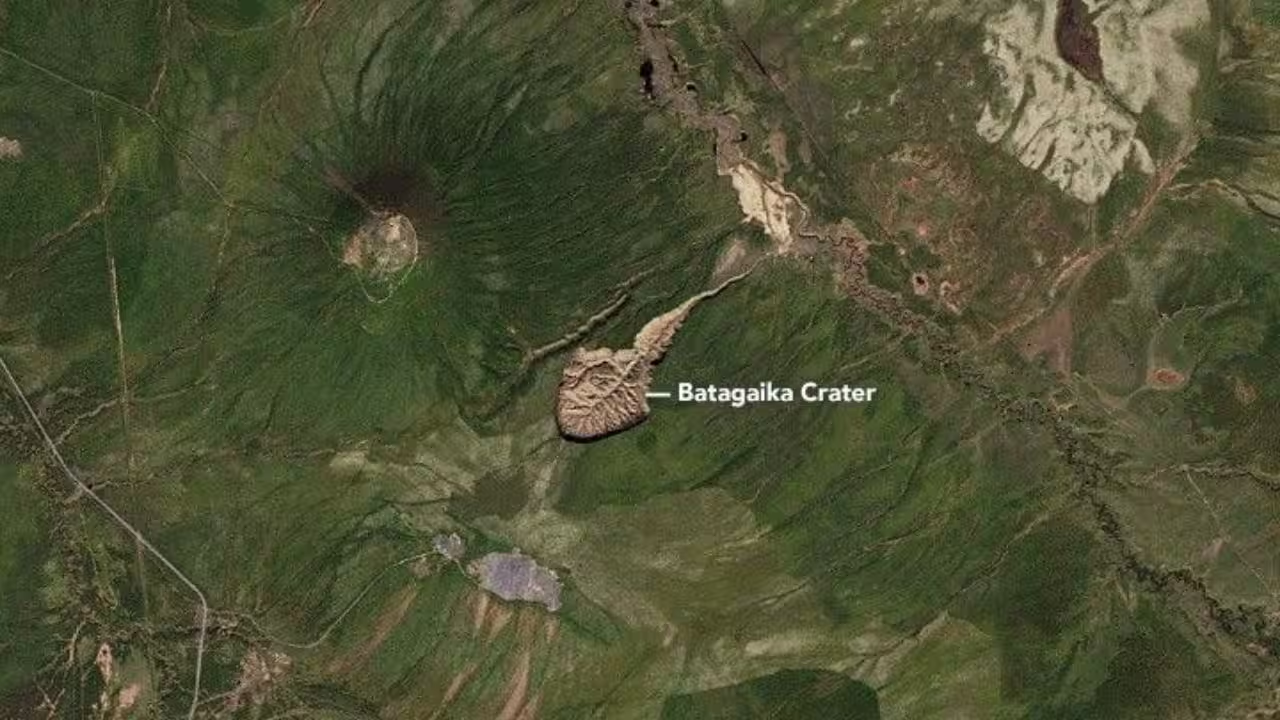
Deep in northeastern Siberia, a vast scar in the landscape continues to grow as warming temperatures melt the ground that has remained frozen for thousands of years. Known as the Batagaika Crater, and also as a massive thaw slump, the formation is the world's largest permafrost crater. Its expanding walls are exposing layers of ice, soil and organic material that offer an extraordinary record of Earth's past. According to the U.S. Geological Survey(USGS), some of the permafrost visible at the bottom may be as much as 650,000 years old. The site has also yielded remarkably preserved remains of extinct animals, while its rapidly changing shape provides a striking example of what can happen when frozen ground becomes unstable. Batagaika is therefore both a window into an ancient Siberian world and a warning about the consequences of continued permafrost thaw.Massive expanding hole revealing clues about life during the Ice AgeThe destruction of the landscape has created an unexpected opportunity for scientists. As the walls of the mega-slump retreat, they expose layers that would otherwise remain buried deep underground. The USGS describes each exposed layer as a snapshot in time. Together, these layers can help researchers investigate how the climate and environment changed over immense periods. The oldest permafrost visible near the bottom of the formation may be up to 650,000 years old. Satellite observations have also allowed scientists to follow the crater's physical expansion over decades. According to the USGS, imagery ranging from declassified satellite records collected in the 1960s to modern Landsat and Copernicus Sentinel-2 observations provides a continuous view of its growth over roughly 60 years. This makes Batagaika unusual in two ways. It is changing rapidly in the present, while simultaneously uncovering a much older record of Siberia's past. The layers exposed along its walls offer evidence of environments that existed long before modern humans began recording the planet's climate.How did the giant crater of Siberia formThe Batagaika Crater lies in Siberia's Yana Uplands and is not a crater in the usual sense of the word. It was formed when permanently frozen ground, known as permafrost, began to melt and collapse, creating what scientists call a mega-slump. Nasa's Earth Observatory explains that rising temperatures have melted the permafrost in the region. Warmer summers and shorter winters have caused layers of frozen soil and ice to collapse and erode away. The exposed face of the slope then becomes increasingly unstable, allowing the formation to move backwards into the surrounding hillside.The process can also accelerate itself. As material at the bottom melts and falls away, more frozen ground becomes exposed to warmer air. That newly exposed ground then begins to thaw(melt away), potentially causing further collapse. Nasa reported that once a feature of this scale has been exposed, stopping the process is extremely difficult. The European Space Agency(ESA), described the formation in May 2026 as the world's biggest permafrost crater. The agency said the crater is roughly 100 metres deep and around one kilometre long, and has been growing at approximately 30 metres per year. ESA linked its rapid expansion to warmer temperatures and deforestation, both of which have helped destabilise the frozen ground.Ice Age animals emerging from the frozen ground in SiberiaBatagaika's frozen deposits have also preserved traces of animals that lived during the Ice Age. The USGS notes that mummified wildlife has been discovered at the site, including the remains of a ‘42,000-year-old foal’ belonging to an extinct horse species, found in 2018. Nasa has reported other remarkable discoveries from the expanding crater. Remains of the ‘extinct Lena horse’ and ‘prehistoric steppe bison’ have emerged from the melting ground, alongside remains associated with cave lions and wolves. These discoveries provide scientists with physical evidence of the animals that once lived in this part of Siberia.The ancient deposits also preserve evidence of changing vegetation. Nasa reported that pieces of wood found in the melting soil suggest spruce and pine forests once grew in the area, while research at the site has indicated that the region experienced periods with different climatic conditions. Today, however, the landscape surrounding the crater is dominated by low shrubs and larch trees. The growing hole is, in effect, exposing fragments of ecosystems that disappeared thousands of years ago.Why is the crater's growth also a climate warningBatagaika's scientific value comes with a serious environmental concern. Permafrost contains large amounts of frozen organic material, and when the ground melts, the carbon stored within it can begin to enter the atmosphere. The USGS warns that thawing permafrost soils can release greenhouse gases, including carbon dioxide, methane and nitrous oxide, which contribute to global warming. This means the expanding crater is not simply a consequence of a warming climate; the melting process itself may contribute to further warming.The site's striking appearance has often drawn attention from satellites. ESA says the crater resembles a tadpole or stingray when viewed from above. Yet behind that unusual image is a landscape undergoing rapid and continuing change. Batagaika presents a remarkable scientific contradiction. Its growth is destroying ancient frozen ground, but that destruction is also revealing a record of landscapes, climates and animals from hundreds of thousands of years ago. The deeper it expands, the more of that ancient world becomes visible while the continued melting offers a stark reminder that Earth's coldest landscapes are changing in real time.Catch the latest World News and Live updates. Download the TOI app.
Topics in this story
Gathered from external sources. Rights to this text belong to whoever originally published it.